HEALTH
Uganda's response to this year's Bundibugyo virus outbreak has now been published in two of the more consequential outlets in global public health, and the headline finding is unusually good news. Of 20 laboratory-confirmed patients, 18 survived.
The clinical account appeared on 10 September in the United States Centers for Disease Control and Prevention's Morbidity and Mortality Weekly Report, written by a team drawn from Uganda's Ministry of Health, the Uganda National Institute of Public Health, the National Health Laboratory Services, the US CDC's Kampala office and the World Health Organization. A companion paper assessing the speed of the response appeared on 1 September in the CDC journal Emerging Infectious Diseases.
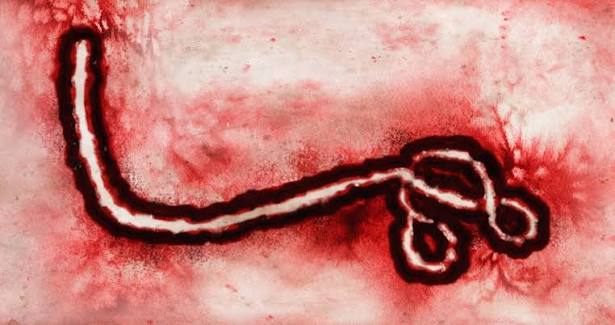
Bundibugyo virus is one of four orthoebolaviruses known to cause Ebola disease in humans. It was first identified in 2007 in Uganda's Bundibugyo District, and before this year only two outbreaks had ever been documented. Case-fatality rates in those two ranged from 32 to 55 per cent. There is still no licensed vaccine and no approved therapeutic for it.
How the outbreak was found
Uganda's index patient was a 59-year-old Congolese man who crossed into the country seeking medical care. He was admitted to a private hospital in Kampala on 11 May with fever, respiratory distress, epigastric pain and nausea, and died in intensive care on 14 May. At that point no outbreak had been declared anywhere, neither in Uganda nor in the Democratic Republic of the Congo.
What broke the case was a phone call. After the patient died, a Congolese resident of Kampala contacted Ministry of Health officials to report unexplained deaths occurring across the border. That prompted officials to retrieve a stored blood sample and test it for viral haemorrhagic fever. On 15 May the Central Emergency Response and Surveillance Laboratory in Kampala confirmed Bundibugyo virus by RT-PCR. The DRC confirmed its own outbreak the same day. WHO declared a public health emergency of international concern on 17 May, and the Africa CDC followed on 18 May with a Public Health Emergency of Continental Security.
Who got sick
Among the 20 confirmed cases the median age was 34, with a range of one to 59 years, and 12 patients, or 60 per cent, were male. Fifteen, three quarters of the total, were Congolese nationals who entered Uganda while already symptomatic, twelve of them specifically seeking care for suspected Bundibugyo virus disease. Four cases were Ugandan health workers exposed during the attempted resuscitation of a patient with probable disease who died and was embalmed before testing could be completed. A fifth Ugandan was a driver exposed to a body.
That distribution is the outbreak in miniature. This was not an epidemic inside Uganda so much as a cross-border spillover, absorbed and stopped by a hospital system in the capital.
What the clinicians saw, and what they gave
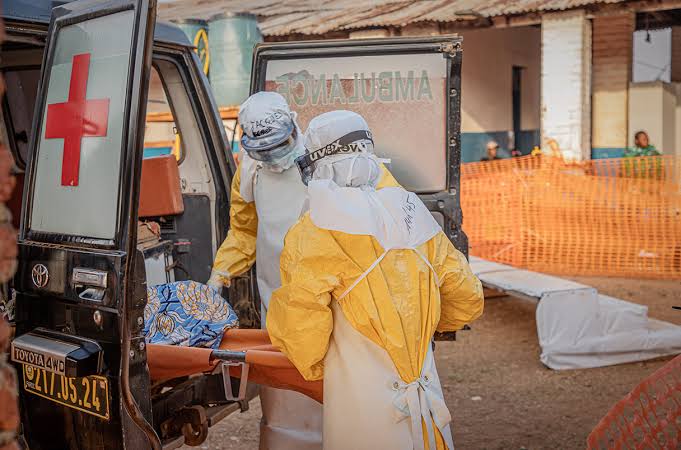
Eighteen of the twenty were admitted to the Ebola treatment unit at Mulago National Referral Hospital. Every one of them presented with fever; 83 per cent had headache and 78 per cent muscle pain. Bleeding, the symptom most people associate with Ebola, appeared in only 17 per cent.
More striking was the laboratory picture. All 18 patients had elevated liver enzymes, low serum albumin and low sodium on admission to the treatment unit. The authors suggest this triad may be a characteristic early signature of Bundibugyo virus disease and that routine laboratory assessment could help guide clinical management, a practical finding for any hospital that receives a suspected case.
All 18 received remdesivir, the antiviral approved for COVID-19, used off-label through Uganda's compassionate-use framework after eligibility assessment and informed consent. It was administered on the day of admission, a median of five days after symptom onset. One patient developed a severe skin rash with hepatorenal toxicity and the drug was stopped after three days; the signs and symptoms resolved and the patient recovered.
The outcome was two deaths among the 20 confirmed cases, a case-fatality rate of 10 per cent, with a third death in a probable case. All three had bleeding from multiple sites; none of the surviving patients bled at all. Crucially, in all three, Bundibugyo virus was only suspected at or after the time of death. Only one of the three ever reached the treatment unit, a 33-year-old woman who arrived critically ill, died two days later, and was the only patient in the series with a known comorbidity.
The authors are careful about causation. They attribute the low fatality rate partly to patients who sought care promptly, and stop short of claiming the drug worked, writing instead that clinical trials of remdesivir for Bundibugyo virus disease might be warranted alongside optimised supportive care. Twenty patients, all treated, with no control group, cannot establish efficacy. But the comparison next door is hard to ignore: as of 2 September the DRC arm of the same outbreak was running a case-fatality rate of 48 per cent.
A clean sweep on 7-1-7, and three things that did not work
The Emerging Infectious Diseases paper, led by researchers from Uganda's National Public Health Emergency Operations Centre with the Africa CDC, the UK Health Security Agency and WHO, measured the response against the 7-1-7 framework: detect a suspected outbreak in under seven days, notify the relevant authorities within one, and complete seven defined early response actions within seven. Uganda met all three targets. Detection took six days, notification happened the same day the event was recorded, and the early response actions were finished within two days of notification. An incident commander was appointed within three hours of the first confirmation.
The review itself was a two-day workshop with 74 participants working in nine response pillars. It credited three enablers: senior leadership operating through coordination machinery that existed before the emergency, including the National Task Force, the Incident Management System and the National Public Health Emergency Operations Centre; nearly two decades of accumulated filovirus experience; and a trained rapid-response workforce ready to deploy.
It was equally direct about what failed. This strain presented mainly with fever and gastrointestinal symptoms rather than classic haemorrhagic signs, and that atypical presentation delayed clinical recognition, particularly in private facilities where staff trained on conventional Ebola case definitions were poorly placed to flag such patients. The authors want Bundibugyo-specific job aids that reflect non-haemorrhagic presentation rather than generic Ebola definitions.
Second, fragmented digital systems were named as a bottleneck across the surveillance, logistics and data analytics pillars: parallel electronic platforms, limited real-time stock visibility and poor interoperability. The reviewers also noted that the proposed fixes remain largely siloed within individual pillars rather than converging on a single cross-system solution. The critique lands in the same fortnight as Uganda's third National ICT Summit, held at Nakawa from 2 to 4 September under the theme of moving from connectivity to intelligence, at which the ICT ministry's permanent secretary, Dr Aminah Zawedde, set out progress on aggregated procurement of government IT systems and the automation of public services. Interoperability stops being an abstract governance concern when an outbreak response cannot see its own stock levels.
Third, cross-border data sharing with the DRC was too slow, despite 15 of Uganda's 20 confirmed cases being directly imported from Ituri Province. The epidemiological link was obvious from the outset; the formal information-sharing mechanism was not operating at the pace the situation demanded. Institutionalised bilateral coordination, coordinated point-of-entry screening and joint investigations along the Uganda-DRC corridor were among the most frequently proposed corrective actions.
The outbreak Uganda closed is still burning
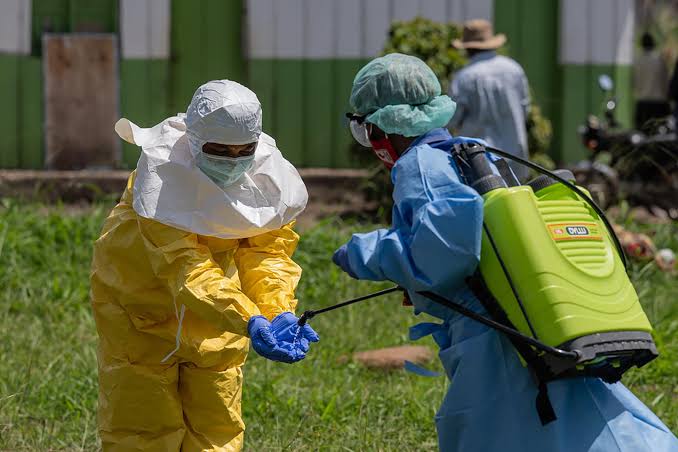
Uganda declared its outbreak over on 26 August, with 20 confirmed and one probable case. The DRC epidemic continues. As of 31 August it had recorded more than 6,100 confirmed cases and close to 2,950 deaths, making it the second-largest Ebola outbreak on record, with Ituri accounting for roughly 84 per cent of confirmed cases and counts still climbing. A CDC analysis published in August found that several core response targets on the DRC side, including case detection, contact tracing and safe burials, had not been met.
Countermeasure development has accelerated in parallel. The Coalition for Epidemic Preparedness Innovations announced funding on 1 June to fast-track three vaccine candidates, from IAVI, Moderna and the University of Oxford. On 31 July a WHO technical advisory group authorised a Phase 3 trial of the rVSV-ZEBOV vaccine in the DRC, and the WHO-sponsored PARTNERS trial protocol has been deployed in both countries.
What to watch
Whether a randomised trial of remdesivir for Bundibugyo virus disease is actually mounted is the question the MMWR report leaves open, and it is the one that would turn Uganda's 90 per cent survival from an encouraging case series into evidence. Beyond that, three things are worth following: whether the Bundibugyo-specific case definitions and job aids the reviewers called for reach private clinics along the western border, where this outbreak was first missed; whether Uganda and the DRC institutionalise real-time surveillance sharing along the Ituri corridor; and whether the interoperability problem flagged in the outbreak review is folded into the government's broader digital integration agenda rather than being solved pillar by pillar, which is how the reviewers noted it is currently being approached..html
Published By | Health News Editor