Written By | Staff Writer
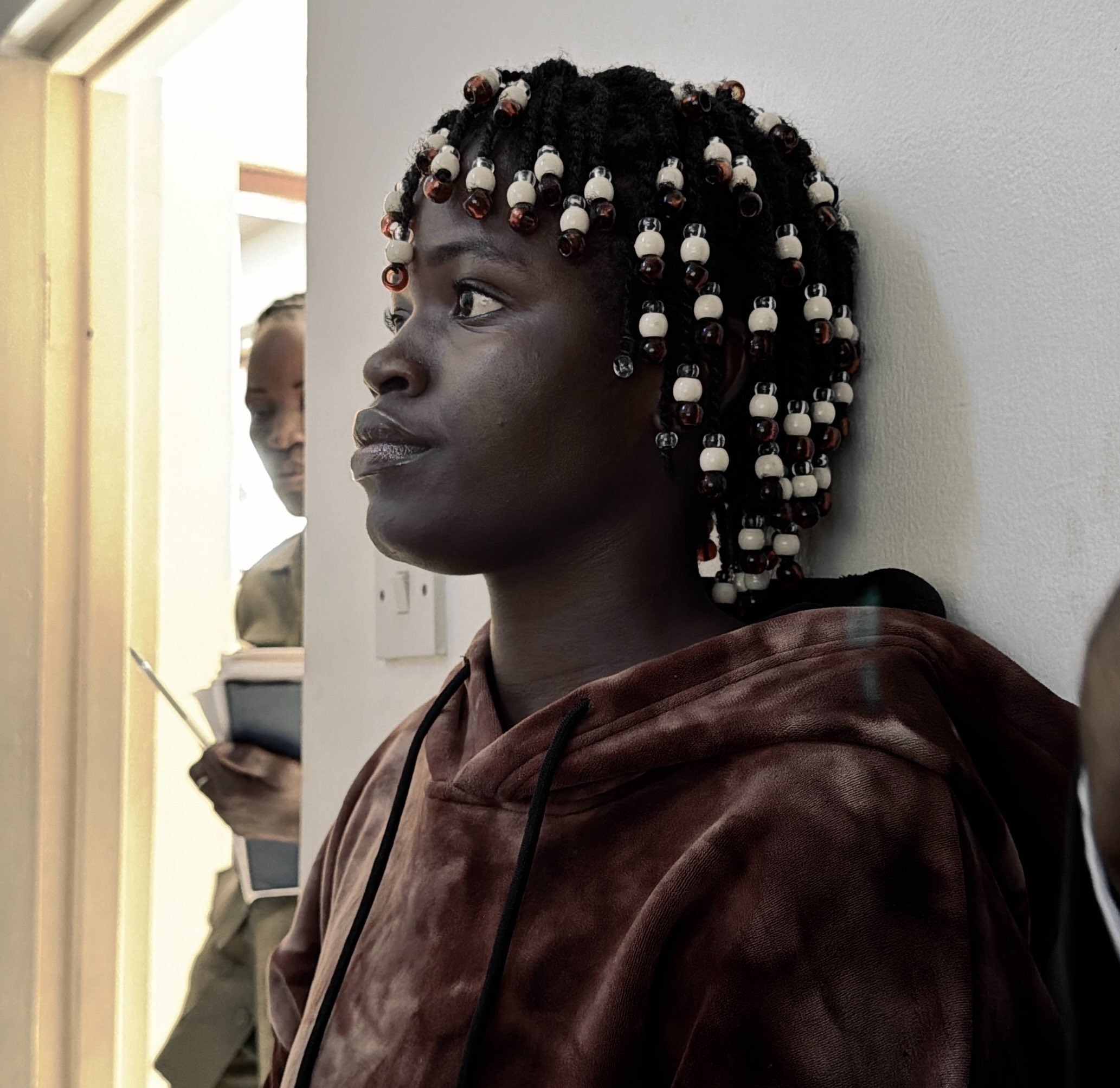
Praise Aloikin Opoloje, a law student and civic activist who won the European Union's 2025 Human Rights Defenders Award
POLITCS
A 25-year-old human rights defender's disappearance from a Kampala police station this week has become the latest flashpoint in Uganda's deepening confrontation between the state and its critics, drawing condemnation from opposition politicians, lawyers, and international rights groups.
Praise Aloikin Opoloje, a law student and civic activist who won the European Union's 2025 Human Rights Defenders Award and was a finalist for the Martin Ennals Award, was reported missing on September 26 after she went to Namungoona Police Station in Kampala, reportedly believing she had been summoned for routine questioning. According to her family, lawyers, and civil society groups, she was instead handed over to armed officers from the Defence Intelligence and Security (DIS) directorate — Uganda's military intelligence service — who drove her away in a vehicle bearing the registration UA875AC. For more than a day, neither the police nor the military would confirm where she was being held, prompting fears of what her lawyers called an "enforced disappearance."
By September 27, more than a dozen prominent Ugandan lawyers — including Eron Kiiza, Sarah Kasande, Anthony Odur, Yvonne Mpambara, Lillian A. Drabo, Peter Arinaitwe and Phillip Karugaba — had signed a joint statement demanding her immediate, unconditional release and her production before a court within the 48-hour window required by Uganda's constitution. The Uganda Law Society added its voice, arguing that criticism of public officials is protected speech under Article 29 of the constitution. Opposition leader Robert Kyagulanyi, better known as Bobi Wine, denounced the episode as "state criminality" and joined a rapidly spreading #FreePraiseAloikin campaign on social media.
Police eventually broke their silence on September 28. Force spokesperson ACP Fred Enanga's counterpart, Kituuma Rusoke, confirmed that Aloikin was in custody — not missing — and had been traced to Kampala's Central Police Station after being moved from Namungoona. "She is in police hands, and at an appropriate time she will be placed in front of the temple of justice to answer to allegations against her," Rusoke told reporters, citing unspecified "social media misuse" and accusing her of having "knowingly misused her digital handle and offended." He did not explain why she had been reported missing for more than 24 hours, why armed men had removed her from a police station rather than processing her there, or what specific offence she is alleged to have committed. Police warned that other social media users could face similar arrests.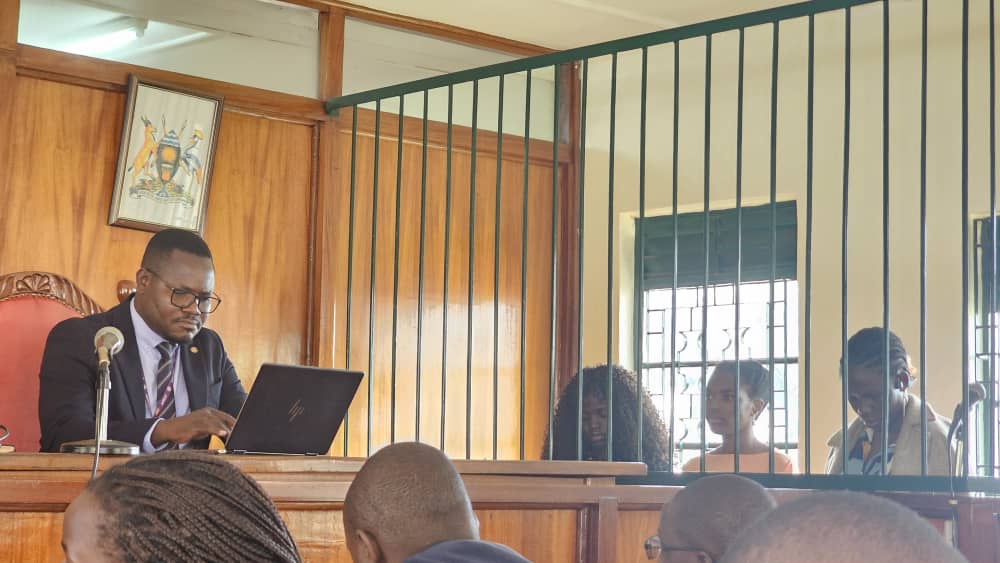
Apoloje in the dock
Civil society groups say the timeline itself is the problem: an unacknowledged transfer from a police station into the custody of unidentified armed men, with no access to a lawyer or family and no public confirmation of her whereabouts, is precisely the pattern that rights monitors have flagged as a hallmark of enforced disappearance under international law, regardless of whether the person is later confirmed to be "safe."
Behind the arrest lies a specific and highly sensitive trigger. According to multiple Ugandan outlets, Aloikin's detention followed a video in which she criticized General Muhoozi Kainerugaba — Uganda's Chief of Defence Forces and the son of President Yoweri Museveni — and condemned the Patriotic League of Uganda (PLU), the political movement Kainerugaba has built up over the past two years, reportedly as a vehicle for his own political ambitions. The PLU, which grew out of what was informally known as the "MK Movement," released a list of 40 founding members earlier this year and has been assembling leadership structures across the country, fueling speculation that Kainerugaba — a combative and prolific social media user in his own right — is positioning himself as a future presidential contender. Criticism of Kainerugaba, who holds one of the most powerful positions in Uganda's security establishment while also cultivating a mass political following, has repeatedly drawn a harsher state response than criticism of other officials, activists say.
The case lands amid a broader pattern that has drawn sustained international scrutiny this year. Human Rights Watch has documented what it calls a "post-election assault on political opposition" following January's disputed presidential election, in which Museveni was declared winner of a seventh term over Bobi Wine, who rejected the result as rigged and briefly said he was in hiding. Amnesty International and the UN human rights office have separately accused Uganda's security forces of arbitrary arrests, torture, and even killings of opposition supporters and activists since the vote. In August, Human Rights Watch reported that another opposition politician had been tortured and charged in what it described as an abusive prosecution. Uganda's military courts remain a particular focus of concern: although the Supreme Court ruled last year that soldiers cannot try civilians, opposition figure Kizza Besigye — a four-time presidential challenger — is still being prosecuted, now on treason charges in a civilian court, with his trial marked by disputed evidence and repeated delays; it was most recently adjourned and is next due on October 5.
Government officials and the ruling National Resistance Movement have consistently rejected accusations of a systematic crackdown, framing individual arrests as ordinary law enforcement and pointing to due-process guarantees in Uganda's courts. Rusoke's promise that Aloikin will eventually be "placed in front of the temple of justice" was an implicit acknowledgment that some legal process is expected, though rights advocates note that a promise of an eventual court date does not address the constitutional requirement that a suspect be produced in court within 48 hours of arrest — a deadline that, on the police's own account of events, has now been missed.
For Aloikin's supporters, the case is a test of how far the state is willing to go to police online speech about the country's most powerful family. She first drew national attention as an organizer of anti-corruption demonstrations, including a march on Parliament in July 2024 and protests over the deadly Kiteezi landfill collapse. Her advocacy made her one of the most recognized young civic voices in Uganda and brought international recognition through the EU award and the Martin Ennals nomination — credentials that have amplified the international response to her detention, including a statement from the global rights network World Liberty Congress demanding Ugandan authorities "disclose the whereabouts of human rights defender Aloikin Praise Opoloje" and guarantee her legal access and safety.
What happens next will be closely watched. If Aloikin is formally charged and brought before a magistrate, her case is likely to become a test of whether "digital misuse" or similar offences can be used to prosecute criticism of Uganda's military and political leadership. If she is instead released without charge, the episode will reinforce a now-familiar criticism from rights groups: that Ugandan security agencies use extrajudicial detention as a warning to government critics, whatever the eventual legal outcome. Either way, the incident has sharpened debate — inside and outside Uganda — over Kainerugaba's expanding political and security role, and over how much space remains for public criticism of Museveni's family as the country processes the aftermath of a bitterly contested election year.



