Written By | International News Agencies
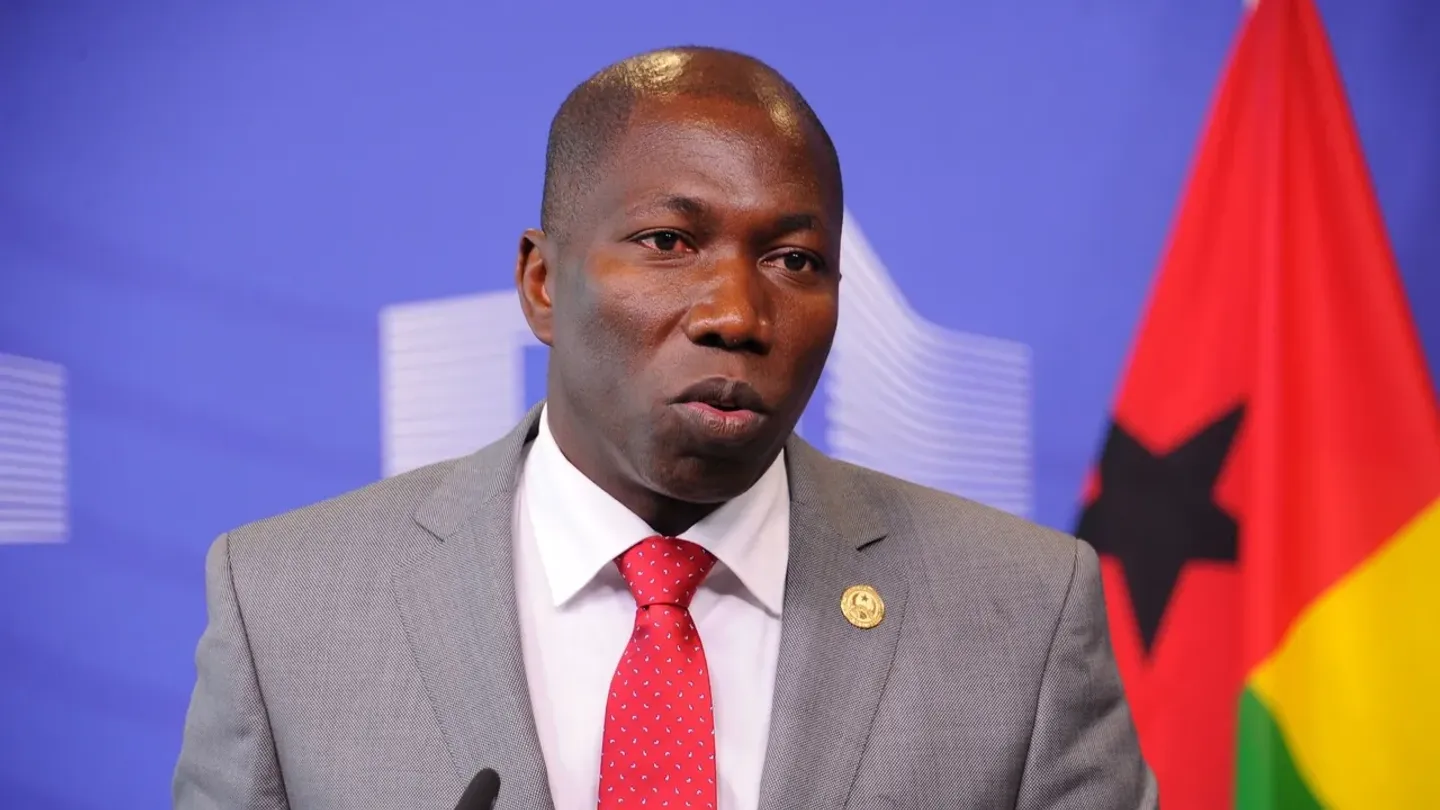
Guinea-Bissau opposition leader leaves prison for treatment in Portugal
Bissau, Guinea-Bissau
Nine months after soldiers overthrew President Umaro Sissoco Embaló three days after a disputed election, Guinea-Bissau remains suspended between military rule and a promised return to democracy — a transition now complicated by the release of the president's chief rival for medical treatment abroad and by a widening corruption scandal touching Embaló's own family. The two threads, combined with a transitional government still finding its footing, make the small West African nation one of the most closely watched political stories on the continent as it heads toward a rescheduled presidential election on Dec. 6.
A coup that followed a contested vote
Guinea-Bissau held a presidential election on Nov. 23, 2025, in a race widely expected to test Embaló's grip on power after a term marked by economic stagnation and accusations of democratic backsliding. Three days later, before official results were announced, armed men seized and destroyed election materials, and elements of the security forces moved against Embaló, taking control of state institutions. A group calling itself the High Military Command for the Restoration of National Security and Public Order announced on state television, through Gen. Denis N'Canha, that it had seized power. Embaló, who was detained and later left the country, was removed from office; Prime Minister Braima Camará, who had held the post since Aug. 7, 2025, was dismissed the same week.
The coup was immediately clouded by allegations that it was not what it appeared to be. Civil society groups in Guinea-Bissau accused Embaló and elements of the army of staging a "simulated coup" specifically to prevent the release of results that would have shown him losing, and to let him remain in power under the cover of a military intervention rather than face defeat at the ballot box. Senegal's prime minister and a former president of Nigeria both said publicly that they believed the ouster had been staged. Guinea-Bissau's neighbors were not persuaded by the official narrative in any case: the Economic Community of West African States and the African Union both suspended the country's membership within days, and the International Monetary Fund and World Bank flagged the economic risks of prolonged instability.
Overthrown: Umaro Sissoco Embaló
A transition finds its shape — slowly
Gen. Horta Inta-A Na Man was installed as transitional president and, in the weeks after the takeover, named a 27-member government led by Prime Minister Ilídio Vieira Té, who also retained the finance portfolio he had held under the previous administration. The Cabinet is mostly civilian but includes five military officers, a structure meant to signal a path back toward civilian rule while keeping the armed forces embedded in the transition's management. In late May, the transitional government carried out a reshuffle affecting the foreign affairs, justice, environment and treasury ministries as it prepared for the promised December election — an adjustment that, notably, came roughly six months into the transition rather than at its outset, reflecting how unsettled the arrangement has remained.
For ordinary Guineans, the coup was the country's sixth successful power seizure since independence from Portugal in 1974, on top of several failed attempts — a pattern that has entrenched chronic poverty and made the country, wedged between Senegal and Guinea on the Atlantic coast, a persistent hub for cocaine trafficking between Latin America and Europe. That backdrop has fed skepticism, inside and outside the country, that this transition will meaningfully break the cycle.
Pereira: prison, house arrest, and now Lisbon
The clearest measure of how contested the road to December remains is the treatment of Domingos Simões Pereira, the leader of the African Party for the Independence of Guinea and Cape Verde (PAIGC) and Embaló's most prominent political rival. Pereira was detained when the army moved against Embaló on Nov. 26 and has been in and out of custody — including a period of house arrest after an initial release in late January — ever since. Military authorities accuse him of involvement in a coup attempt in October 2025, which they allege he helped finance, as well as separate financial crimes and involvement in an earlier, 2023 coup attempt. Both alleged plots occurred under Embaló, before Embaló's own November ouster — a detail Pereira's supporters say underscores how selectively the accusations have been applied.
On July 24, judicial and security sources confirmed that Pereira had been released from custody and allowed to travel to Portugal for medical treatment, after a military hospital assessment in Bissau found he had a condition that "could not be properly treated in Guinea-Bissau" and required care abroad, according to a judicial document cited by AFP. One judicial source said the release was granted for "legal humanitarian reasons," adding there was "no reason to keep him in detention any longer" once military doctors confirmed his illness. Pereira's lawyers and party have consistently denounced the underlying accusations as arbitrary, describing them as a politically motivated effort to bar him from the December presidential race.
Arriving in Lisbon, Pereira was met by dozens of supporters and told local reporters he intended to return to Guinea-Bissau "absolutely." "I am Guinean and will continue this fight as soon as possible," he said. Whether Pereira is medically able — or, more pointedly, legally permitted — to be a candidate on Dec. 6 is now one of the central open questions of the transition, and one that will shape whether the eventual vote is seen at home and abroad as genuinely competitive or as a managed process designed to sideline Embaló's strongest challenger.
A parallel corruption scandal
Compounding the political uncertainty is a financial scandal that has directly touched Embaló's inner circle. On the night of Dec. 12-13, 2025, Portuguese judicial police intercepted a private jet from Bissau during a stopover in Lisbon and seized suitcases containing nearly €5 million in cash. Aboard was Tito Gomes Fernandes, widely described as Embaló's "right-hand man," who was arrested on suspicion of money laundering and smuggling. Embaló's wife, Dinisa Reis Embaló, was also on the flight; she was not arrested that night but has since been formally charged in Portugal with money laundering and the smuggling of prohibited goods. Portuguese authorities, who acted on an anonymous tip and worked jointly with tax officials, believe the cash was intended to help sustain the former first family's lifestyle in exile. The case has become a proxy battleground in Guinea-Bissau's politics, with some student and labor groups in Bissau calling on Portugal — the former colonial power, and now host to a small ecosystem of Guinean exiles and dissidents — to extend sanctions against figures associated with both the ousted government and the coup leaders alike.
What the December vote will decide
The stakes of the Dec. 6 election extend well beyond who occupies the presidency. A credible vote, with international observers satisfied that opposition figures like Pereira were not systematically excluded, would give Guinea-Bissau a plausible path back into ECOWAS and the African Union and could unlock the international financing the transitional government badly needs. A vote widely viewed as managed or exclusionary, by contrast, would likely harden the country's isolation and validate warnings from regional diplomats that West Africa's recent run of coups — Guinea-Bissau joins Mali, Burkina Faso, Niger and Guinea in various stages of military-led transition — is entrenching rather than receding.
Analysts will be watching several signals in the run-up to the vote: whether Pereira is formally cleared to run once he returns from Portugal, or whether new charges emerge that keep him sidelined; whether Gen. Horta Inta-A Na Man's government holds to the December date or seeks a further postponement, as transitional authorities elsewhere in the region have done; and whether ECOWAS, which has pushed for a "rapid return to constitutional rule," is satisfied enough with the process to lift its suspension before or after the vote itself. The Embaló family corruption case, meanwhile, is likely to keep generating headlines in Lisbon's courts regardless of what happens in Bissau, a reminder that Guinea-Bissau's political crisis has become as much a story about the country's diaspora and its former colonial patron as about the transitional institutions nominally in charge at home.



