QUITO, ECUADOR
Architecture competitions are rarely dramatic. A jury deliberates, a winner is announced, renderings circulate for a news cycle, and construction eventually begins years later, largely out of public view. The competition to design Ecuador's new National Museum in Quito broke that pattern almost immediately — and the story of how it did offers a rare, real-time case study in what happens when the public is handed genuine power over a major architectural decision, rather than just the illusion of one.
The saga began, respectably enough, on July 6, when a jury of national and international architects announced the winner of a competition that had drawn 148 entries from around the world, whittled down to 20 shortlisted teams and finally 17 finalists. The winning scheme, "Ecos del Sol" ("Echoes of the Sun"), came from a partnership between Madrid-based Studio Campo Baeza — led by the internationally decorated Spanish architect Alberto Campo Baeza — and the Quito firm MAODA. The design, a box-like structure organized around courtyards and excavated voids, was explicitly conceived as a response to Quito's mountainous topography and the vertical logic of pre-Columbian Andean architecture. The team collected a $450,000 prize. By any normal measure, the story should have ended there.
The Backlash
It didn't. Within days of the July 6 announcement, a public backlash began building online, driven by comparisons of the winning design's monolithic, boxy massing to generic "corporate real estate" — a phrase that surfaced repeatedly in the Ecuadorian press and on social media as the criticism metastasized. An online petition opposing the scheme gathered more than 20,000 signatures, with critics arguing that the design's scale and severity clashed with what they described as Ecuador's national identity and the symbolic weight a national museum ought to carry. One architecture outlet later described the episode, only half-jokingly, as a case of "memes calling the shots" — a nod to how much of the public campaign against the design played out through viral social commentary rather than formal architectural critique.
The government's response was as unusual as the backlash itself. Rather than defending the jury's decision or waiting out the controversy, Ecuador's Ministry of Transportation and Public Works moved to recall the "Ecos del Sol" selection entirely, sending the competition back into a revised evaluation process. Studio Campo Baeza and MAODA, understandably, objected — the firms argued publicly that overturning a duly selected winner "breaks the transparency and integrity of a public competition," a complaint echoed by parts of the international architecture press, who worried the reversal set an uncomfortable precedent: that a sufficiently loud social-media campaign could unmake a jury's technical judgment after the fact.
A Second Selection — With the Public Voting Directly
What followed was not simply a re-run of the original process but a structurally different one. The revised competition combined a technical jury evaluation, weighted at 85 percent, with a direct citizen vote, weighted at 15 percent — an unusually explicit mechanism for public participation in what is normally an insider's process dominated by credentialed juries. More than 50,681 Ecuadorians took part in the digital vote, according to figures released alongside the announcement.
On July 19, Ecuador's Minister of Transportation and Public Works, Roberto Luque, announced the result: a team led by SANAA — the Tokyo-based, Pritzker Prize-winning practice of Kazuyo Sejima and Ryue Nishizawa, celebrated globally for the airy, dematerialized quality of buildings like the Rolex Learning Center in Lausanne and the Grace Farms complex in Connecticut — had won, in collaboration with Estudio A0, Caá Porá Arquitectura, Jerome Haferd Studio, and Taller Capital Landscape. Their proposal, titled "Estratos Vivos" ("Living Strata"), scored 81.7 points under the revised weighting system, comfortably ahead of the field.
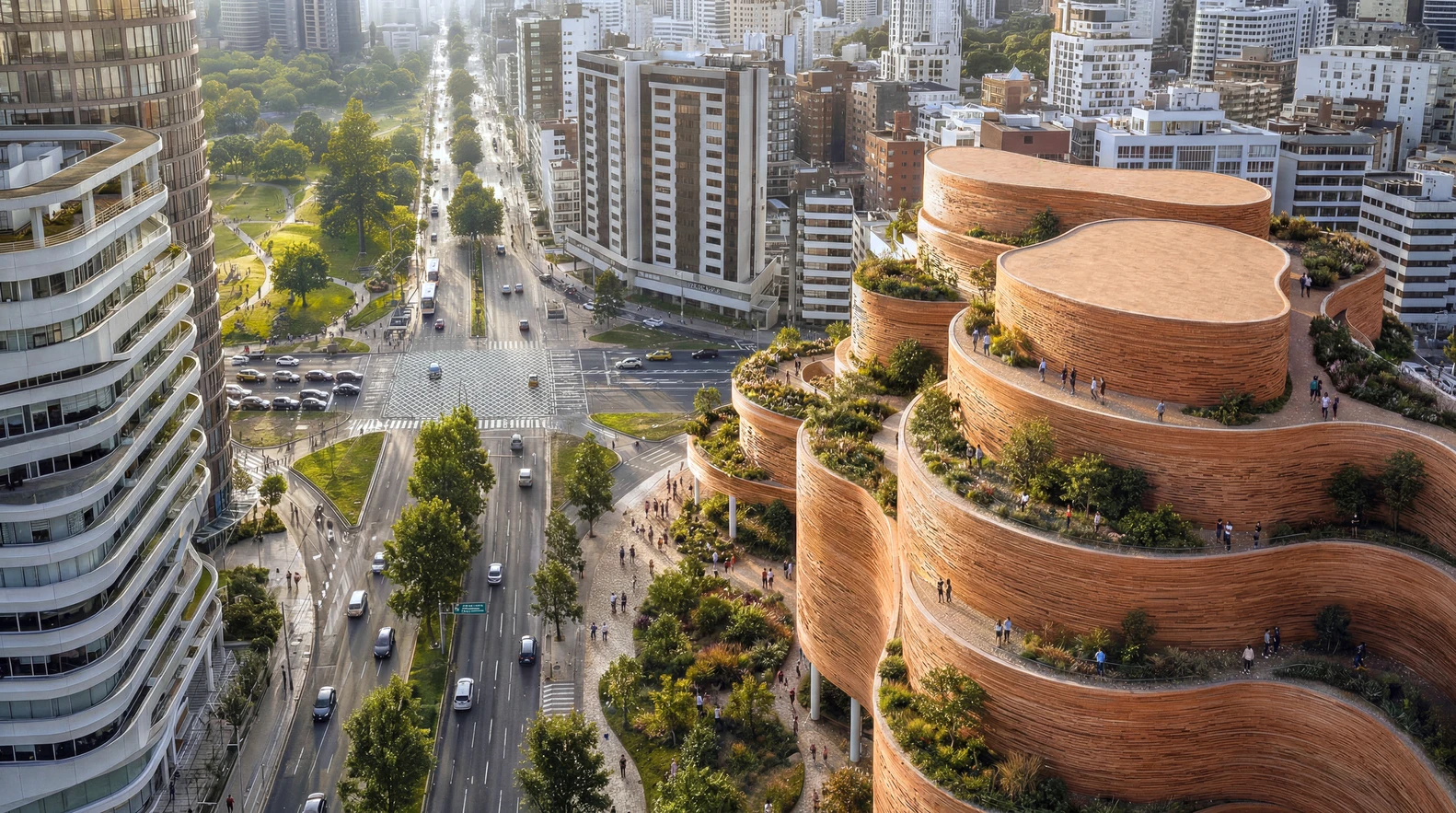
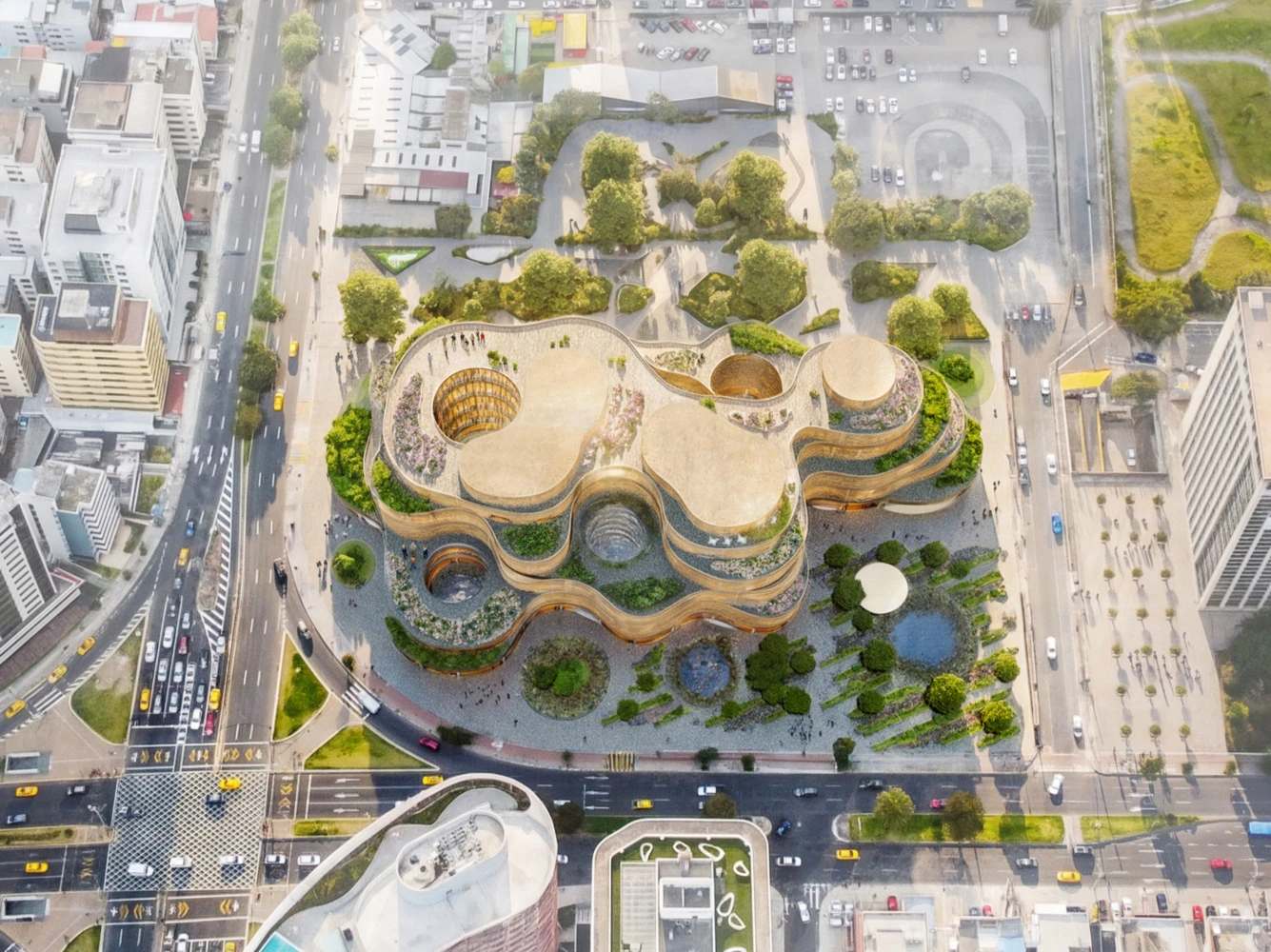
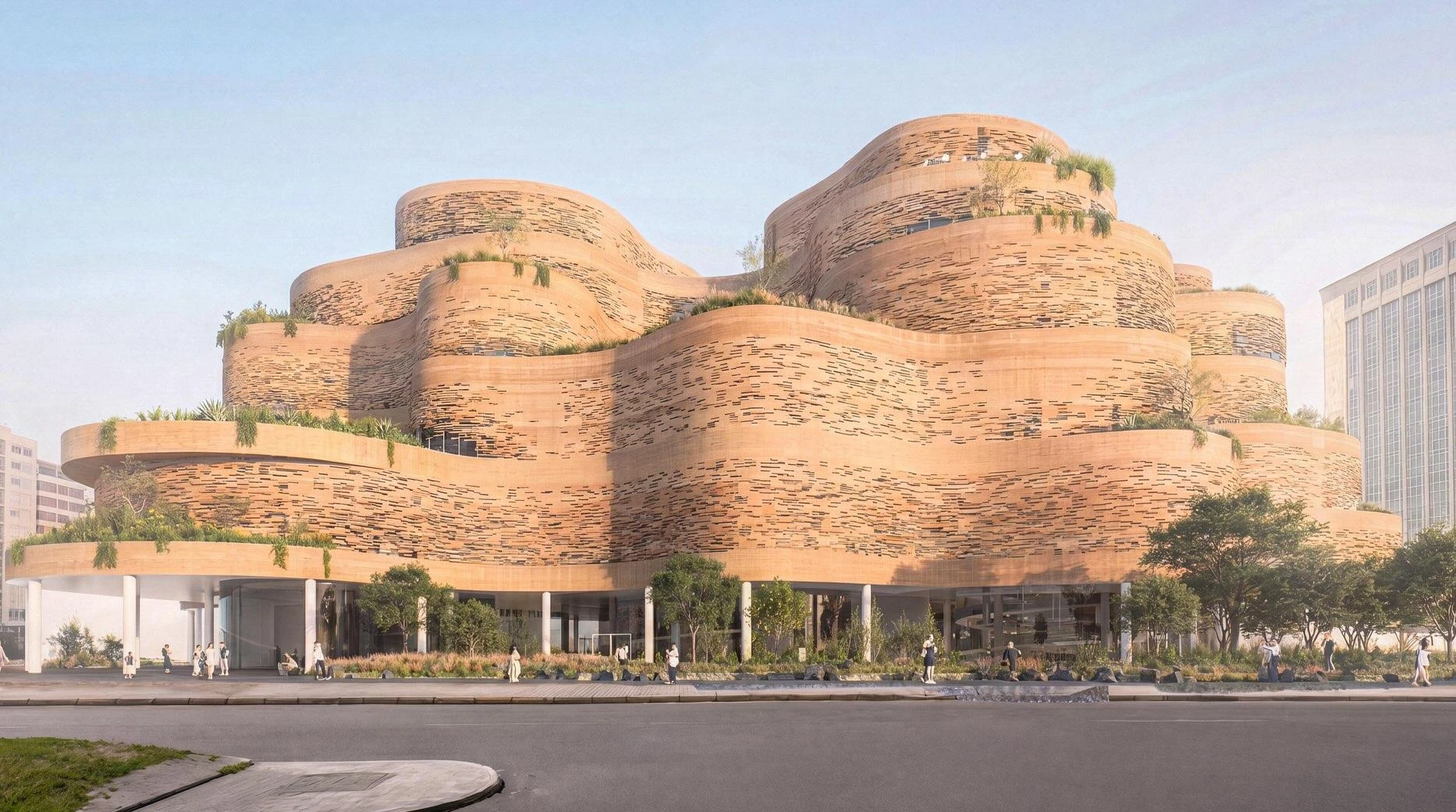
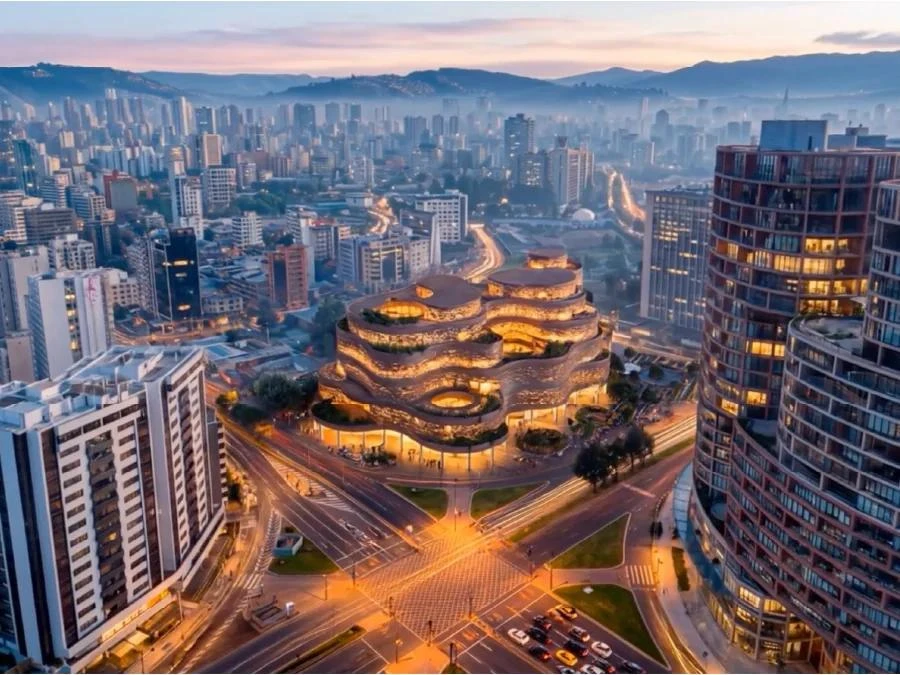
Where "Ecos del Sol" had leaned into solidity and mass, "Estratos Vivos" does close to the opposite: an undulating structure of curved, stacked terra-cotta brick volumes, organized around planted courtyards and shaded terraces, conceived around themes of collective memory and connection to the surrounding landscape. Design outlets covering the reversal noted the proposal's explicit grounding in pre- and post-Columbian cultural references — an attempt, evidently, to address head-on the "national identity" critique that had doomed its predecessor.
The Bigger Question
The episode has become a genuine flashpoint in architecture circles well beyond Ecuador, less for the merits of either design than for what the whole sequence implies about the future of public commissions. Architecture competitions have traditionally operated on the premise that expert juries, insulated from populist pressure, are best positioned to judge complex technical and aesthetic questions that the general public isn't trained to evaluate. Ecuador's National Museum saga inverted that premise almost entirely, treating public sentiment not as background noise to be managed after a jury's decision, but as a formal input with real, quantified weight in the outcome.
Supporters of the reversal argue this is simply democracy catching up to architecture — that a museum meant to hold "the country's history and most valuable artistic treasures," as the original brief described it, should reflect the taste and values of the citizens who will actually walk through it, not just the technical preferences of an international jury. Critics, including the original prizewinning firms, counter that it sets a precedent in which any sufficiently organized online campaign can override a competition's result after the fact, potentially discouraging ambitious or unconventional design submissions in future public commissions — architects, the argument goes, may simply play it safer next time, anticipating public backlash rather than pursuing their strongest ideas.
What This Means for Readers
Even for readers who have never given architecture competitions a second thought, the Ecuador museum saga is a useful lens on a much broader tension playing out across public life: the growing expectation, amplified by social media, that expert institutions justify their decisions to the public in real time — and the genuine risk, on the other side, that expertise gets steamrolled by whichever version of a controversy trends hardest online. Ecuador's solution — a hybrid weighting system that gave the public a real but bounded vote rather than a veto — is likely to be studied closely by other governments navigating similar controversies over major public buildings, from stadiums to transit hubs to museums, in the years ahead.
Construction on "Estratos Vivos" has not yet begun, and the $100 million project remains, for now, a set of renderings and a 81.7-point score. But the building's ultimate legacy may end up resting as much on the unusual, contentious process that produced it as on the finished structure itself — a rare instance of a museum's origin story becoming as culturally significant as anything likely to hang inside it.
Published By | Features Editor