PARIS, FRANCE
PARIS — When Pierpaolo Piccioli walked out for his final bow at Balenciaga's Fall 2026 haute couture show last week, the ovation that met him wasn't the polite, obligatory kind reserved for a new creative director's first outing. It was loud, sustained, and — by the account of several editors in the room — visibly emotional, breaking out beneath a blazing Paris sun as superfans, longtime clients, students and celebrities alike rose to their feet. For a designer who spent 25 years building Valentino into one of the most romantic houses in fashion before an abrupt exit last year, it was as close to a public vindication as haute couture gets.
The show marked Piccioli's solo couture debut at Balenciaga, the storied house founded by Cristóbal Balenciaga in 1917 and known, in its most recent Demna-led era, for a very different, more conceptual and often deliberately anti-glamorous sensibility. Piccioli's arrival signals a sharp tonal pivot — one Paris has been anticipating since his appointment was announced, and one that this collection answered emphatically, if not unanimously.
Color as Argument
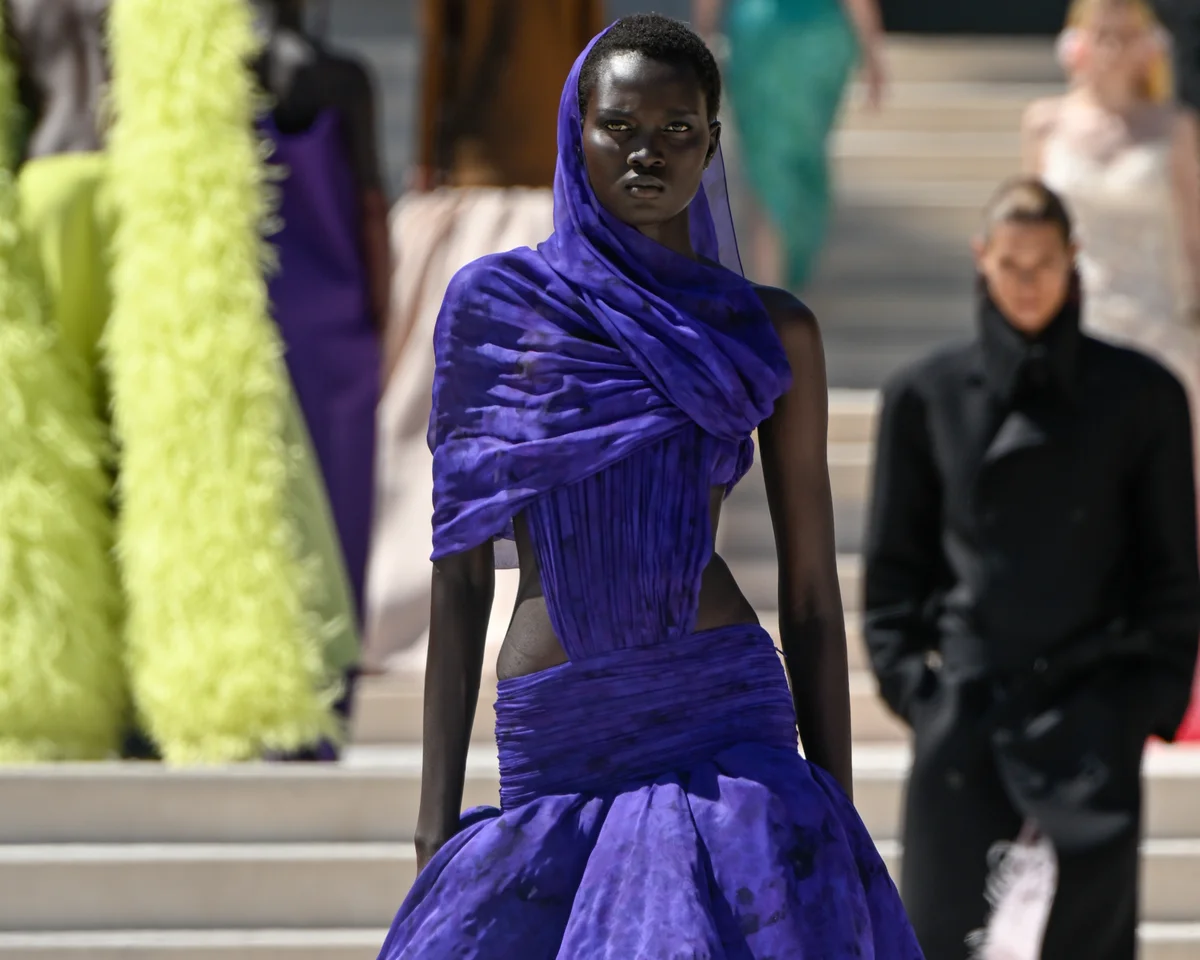
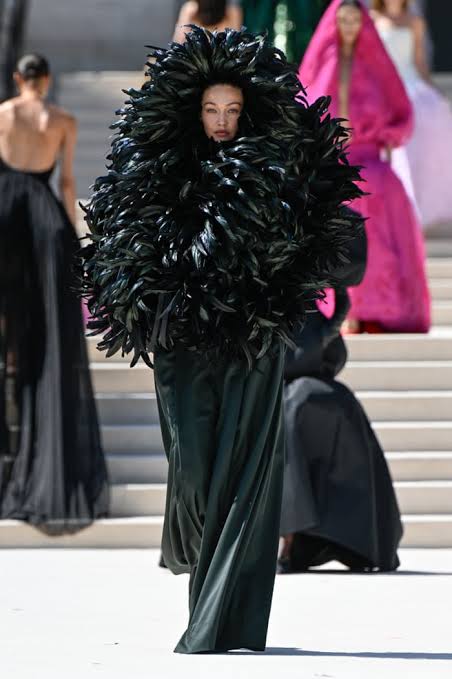
Piccioli built his reputation at Valentino on an almost theological belief in color — his 2022 all-pink "Pink PP" collection remains one of the most cited fashion moments of the decade — and he didn't soften that instinct for his new house. The Balenciaga debut leaned into neon pink, mint green and orange against the house's classically voluminous, sculptural silhouettes, pairing an emotional, maximalist palette with construction techniques that stayed close to Balenciaga's ultramodernist archive.
Sleek coats produced with hand-molded leather and cashmere gave the collection its most architectural moments, holding sharp, almost sculpted profiles that echoed the house's mid-century tailoring heritage. Elsewhere, puff-sleeved silk gazar bomber jackets with dramatically bulging backs pushed the volume further, blending sportswear-adjacent shapes with unmistakably couture fabrication — pieces industry observers expect to generate real client orders rather than simply headlines, a distinction that matters in a category where most looks never leave the runway.
"A collection that felt celebratory, decadent, and full of passion" was how the show's mood was widely described afterward — Piccioli's answer to what a Valentino romantic might look like reimagined inside Balenciaga's more severe design language.
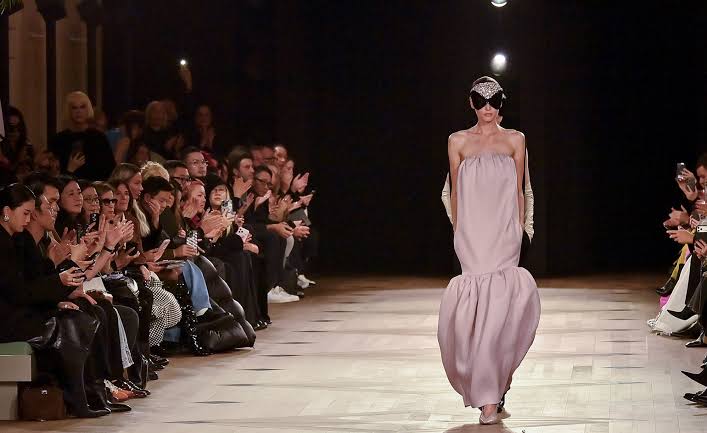
The show drew a front row stacked with Hollywood names, including Meghan Markle and Anne Hathaway, both photographed among the crowd that gathered for what several outlets billed as fashion's most anticipated Paris debut of the season.
Not Everyone Stood to Applaud
The reception wasn't universal. Alongside the standing ovation and the wave of glowing reviews, a more skeptical current ran through fashion's online forums and comment sections, where some longtime couture watchers described the collection as comparatively "pedestrian" and lacking a distinct point of view for the house — a reminder that Balenciaga's most devoted followers spent years acclimating to Demna's confrontational, streetwear-inflected version of the brand, and that any successor was always going to be measured against that radical departure rather than judged purely on its own terms.
That tension — between Piccioli's inherently romantic instincts and a Balenciaga audience trained to expect provocation — is likely to define how his tenure at the house is read for the next several seasons. His debut didn't attempt to replicate Demna's confrontational codes at all; it instead reasserted Balenciaga's earlier, Cristóbal-era relationship to sculptural rigor and craftsmanship, filtered through Piccioli's own emotional maximalism. Whether that reads as a compelling synthesis or a mismatch of sensibility is, at this early stage, still being argued out in real time.
A Debut Among Debuts
Piccioli's first Balenciaga couture show landed in the middle of an unusually consequential Fall 2026 Couture Week, which drew roughly thirty participating houses to Paris and included a striking number of high-profile creative director debuts and sophomore outings. Pierpaolo Piccioli's couture premiere at Balenciaga shared the calendar with Duran Lantink's debut couture collection for Jean Paul Gaultier — another closely watched arrival, given Lantink's reputation for boundary-pushing, gender-fluid design. The week also featured sophomore couture collections from Jonathan Anderson at Dior, Matthieu Blazy at Chanel, and Silvana Armani at Giorgio Armani Privé, making this Couture Week arguably the most closely scrutinized generational handoff moment fashion has seen since the wave of creative-director shuffles that reshaped the industry over the past two years.
That density of change matters beyond gossip value. Haute couture, unlike ready-to-wear, exists largely as a marketing and image-making exercise for houses — actual client purchases are a small fraction of the business, concentrated among an extremely narrow tier of ultra-wealthy buyers. What couture week debuts really do is set the visual and emotional register a house will carry into its far more commercially significant ready-to-wear and accessories lines. A strong, well-received debut, standing ovation included, gives a designer runway — in every sense — to bring a coherent point of view down through handbags, ready-to-wear and eventually the kind of licensed products that actually drive luxury conglomerate revenue.
What This Means for Shoppers
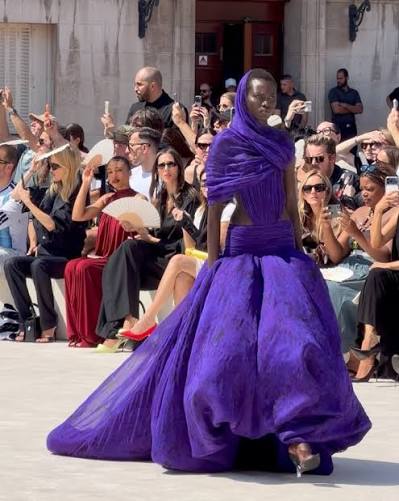
For anyone who doesn't buy couture — which is to say, nearly everyone — Piccioli's debut still matters as a preview. Design signatures introduced on a couture runway tend to filter down within two to three seasons into the ready-to-wear collections, and eventually into the accessible accessories and fragrance lines that make up the overwhelming majority of a luxury house's sales. The neon palette, the sculptural coat silhouettes and the puff-sleeve volume seen in Paris are reasonable early indicators of where Balenciaga's more wearable output is headed over the next year or two — a meaningfully different visual direction than the brand's recent past, and one likely to show up first in outerwear and eveningwear before working its way into everyday pieces.
It's also, more broadly, a signal about where luxury fashion's mood is heading in 2026: after several seasons dominated by "quiet luxury" restraint, Piccioli's maximalist, color-forward debut adds further momentum to what much of the industry is now calling a shift toward "loud luxury" — voluminous silhouettes, saturated color and unapologetic drama replacing the muted minimalism that defined the earlier part of the decade. If Piccioli's Balenciaga era holds to the tone he set last week, expect that shift to keep accelerating.
Published By | Features Editor