KHARTOUM, Sudan
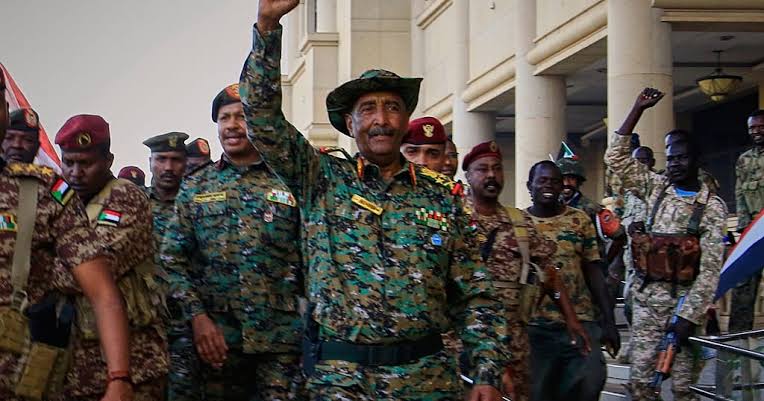
Sudanese army chief Abdel Fattah al-Burhan on Thursday received credentials from newly arrived ambassadors of Saudi Arabia, the Democratic Republic of Congo and Somalia at the Republican Palace in Khartoum — the first time he has performed such diplomatic duties there since Sudan's civil war erupted in April 2023. The ceremony, modest as it may appear, is a deliberate signal from Sudan's military-led government that it intends to project normalcy and sovereign authority from the capital even as the war with the paramilitary Rapid Support Forces grinds into its fourth year with famine spreading, millions displaced and repeated international peace efforts stalled.
The symbolism is not lost on Sudan-watchers. Khartoum was largely emptied of foreign diplomatic activity after RSF fighters and the army turned the capital into a battleground in the war's early months; al-Burhan's return to hosting credential ceremonies at the Republican Palace suggests his government believes it has regained enough control of the city to resume the trappings of normal statecraft. But the gesture arrives against a backdrop that is anything but normal: a war that has displaced more than 10 million people inside Sudan, left over 30 million in urgent need of humanitarian assistance, and produced famine conditions in parts of Darfur that aid agencies say are among the worst in the world.
Background: A War Without a Front Line
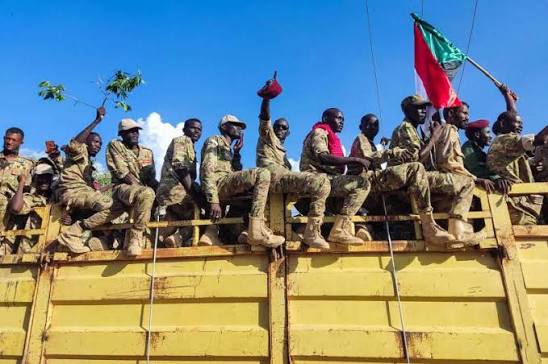
The conflict pits the Sudanese Armed Forces under al-Burhan against the RSF, led by Mohamed Hamdan Dagalo, widely known as Hemedti, a former ally-turned-rival with whom al-Burhan jointly staged a 2021 coup before their alliance collapsed into open warfare in April 2023. What began as a power struggle in Khartoum has since fractured the country along shifting front lines, with the RSF consolidating control over much of Darfur in the west while the army has held on to — and in recent months regained — territory in central Sudan.
The war's toll has been especially severe in North Darfur. El Fasher, the region's last major army-held stronghold, fell to the RSF in October 2025 after a prolonged siege, with at least 127,000 people fleeing the city as it fell. Some 400,000 people who fled to the town of Tawila are now receiving support from the World Food Programme. The Integrated Food Security Phase Classification, the global authority on hunger crises, confirmed Famine — IPC Phase 5, the most severe classification — in El Fasher and the town of Kadugli, with 20 additional areas across North, South and East Darfur, along with West and South Kordofan, assessed as being at risk of famine as displaced populations continue to arrive. As of September 2025, an estimated 21.2 million people, or 45% of Sudan's population, faced high levels of acute food insecurity at IPC Phase 3 or above, including 375,000 people classified in Phase 5, the catastrophe tier.
Key Developments This Week
Even as al-Burhan staged his diplomatic reset in Khartoum, fighting continued elsewhere. Sudan's air defenses intercepted a drone attack the RSF launched west of Omdurman, part of the greater Khartoum metropolitan area, in the days surrounding the credentials ceremony. The Sudanese Armed Forces, for their part, carried out a fresh round of airstrikes targeting what they described as smuggling convoys carrying Emirati-supplied materiel for the RSF as the convoys moved from southeastern Libya toward Sudanese territory — an allegation consistent with long-standing accusations from Khartoum that the United Arab Emirates has armed the RSF, a claim the UAE has repeatedly denied.
The immediate backdrop to this week's diplomatic and military activity is a major army advance in late July, when Sudanese forces regained full control of the Al Sadarat highway, a strategic 350-kilometer route linking Khartoum to the besieged city of El-Obeid in North Kordofan, after two days of heavy fighting with the RSF. The advance pushed RSF fighters away from El-Obeid, which they had been attempting to encircle, and opened a faster supply route for the army to move troops, weapons, fuel and other materiel to the city, replacing a longer alternative route through White Nile State. The RSF responded within hours, striking El-Obeid with drones even as the army consolidated its hold on the highway — a pattern of tit-for-tat escalation that has characterized much of the war's recent phase.
Further west in Darfur, the humanitarian toll of the fighting was underscored on Aug. 2, when a Sudanese army drone struck a traditional court in the village of Garra al-Zawaya, near Kabkabiya in North Darfur — territory under RSF control — killing at least 35 people and wounding several others, according to the rights group Emergency Lawyers, which has documented abuses by both sides of the war. Witnesses told AFP the court session was being held under a tree, with local community leaders gathered to hear tribal and land disputes, when the strike hit; among the dead were four tribal leaders and two RSF commanders. Garra al-Zawaya sits roughly 150 kilometers west of El Fasher, the army's last stronghold in Darfur before it fell to the RSF in October 2025. U.N. investigators have said RSF violence during the siege and capture of El Fasher bore "the hallmarks of genocide," and the U.N. says more than 1,000 civilians were killed in drone strikes across Sudan in the first five months of 2026 alone, as both sides have increasingly turned to drone warfare.

The Stalled Peace Process
Diplomatic efforts to end the war have repeatedly foundered despite months of engagement by a coalition of outside powers known as the Quad — the United States, Saudi Arabia, the United Arab Emirates and Egypt. In September 2025, the four governments jointly announced a roadmap calling for a three-month humanitarian truce leading to a permanent ceasefire, followed by a nine-month political process to install a transitional civilian-led government. By February 2026, U.S. presidential advisor Massad Boulos announced that the Quad had reached what he described as a peace document acceptable to both warring parties, tied to a goal of raising $1.5 billion in support for the war-torn country.
That optimism proved premature. Al-Burhan has publicly rejected the Quad initiative, and the RSF has resisted committing to a ceasefire, having believed — at least at the time — that it was on the cusp of a decisive victory in El Fasher, which has since fallen under its control. U.N. Personal Envoy for Sudan Pekka Haavisto has continued shuttle diplomacy aimed at de-escalation, holding talks with Sudanese Foreign Minister Muhieddine Salem and separately with Hemedti to explore what the U.N. has described as "practical steps" toward reducing violence, though no breakthrough has yet materialized.
Analysis: Normalization Without Resolution
Al-Burhan's decision to resume formal diplomatic functions in Khartoum should be read less as a sign the war is winding down than as an effort to consolidate legitimacy for his military-led government at a moment when the RSF has demonstrated it can still inflict significant battlefield and symbolic damage, including drone strikes reaching the capital's outskirts. By hosting ambassadors from Saudi Arabia, the DRC and Somalia — three states with no direct stake in Sudan's internal battle lines but whose diplomatic presence lends an air of international acceptance — al-Burhan is signaling to both domestic and foreign audiences that his administration, not any transitional or rival authority, represents the Sudanese state.
That posture complicates the Quad's peace architecture, which envisions a negotiated transition to civilian rule rather than a consolidation of military authority on either side. Each battlefield gain — the army's recapture of the Al Sadarat highway, the RSF's continued hold over El Fasher and much of Darfur — hardens the incentives for both sides to keep fighting rather than negotiate from a position they perceive as temporary. Analysts who track the conflict have noted that as long as both the SAF and the RSF retain access to outside military and financial backing, neither faces sufficient pressure to accept a ceasefire that would freeze the war along lines each considers unfavorable.
What to Watch Next
The coming weeks are likely to bring further contests for control of supply routes into contested Kordofan and Darfur towns, with El-Obeid remaining a flashpoint given its strategic value to both sides following the army's highway breakthrough. Diplomatically, attention will turn to whether Haavisto's engagement with both Salem and Hemedti yields any concrete de-escalation steps, and whether the Quad can revive momentum behind its stalled roadmap now that El Fasher's fall has altered the RSF's calculus. Humanitarian agencies, meanwhile, are expected to continue warning that famine risk will keep expanding into new areas as displaced populations move into already strained host communities — a crisis that shows no sign of easing regardless of the diplomatic choreography now playing out in Khartoum.
Published By | News Editor