Written By | Fashion and Design Desk
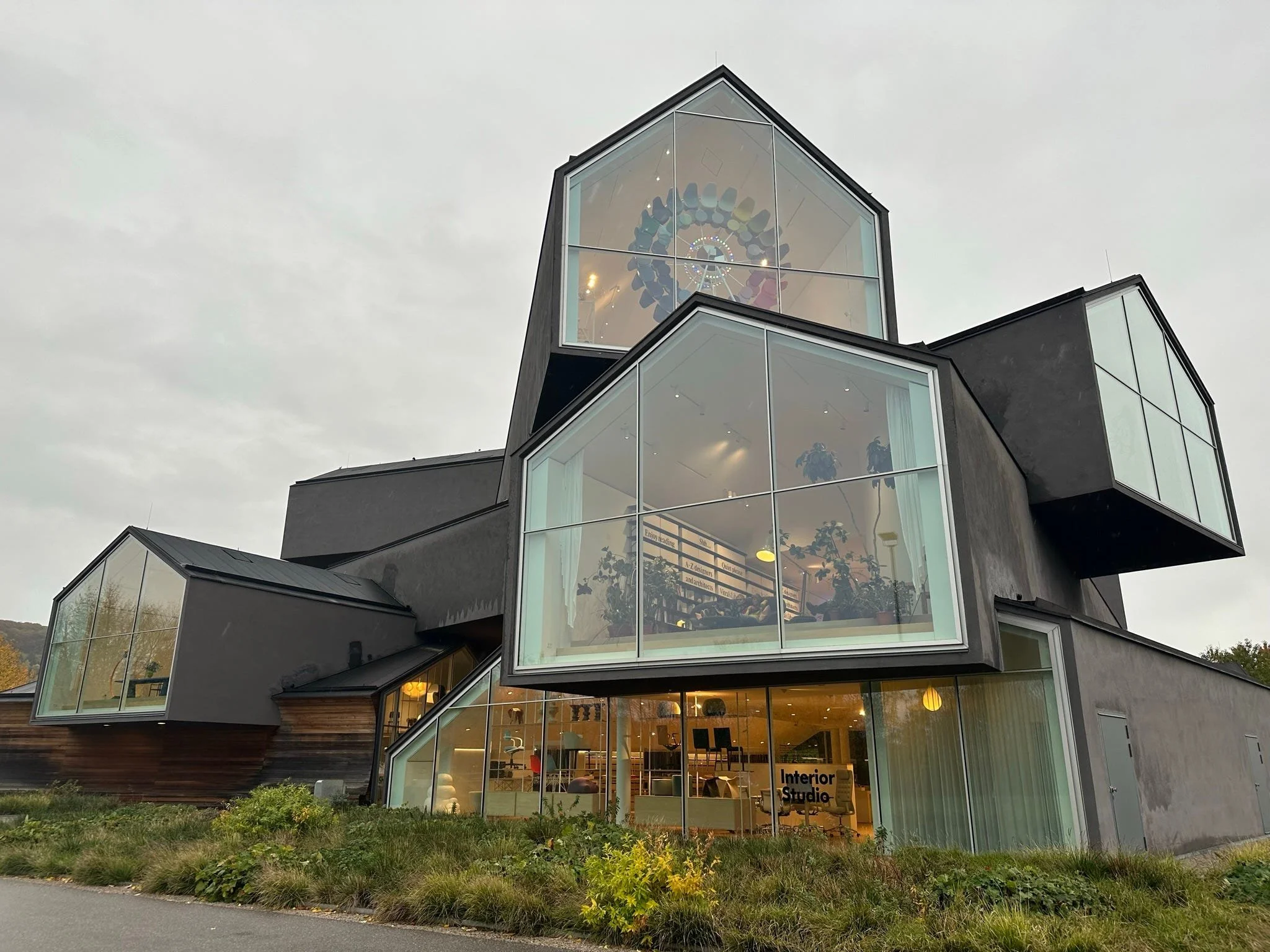
A new exhibition at the Vitra Design Museum, opening today, brings the Sri Lankan master's tropical modernism to Europe, showing how buildings can breathe with landscape, climate and craft
WEIL AM RHEIN, Germany,
Across much of Asia, Geoffrey Bawa is something close to a hero. Ask architects in Japan, China or India and they will name him alongside the great modernists of the 20th century. In Europe, his name is far less familiar. That may change after today, when 'Geoffrey Bawa: Architecture for the Senses' opens at the Vitra Design Museum near Basel, the first major retrospective of the Sri Lankan architect's work in two decades.
The exhibition runs until February 28, 2027, before travelling to M+, the museum of visual culture in Hong Kong, from June 2027. It is a co-production of the Vitra Design Museum, M+, Germany's Wüstenrot Foundation and the Geoffrey Bawa Trust, and brings together more than 250 objects, including drawings, models, furniture, archive film, artworks and photographs.
The Lawyer Who Became an Architect
Born in 1919 to a family of mixed Asian and European heritage, Bawa first trained as a lawyer. He came to architecture late, graduating from London's Architectural Association in 1957 before returning home to set up his practice. Over five decades he worked on more than 200 projects, some preserved, some demolished and several never built, until his death in 2003.
His achievement was to take the principles of modernism, including open plans, clean structure and honest materials, and fuse them with Sri Lanka's building traditions, its colonial history and, above all, its climate. The result, often called tropical modernism, produced buildings that blur inside and outside: verandas instead of walls, courtyards open to the rain, and gardens treated as rooms.
Four Rooms, One Sensibility
The exhibition is organised into four rooms, according to Wallpaper*. The first begins with Bawa's own homes: Number 11, his townhouse in Colombo, and Lunuganga, the country estate in Bentota that he reshaped for decades. Both were lifelong projects in which he designed the gardens as carefully as the buildings.
The second room places his work in the political and social context of Sri Lanka, highlighting public projects such as St Thomas' Preparatory School and the New Sri Lankan Parliament at Kotte, whose copper roofs appear to float above a lake. The third, titled 'Weaving art into architecture', explores his collaborations with artists and craftspeople. Shayari de Silva of the Geoffrey Bawa Trust, a co-curator, told Wallpaper* that when you see a batik panel overhead in a Bawa building, it is the ceiling, not art hung on one.
The final room zooms out to whole sites, through aerial views and drawings, including the Kandalama Hotel in Dambulla, a building so deeply planted into its rocky hillside that it is often cited as an early model of ecological hotel design.
A Show Designed to Be Felt
True to its title, the exhibition aims to be immersive rather than academic. The scenography is by Lina Ghotmeh, the Paris-based Lebanese architect behind the 2023 Serpentine Pavilion, who created a warm, enveloping environment inside Frank Gehry's 1989 museum building. It features newly commissioned photographs by Iwan Baan, one of the world's best-known architectural photographers, capturing Bawa's most celebrated buildings today.
Vitra Design Museum director Mateo Kries told Wallpaper* the team wanted to convey the intensity of the places where Bawa built, where colours are vivid and fast-growing nature takes over almost immediately. He added that Bawa shows, better than almost anyone, how modern architecture connected with local and even colonial traditions.
The curatorial team includes exhibition curator Johan Deurell, Ikko Yokoyama of M+ and de Silva, reflecting a deliberate partnership between European and Asian institutions.
Why Bawa Matters Now
Bawa's work feels strikingly current. As cities overheat and air-conditioning drives up energy use, architects worldwide are revisiting passive design: shade, cross-ventilation, planted roofs and buildings that work with climate rather than against it. Bawa was practising all of it decades ago, not as a technical checklist but as a way of making spaces that feel good to be in.
His collaborative approach also resonates. At a time when craft is enjoying a revival in design, his habit of building textiles, murals and reliefs into the structure of a building offers a model of architecture as a shared act of making.
The show also reflects a wider effort to rebalance architectural history. For much of the last century, the story of modernism was told largely through European and American figures such as Le Corbusier, Mies van der Rohe and Frank Lloyd Wright, with architects from the Global South treated as regional footnotes. Recent exhibitions and scholarship have pushed back on that view, and a retrospective at one of Europe's leading design museums, co-organised with a major Asian institution, is part of that shift. Kries was candid that Vitra has no commercial interest here: the company does not produce Bawa furniture, and Bawa never built outside South and Southeast Asia. The motivation, he suggested, is simply that the story deserves a wider audience.
What This Means for You
If you are in or near Basel before the end of February, the exhibition is an easy day trip; the Vitra Campus sits just across the Swiss border in Weil am Rhein, Germany, and also houses buildings by Zaha Hadid, Tadao Ando and Herzog & de Meuron. For travellers heading to Sri Lanka, the show is a primer: Lunuganga is now run as a hotel, where guests can stay in rooms Bawa designed.
And for anyone planning a home, Bawa's ideas scale down well. Frame a view rather than block it. Let a courtyard or veranda do the work of a hallway. Plant close to the house. Choose materials that age gracefully in your climate. You do not need a tropical estate to design for the senses.
The Last Word
Great architecture is usually photographed, then admired from a distance. Bawa's was meant to be walked through, smelled after rain and felt in the cool of a shaded corridor. Bringing that to a museum in southern Germany is an ambitious task. By all early accounts, the Vitra Design Museum has pulled it off, and European audiences now have five months to discover what much of Asia has known for decades.



