Written By | Staff Writer

Southern Africa's last absolute monarchy leans on customs-union transfers, sugar and textiles as diversification pressure mounts
Eswatini, the small, landlocked kingdom wedged between South Africa and Mozambique, posted one of Southern Africa's stronger growth performances in 2025 — yet almost every line of its macroeconomic story carries the same footnote: for how much longer. Real GDP growth accelerated from 2.8% in 2024 to an estimated 4.6% in 2025, according to the African Development Bank's African Economic Outlook 2026, with real GDP per capita growth rising to 3.5% from 2.0% over the same period. The International Monetary Fund, whose staff mission visited Mbabane from July 23 to August 5, 2026 to conduct the 2026 Article IV Consultation, put 2025 growth even higher, at 4.9%, crediting large public and private investment projects. Both institutions agree on the trajectory that follows: growth is set to moderate, to roughly 4.0% in 2026 and 3.5% in 2027, as higher fuel costs, weaker global demand, tighter financing conditions, weather-related disruptions and an easing of investment activity take hold.
A Recovery Built on a Narrow Base
On the supply side, the AfDB attributes 2025's rebound mainly to services, with construction also recovering as delayed public infrastructure projects finally advanced. Manufacturing grew only modestly amid stable regional trade, agriculture partially recovered on improved rainfall and irrigation, and mining stayed weak. On the demand side, growth was driven by higher public and private investment and a recovery in household consumption. Monetary policy offers Eswatini little room to maneuver: as a member of the Common Monetary Area, its currency, the lilangeni, is pegged one-to-one to the South African rand, and the Central Bank of Eswatini held its policy rate at 6.75% through 2024 and 2025. Inflation eased from 4.0% in 2024 to 3.1% in 2025 on lower food and fuel prices, but elevated non-performing loans and cautious bank lending have constrained how much of that stability reaches private-sector credit.
The fiscal accounts tell a less comfortable story. The deficit widened from 1.7% of GDP in 2024 to 2.8% in 2025, driven by higher wage spending and a drop in Southern African Customs Union (SACU) transfers, financed largely through domestic borrowing. The AfDB projects the deficit will widen further, to 6.4% of GDP in 2026, before narrowing to 5.4% in 2027, as capital spending and wage pressures continue to outpace a subdued revenue base. Public debt, still modest by regional standards, is on a rising path: it climbed to roughly 45% of GDP by the end of fiscal year 2025/26 and is projected to reach about 50% by the end of FY2026/27. The current account surplus, which narrowed to 1.3% of GDP in 2025, is expected to flip into a deficit of around 1.0% of GDP in 2026, widening to 1.2% in 2027 as import-intensive capital spending accelerates.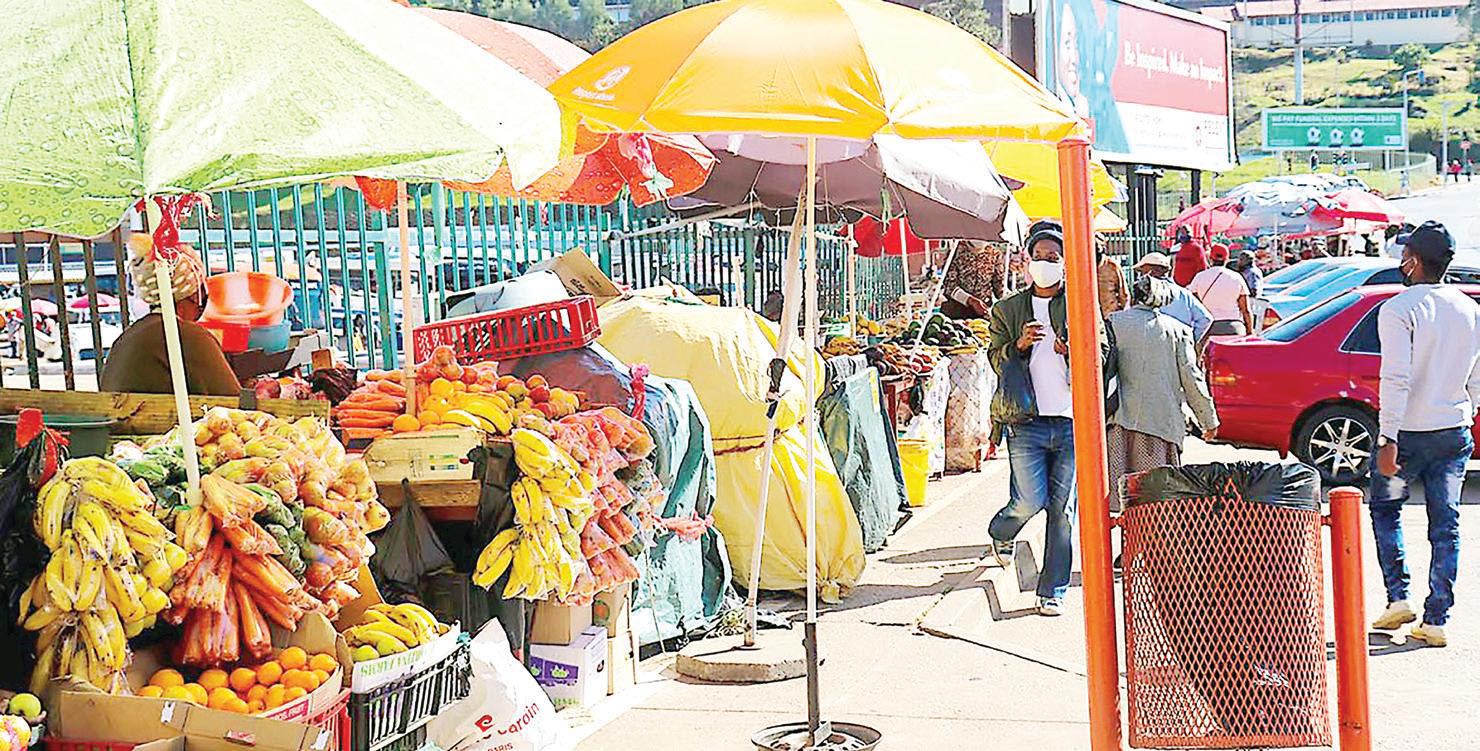
The SACU Dependence Problem
Underneath these numbers sits a structural vulnerability that recurs in almost every AfDB and IMF assessment of Eswatini: its heavy reliance on Southern African Customs Union revenue-sharing transfers, which move in line with South Africa's trade cycle and are notoriously volatile. SACU receipts fell an estimated 21% in 2025, a swing large enough on its own to explain much of the year's fiscal deterioration; a partial rebound in SACU inflows is expected to help narrow the budgeted deficit to 5.9% of GDP in FY2026/27, even as the AfDB's calendar-year deficit projection continues to widen. The gap between the two institutions' precise figures — a function of different fiscal-year conventions and forecast vintages — matters less than the shared conclusion: a government budget this exposed to a regional customs pool it does not control is a government budget that cannot plan with much confidence.
The IMF's Article IV mission statement, issued August 5, 2026, frames the medium-term challenge in similar terms, while noting the downside risks are compounding rather than isolated: delays in project execution, climate shocks, volatile SACU receipts and knock-on effects from the Middle East conflict on fuel prices all sit on one side of the ledger. On the other side, the AfDB points to faster infrastructure delivery, stronger domestic revenue mobilization — including digital tax reforms and improved public investment management — and diversification of trade and financing sources, among them green bonds and revenue-backed instruments linked to tolls and fuel levies, as the levers available to build resilience.
Sugar and Textiles: The Export Backbone Loses Its Safety Net
Manufacturing in Eswatini has long meant two things above all: sugar processing and textile and garment production, much of the latter built around duty-free access to the United States market under the African Growth and Opportunity Act (AGOA). That access lapsed in September 2025 when AGOA's authorization expired, and although Eswatini secured a Reciprocal External Tariff of just 10% on exports to the United States — a comparatively favorable outcome — the episode has sharpened a diversification debate that had been simmering for years. The textile sector supports an estimated 20,000 jobs concentrated in the industrial hubs of Matsapha, Nhlangano and Big Bend, and remains one of the country's most significant sources of formal employment outside the public sector. With South Africa simultaneously tightening its own localization requirements for regional supply chains, Eswatini's manufacturers face pressure from two directions at once: a less certain US market and a more protective neighbor that has historically absorbed a large share of regional trade.
In his Speech from the Throne, King Mswati III — whose government retains full executive authority in a system that bans political parties from contesting elections — pledged what he described as decisive action to drive growth, create jobs and expand local and regional value chains, setting out a national vision built around what officials are calling economic transformation and shared development. In practical terms, that vision points toward agro-processing, information and communications technology, and renewable energy as the sectors meant to broaden an industrial base still overwhelmingly dependent on sugar and garments. Whether that diversification materializes at meaningful scale, or simply adds a few new lines to an economy still anchored by SACU transfers and two commodity-adjacent export sectors, is likely to be the defining question for Eswatini's economy over the rest of the decade.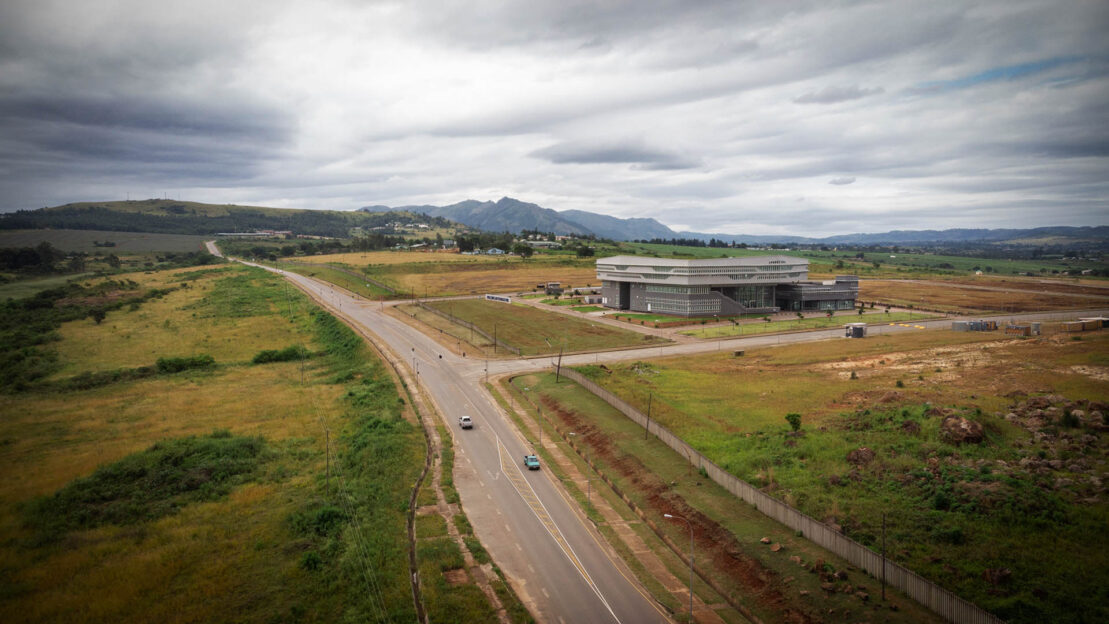
Poverty, Inequality and a Demographic Dividend Still Unrealized
Faster per-capita growth in 2025 has not yet translated into broad-based inclusion. The AfDB estimates that 34% of Eswatini's roughly 1.3 million people live in extreme poverty, concentrated overwhelmingly in rural areas, while separate poverty-line estimates cited in recent country assessments put more than half the population below the international poverty threshold. High unemployment and limited structural transformation persist alongside the growth recovery. The government's response has centered on expanded social grants, community outreach programs, rural agricultural empowerment initiatives, and youth and women's skills programs, framed explicitly around reducing inequality and harnessing the country's demographic dividend — a working-age population that, on paper, offers Eswatini the same growth opportunity many of its regional peers are also racing to capture.
The country's health burden compounds the challenge. Eswatini has for years recorded the world's highest HIV prevalence among adults aged 15 to 49 — estimated at 25.4% by international agencies — with the burden falling disproportionately on women and adolescent girls, whose infection rate among 15-to-24-year-olds has been measured at roughly 12.2%. That burden shapes labor-force participation, household savings behavior and public health spending in ways that ripple through the same fiscal accounts already strained by SACU volatility. On financial inclusion, Eswatini adopted a National Financial Inclusion Strategy covering 2023 to 2028, and mobile money has expanded access at the margins — research shows mobile money users are roughly 19% more likely to hold a formal bank account — but the evidence so far suggests mobile money has not meaningfully reached the population structurally excluded from the formal financial system, a gap the new strategy is explicitly designed to close.
Outlook
Eswatini's 2026 economic story is therefore one of a government trying to build fiscal and structural resilience faster than its two chief vulnerabilities — SACU revenue volatility and AGOA-dependent manufacturing — can erode it. The AfDB's prescription is squarely institutional: stronger domestic revenue mobilization through digital systems, deeper capital markets, and bankable public-private partnerships to crowd in private capital for climate-resilient infrastructure. The IMF's Article IV consultation, whose full staff report is expected to follow the August 2026 mission, will offer the next formal read on whether Mbabane's fiscal consolidation plans are credible enough to stabilize debt before it reaches the 50%-of-GDP mark now projected for the coming fiscal year. For a kingdom of 1.3 million people whose growth has historically tracked decisions made in Pretoria and Washington more than in Mbabane, the test of the diversification push announced from the throne will be whether it can shift that balance even modestly in the years ahead.



