Written By | International News Agencies
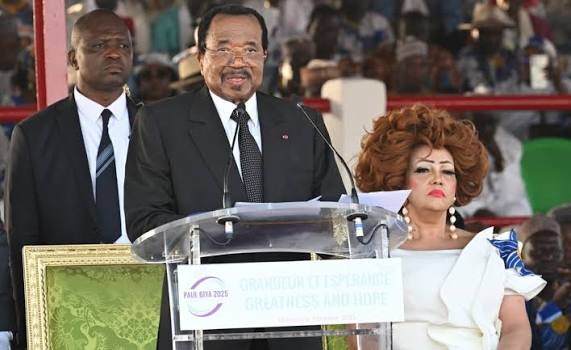
Biya left Yaoundé on Sunday, June 7, for what a presidential communiqué described as a short private stay in Europe
YAOUNDÉ, Cameroon
Two weeks after President Paul Biya returned to Yaoundé from a 74-day absence in Europe that his office never fully explained, the constitutional machinery Cameroon built this year to manage his succession remains untouched: the vice presidency created by parliament in April is still vacant, no appointment has been announced, and the country's legal community is openly arguing about whether the emptiness of that office would paralyse the very procedure meant to handle a presidential vacancy.
That is the political fact of Cameroon in early September 2026. There is no crisis today. There is a 93-year-old head of state who has governed since Nov. 6, 1982 — longer than any other serving leader in the world — a term that runs to 2032, an untested succession mechanism with nobody in the chair it created, and, increasingly, an audience of ratings agencies and regional central bankers who have started treating all of this as a financial variable rather than a constitutional abstraction.
The absence, and what it revealed
Biya left Yaoundé on Sunday, June 7, for what a presidential communiqué described as a short private stay in Europe. He returned on Thursday, Aug. 20 — 74 days later, though at least one international outlet counted 73. The presidency has never named the destination; press reports place him in Geneva, and the presidency's own arrival photographs were filed under that name.
The presidential aircraft landed at Yaoundé-Nsimalen shortly after 4 p.m., and Biya reached the Palais de l'Unité around 6 p.m., met at the foot of the steps by Prime Minister Joseph Dion Ngute and the secretary-general of the presidency, Ferdinand Ngoh Ngoh. Thousands of governing-party supporters lined the route from the airport. The presidency's own account said those who greeted him had the privilege of shaking his hand and seeing that he "is in perfect health," and the same statement attacked individuals spreading false allegations about his health on social media and what it called certain instrumentalised foreign media.
The combative register of that statement was itself the story. Nearly two and a half months without a public appearance by a 93-year-old president had produced exactly the vacuum the government feared. An opposition lawmaker asked the Constitutional Council to declare the presidency vacant. Communications Minister René Emmanuel Sadi rejected the demand, arguing that only the Constitutional Council can establish a vacancy. A decree purporting to name a vice president circulated on social media during the absence and was dismissed as false. Presidential decrees continued to be signed and official accounts continued to post in Biya's name — reassurance offered in the only currency the presidency has.
Nor was the state idle. On Aug. 4, in the middle of the absence, Biya signed three decrees replacing commanders in four of Cameroon's five joint military regions, appointing Maj. Gen. Hippolyte Ebaka as deputy chief of defence staff and Brig. Gen. Elie Romance Mezui Zo'o as commander of the Rapid Intervention Brigade. Critics read the reshuffle as a consolidation of military control around Biya's Beti-Bulu base. Issa Tchiroma Bakary, the opposition figure now in exile, questioned whether decrees issued from abroad were even lawful.
The vice presidency nobody has filled
On April 4, 2026, parliament sitting in congress voted 200 to 18 to amend the constitution and reintroduce a vice president of the republic. The post is appointed by the president and revocable by him, and its holder would complete the presidential mandate if the office fell vacant. As of Biya's return in late August, no vice president appears to have been appointed.
Cameroonian legal commentators have argued that with the post empty, the vacancy procedure is itself blocked, on the reading that only a vice president would be able to seize the Constitutional Council. That is an analytical claim rather than a settled interpretation, and it has never been tested in practice — which is precisely the problem. The older text is clearer but narrower: under the 1996 constitution, a vacancy arises only on death, resignation or permanent incapacity established by the Constitutional Council at the government's request, after which the president of the Senate acts provisionally.
Even that fallback has been rebuilt this year. Marcel Niat Njifenji left the Senate presidency in March after nearly 13 years and died on April 11, aged 91 by most accounts. He was succeeded by Aboubakary Abdoulaye, the Lamido of Rey-Bouba. Cameroon has therefore replaced its constitutional understudy, created a new understudy above him, and left that new post empty — all within a single year.
The election that preceded it
The constitutional reform did not arrive in a vacuum. Biya was re-elected on Oct. 12, 2025, in a result the Constitutional Council proclaimed on Oct. 27 with 53.66 percent for him and 35.19 percent for Tchiroma. It was his eighth term, and he was sworn in at 92.
Tchiroma rejected the count. Press tallies of the unrest that followed put the death toll at at least 14, with more than 1,200 arrests — figures the government has not confirmed. Analysts writing after those protests argued that suppressing post-election demonstrations would not resolve the succession question underneath them, and that the governing party has no institutional mechanism for selecting a successor, making a future succession crisis likely and potentially destabilising.
The April amendment can be read two ways, and Cameroonians read it both. It is either the first serious attempt in four decades to give the state an orderly transfer mechanism, or it is a device for a designated heir — a post appointed and revocable by the president, filled at a moment of his choosing, inheriting the balance of a term that runs to 2032. Because the chair is empty, both readings remain available, and neither can be disproved.
Why creditors are watching a health rumour
The reason this has moved beyond Yaoundé politics is monetary. Cameroon is one of two sovereigns holding up the external position of the Central African monetary union. Regional central bank projections from July put CEMAC foreign exchange reserves at about 7,962 billion CFA francs by the end of 2026 — roughly 14 billion U.S. dollars, a 25 percent increase — credited mainly to the success of Cameroonian and Congolese Eurobond issues, according to The Rio Times' account of the forecasts. The same projections revised regional growth up to 3.2 percent for 2026 and put external currency coverage at 70.7 percent, against 65.2 percent in 2025.
None of those numbers is comfortable, but all of them are improving, and all of them assume political continuity. A succession that ran through an untested constitutional procedure — with lawyers arguing in real time about whether the Constitutional Council could even be seized — would put that improvement at risk. Cameroonian business press reported in April that the reform was being watched by markets and ratings agencies precisely because an orderly transfer has become a credit variable. That is the practical reason a 74-day trip to Europe mattered to people who have never voted in Cameroon.
The stakes, and what to watch
Cameroon's position is unusual and worth stating plainly: the country has a succession mechanism on paper and nobody in the chair. It has a fallback mechanism in the 1996 text, but the office that fallback runs through changed hands twice this year. It has a governing party with no internal succession procedure. And it has a head of state whose health is a matter of official assertion rather than public evidence, in a system where only an institution he appoints members to can declare his office vacant.
Three things are worth watching. First, whether Biya appoints a vice president — and, if he does, who. An appointment from the Beti-Bulu core would confirm the dynastic reading and probably calm markets while inflaming the opposition; an appointment from outside it would do the reverse. The military reshuffle of Aug. 4 is the best available signal of where the president's trust currently sits.
Second, whether any authority tests the vacancy procedure before it is needed. A reasoned opinion from the Constitutional Council on whether the office can be seized in the absence of a vice president would remove the single most dangerous ambiguity in the system. There is no sign one is coming.
Third, the exile opposition. Tchiroma, who took 35.19 percent by the Constitutional Council's own count and rejected the result, has continued to contest the legality of decrees signed abroad. He has no institutional route to power, which means his influence depends entirely on whether a disputed succession creates a moment when institutional routes stop mattering.
Biya is back at the Palais de l'Unité, and the presidency says he is in perfect health. The country still does not know who follows him, or which procedure would decide it.



