WORLD NEWS
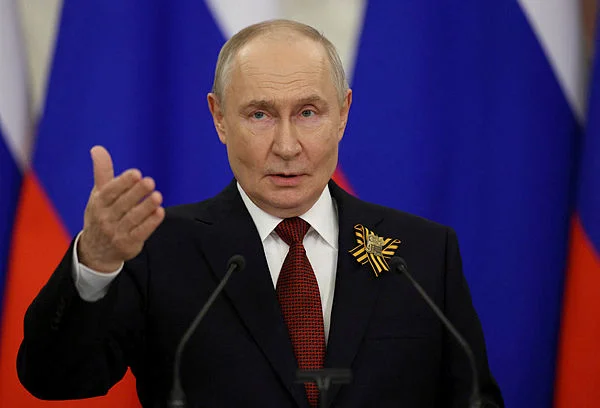
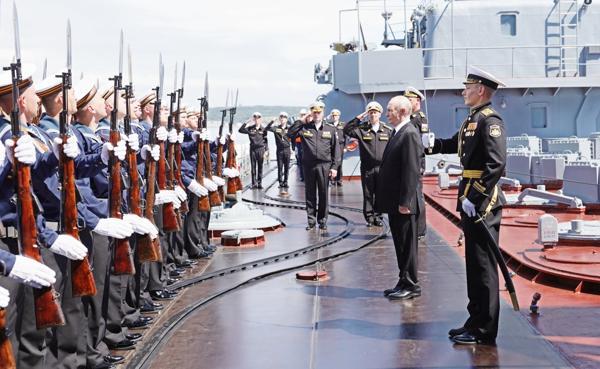
Russian President Vladimir Putin warned on August 12, 2026 that Moscow will seize European-owned or European-flagged ships in retaliation if European governments continue detaining vessels from Russia's so-called "shadow fleet" and selling off their cargo. Speaking aboard the missile cruiser Varyag during the final stage of Pacific Fleet exercises off Sakhalin Island, Putin cast the European seizures as unlawful, calling them "piracy" and "pirate robbery," and said any Russian response would not necessarily be confined to the waters where an original seizure took place. The remarks mark one of the sharpest escalations yet in a slow-building maritime confrontation between Russia and the European Union over the tankers Moscow uses to keep its oil flowing despite Western sanctions.
Background
Since Russia's full-scale invasion of Ukraine in February 2022, the European Union, the United States and their allies have progressively tightened sanctions on Russian energy exports, including a price cap and, from December 2022 and February 2023, embargoes on seaborne Russian crude oil and refined products. In response, Russia built up what maritime analysts and Western governments call a "shadow fleet": a large, loosely organized collection of aging tankers, often uninsured or under-insured, registered under flags of convenience in third countries, and frequently equipped to disable or spoof their transponders to obscure ship-to-ship transfers and true origin of cargo. A Ukrainian government tracking register had identified roughly 1,404 vessels linked to this shadow fleet as of May 2026.
The EU has steadily expanded its sanctions lists to target these ships directly. As recently as July 2024, only around 25 vessels were under EU sanction; by the time the bloc adopted its 21st sanctions package in July 2026, that number had grown to roughly 671 to 692 ships, alongside sanctions on individuals and companies that service or insure them. Crucially, the July 2026 package also gave European member states a new legal mechanism: the right to sell oil and other cargo confiscated from vessels suspected of evading sanctions, rather than simply detaining the ships indefinitely. That change turned sporadic inspections into a potentially lucrative enforcement tool, and it is the immediate backdrop to Putin's threat.
In the weeks before Putin's remarks, European authorities acted on that new authority. French officials seized a tanker after it loaded roughly 600,000 barrels of oil, valued at about $48 million, at the Russian port of Murmansk. Belgian authorities separately detained a tanker in the North Sea on suspicion of shadow-fleet links. Earlier in 2026, the United Kingdom had cleared its own forces to seize shadow-fleet vessels found in UK waters. Taken together, these actions signaled a coordinated shift among European states from monitoring the shadow fleet to actively intercepting and monetizing it — a shift Moscow has now vowed to answer.
Key Developments
Putin's August 12 appearance was itself a piece of political theater: dressed in naval uniform, he traveled to Sakhalin Island to observe the culminating phase of Russia's Pacific Fleet exercises from the deck of the Varyag missile cruiser. In his remarks, he folded the shadow-fleet dispute into a broader message about Russia's threat perception in Asia and the Pacific, telling his audience that NATO was "infiltrating" the Asia-Pacific region, that alliance plans to deploy new weapons systems there threatened Russia, and that the potential for conflict was rising in both the Asia-Pacific and the Arctic.
On the ship seizures specifically, Putin said the European moves to detain and sell cargo from shadow-fleet vessels amounted to "pirate robbery" and warned, "We will be forced to respond in kind." He added that any Russian retaliation would not necessarily be limited to the location of an original seizure, meaning Russian forces could act far from European waters — including, he suggested, in the Pacific Ocean — or wherever Moscow "deems necessary." Pacific Fleet commander Viktor Liina, addressing Putin during the same event, said Russian forces already possess the assets, personnel and interagency coordination needed to "inspect vessels of unfriendly countries," explicitly including ships operating under third-country flags — a description that would cover much of the commercial shipping European nations and their allies rely on.
The same speech touched on Japan, with Putin arguing that Tokyo had imposed sanctions on Russia without provocation, that Russia has no territorial claims against Japan, but that Japan maintains a claim against Russia over the Kuril Islands. While notable in its own right, that portion of the remarks was secondary to the ship-seizure warning, which dominated international coverage of the speech and represents the more immediate flashpoint with the West.
Russian officials and state media have framed the threat as a defensive, proportionate response to what they describe as unlawful European conduct rather than an offensive escalation. European governments, for their part, have not backed away from the enforcement actions that prompted Putin's remarks, and there is no indication as of this writing that any European state has altered its approach to shadow-fleet inspections in response to the threat.
Reactions
The European Union's response has been to downplay the threat while reaffirming its enforcement posture. EU foreign policy chief Kaja Kallas characterized Putin's warning as rhetoric rather than a credible new risk, saying, in effect, that these were "just threats" of a kind Russia had issued before, and that European unity was the bloc's best defense: "If we keep united, we are much stronger." Kallas has separately pointed to the EU's expanding naval and enforcement presence around sanctioned vessels as evidence that the bloc intends to keep boarding and inspecting suspect ships as part of a broader effort to curb the revenue that funds Russia's war in Ukraine.
The episode drew wide coverage across European, Russian-opposition and international outlets — including Euronews, RFE/RL, Al Jazeera, the Moscow Times, the Irish Times, TRT World and others — a reflection of how directly it touches core European interests: energy security, sanctions enforcement, and freedom of navigation. Coverage in Russian state-aligned outlets, by contrast, emphasized Putin's framing of European seizures as "banditry" and stressed the Pacific Fleet's readiness rather than any diplomatic opening.
Notably, reactions so far have been more measured than the rhetoric itself. No European government has publicly announced retaliatory measures against the threat, and no maritime incident directly tied to Putin's warning had been reported at the time of writing. Shipping-industry and insurance-sector commentary has focused on the risk that renewed uncertainty over vessel safety in contested waters could push up insurance premiums for tankers operating anywhere near Russian-linked routes, regardless of whether Moscow follows through.

What's Next
The central question is whether Putin's warning is a deterrent bluff intended to slow European enforcement, or a genuine signal of coming Russian action against European-linked shipping. Much will depend on whether France, Belgium, the UK or other European states carry out further seizures and cargo sales under their new legal authority; each additional action raises the odds that Moscow feels compelled to demonstrate it will "respond in kind" somewhere, potentially against a commercial vessel with tenuous or indirect European ownership.
Analysts will also be watching whether Russia has the practical naval capacity to make good on a broad seizure campaign given its commitments to the war in Ukraine and now to a heightened posture in the Pacific and Arctic. Pacific Fleet commander Liina's comments suggest Moscow believes it does, at least in principle, but translating that capacity into actual boardings of "unfriendly state" shipping — especially vessels under third-country flags, which make up much of global commercial shipping — would be a significant and legally fraught step beyond anything Russia has done to date in this dispute.
There is also a risk of miscalculation at sea, particularly in contested or crowded waters such as the Baltic and Black Seas, where shadow-fleet activity, undersea infrastructure incidents and NATO patrols already overlap. A single confrontational boarding by either side could escalate quickly, drawing in NATO members directly rather than leaving the dispute as a matter of EU civil enforcement. For now, the standoff remains a war of words layered on top of a slow, steady tightening of European sanctions enforcement — but one where both the financial stakes (billions of dollars in oil cargo) and the military symbolism (Putin's uniformed appearance aboard a warship) suggest neither side intends to back down soon.
Published By | News Editor