DUBLIN
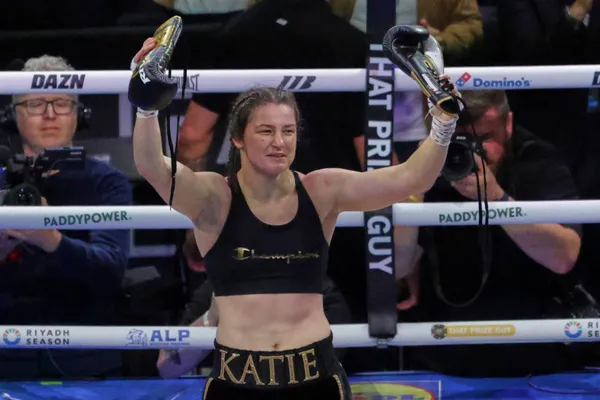
There is a particular kind of silence that only 80,000 people can make. It arrived at Croke Park on Saturday night, just before the first bell, when the floodlights dropped and a woman from Bray walked out into the middle of a stadium built for hurling and Gaelic football and, for one evening, for her.
Katie Taylor had said for years that this was the dream — not Madison Square Garden, not the Olympic podium, but here, on the grass of Ireland's national stadium, in front of the people who had watched her since she was a teenager fighting in leisure centres with her father in the corner. On Saturday she got it, and then she did the hardest thing an athlete can do: she won, and she stopped.
A near-flawless goodbye
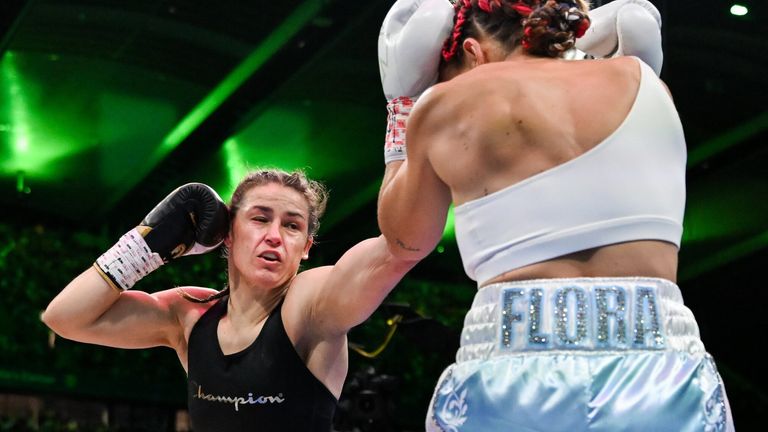
Taylor beat France's Flora Pili by unanimous decision over ten rounds, the judges returning cards of 100-90, 100-90 and 98-91. It was not a brawl and it was never meant to be. It was a demonstration — the jab that has been the most reliable punch in women's boxing for a decade, the footwork that turns opponents into pursuers, the ring generalship that made Taylor almost impossible to trap in a corner.
The win made her the undisputed super-lightweight champion for a second time, and closed her professional ledger at 26 wins and one loss, with six knockouts. In a sport where careers usually end with somebody being stopped on their stool, or fading through three fights too many, Taylor's ending has the tidiness of fiction.
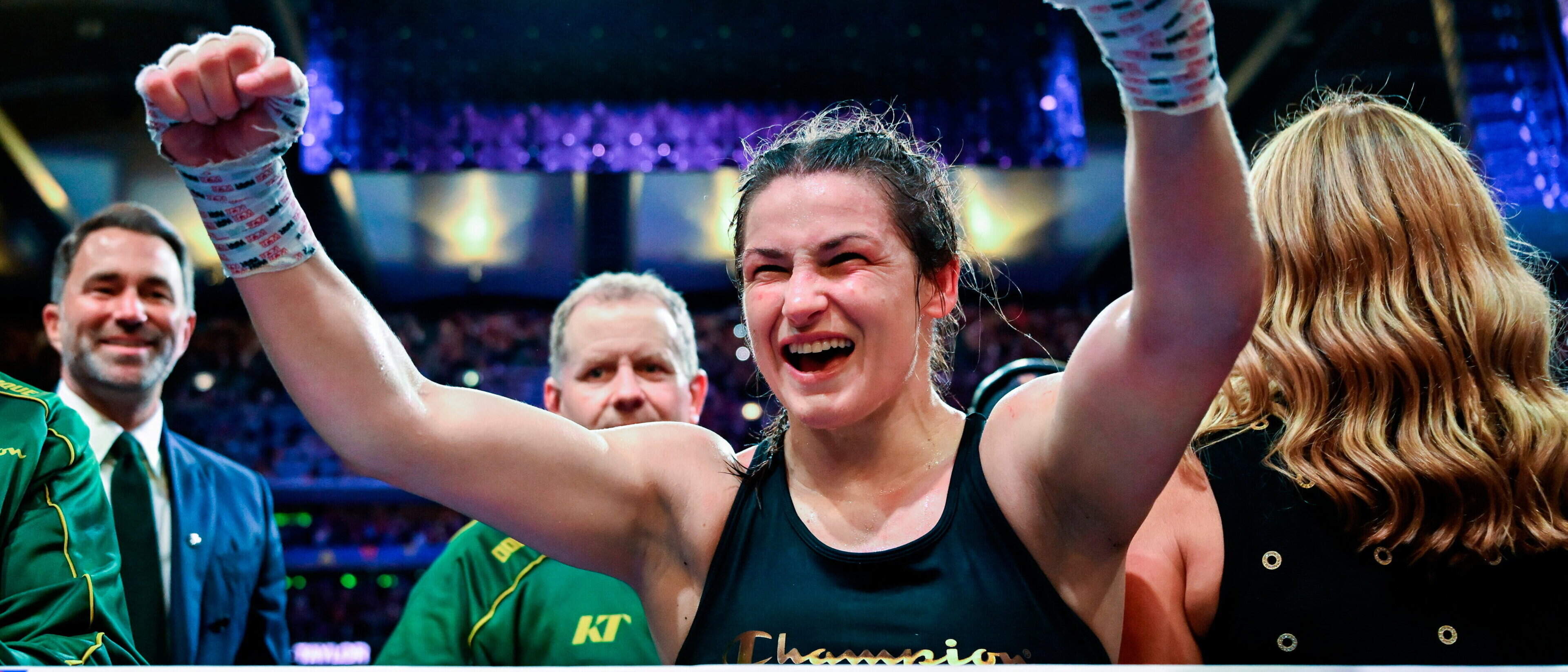
"This was definitely the highlight of my whole career," she said in the ring afterwards, still catching her breath. "I ended my career on top, like every athlete wants to do, on my terms, and I ended it as the undisputed champion. That's exactly how I wanted it to end. It was so important to me all along to end my career well."
Thirty years, three summits
To understand why Saturday mattered beyond one result, you have to run the tape back. Taylor's amateur career culminated in gold at London 2012, in an Olympic Games that had only just decided to let women box at all. Her semi-final and final at the ExCeL arena were played out at a volume British broadcasters compared to a football derby; the sport's inclusion had been contested for years, and Taylor was the argument that settled it.
She turned professional in November 2016 and became undisputed lightweight champion in 2019, holding that status until 2024. Then came the fight that changed the economics of the sport: 30 April 2022, Madison Square Garden, against Amanda Serrano — the first women's bout ever to headline that building. Taylor won a split decision, 97-93 and 96-93 on two cards. Sports Illustrated named it Fight of the Year. The Ring called it Event of the Year. Promoters who had spent a decade insisting women's boxing could not sell tickets discovered, in one night, that it could sell out the most famous arena in the sport.
Taylor herself framed Saturday as the last rung of that ladder. "I didn't think anything could get bigger than London 2012 and then MSG came along," she said. "I didn't think anything could get bigger than that first fight with Serrano — and then here we are at Croke Park."
The stadium as statement
Croke Park is not a neutral venue. It is the headquarters of the Gaelic Athletic Association, a ground with a complicated place in Irish history and a capacity north of 82,000. Staging a women's boxing card there was a gamble that would have been unthinkable when Taylor turned professional — and in the end barely a gamble at all.
That is the practical measure of what she built. Not a title belt, not a highlight reel, but a proof of demand — evidence that a female fighter can carry a national stadium on her name alone, with no male headliner underneath her and no novelty framing around her.
What she leaves behind
The obvious inheritance is structural. Women's world title fights are now ten two-minute rounds by convention rather than exception, undisputed championships are contested and defended rather than theoretical, and the biggest names in the division can headline pay-per-view cards on their own terms. None of that was true when Taylor debuted.
The less obvious inheritance is behavioural. Taylor was, by the standards of modern boxing, almost eccentrically quiet. She did not trade insults at press conferences. She rarely gave interviews that were not about the work. She built an audience through competence rather than provocation, which is the harder route and the more durable one — and a generation of fighters coming up behind her now have a template that does not require them to perform hostility to be paid.
There will be a temptation to talk about a comeback; boxing retirements are famously reversible. But Taylor has been unusually explicit that this was not a soft exit.
What this means for the rest of us
If you follow the sport casually, the practical upshot is a vacancy. The super-lightweight division is now open at the top, and promoters who built cards around Taylor's certainty will spend the next year auditioning replacements — in venues bigger than those fighters would have commanded two years ago. That is Taylor's inflation, and it will outlast her.
If you do not follow boxing at all, there is still something worth taking from Saturday. Taylor's career is one of the cleanest available case studies in what happens when someone insists on a standard for long enough that the institutions around them have to move. She did not campaign for women's boxing so much as she made ignoring it embarrassing.
And there is the smaller, more human lesson in the timing. Athletes almost never choose their last day; injury, promoters or arithmetic choose it for them. Taylor chose hers, announced it in advance, and then went out and won it in front of everyone she had ever fought for. Whatever your field, that is a rare and enviable piece of self-knowledge — recognising the moment when the story is complete, and declining to write a sequel.
The bell that ended the tenth round on Saturday was the last competitive bell of her career. Eighty thousand people stood for it. Very few careers get an ending that good, and almost none of them are earned this deliberately.
Published By | Sports Editor