Written By | Staff Writer
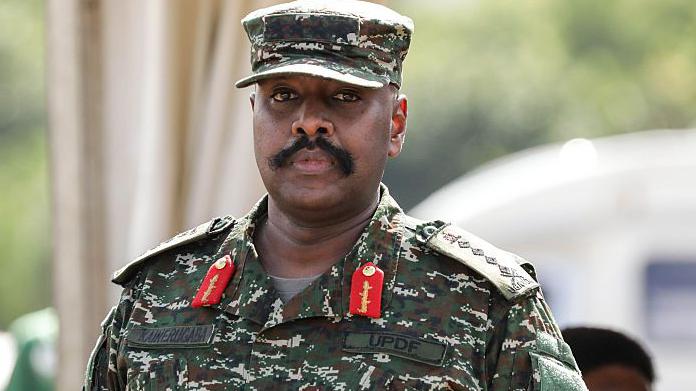
Kainerugaba is Museveni's eldest son and has built a career that runs in parallel through the military and politics.
POLITICS
Uganda's military chief, General Muhoozi Kainerugaba, has formally declared that he will run for president in 2031, ending years of coy signalling and putting the question of who eventually succeeds his 81-year-old father, President Yoweri Museveni, back at the center of the country's political conversation. The announcement, made in a string of posts on X on Tuesday, August 25, came just seven months after Museveni was sworn in for a seventh term following the disputed January 2026 election, and it lands at a moment when Uganda's opposition is at its weakest in years.
What Kainerugaba Said
Writing directly to his followers, the 52-year-old Chief of Defence Forces and senior presidential advisor on special operations said: "I will stand for the highest office in the land in 2031. And we will win by the grace of Almighty God." He went further, predicting a landslide: "With my great father, Mzee's, support I will get 90% in the elections in 2031," using the honorific Ugandans commonly apply to Museveni.
The declaration was unusually direct by Kainerugaba's own standards. He has long been treated as a probable heir to Museveni, but has previously oscillated between denying presidential ambitions, mocking the idea, and openly courting it, often through the same combative social media style that has become his signature. In 2025 he said he intended to contest the 2026 election himself, only to withdraw from that race. This time, by naming a specific year, a specific vote share, and invoking his father's backing directly, he removed most of the ambiguity that has surrounded his intentions for the better part of a decade.
Who Is Muhoozi Kainerugaba
Kainerugaba is Museveni's eldest son and has built a career that runs in parallel through the military and politics. As Chief of Defence Forces, he commands Uganda's armed forces; as head of the Patriotic League of Uganda, a political pressure group he founded, he maintains an organizational base independent of the ruling National Resistance Movement (NRM), the party his father has led since 1986. That independence is notable: Kainerugaba has at times expressed open contempt for the NRM itself, once describing it as the "most reactionary organisation in the country" and saying he does not believe in it as a political vehicle. That tension resurfaced this year in a public clash with veteran NRM figure Maj. Gen. Kahinda Otafiire, after Kainerugaba suggested Otafiire could face arrest, a episode widely read within Kampala's political class as evidence of a generational and ideological rift inside the ruling establishment over who controls the party's future.
Kainerugaba is also one of Uganda's most closely watched, and most controversial, public figures because of his social media conduct. According to Reuters reporting cited by Africanews, he played a significant role in his father's re-election campaign this year, including actions taken against opposition forces and a nationwide internet shutdown during the vote. He has also directed threats at opposition figures, including a widely reported 2024 statement threatening to have opposition leader Kizza Besigye executed.
The State of the Opposition He Would Face
Kainerugaba's declaration lands at a moment when Uganda's two most prominent opposition figures are effectively removed from the political stage. Robert Kyagulanyi, the musician-turned-politician known as Bobi Wine who leads the National Unity Platform (NUP) and ran against Museveni in January, left Uganda for the United States earlier this year, saying he feared for his safety. Kizza Besigye, a four-time presidential candidate and Uganda's most durable opposition figure, has been held since he was seized in Kenya in late 2024 and is now on trial for treason in Kampala, accused of conspiring to overthrow the government by force; the case has featured allegations of a plot involving drones and explosives, testimony from a state witness in Nairobi, and a July court session in which Besigye collapsed and had to be taken to Mulago National Referral Hospital. With Wine abroad and Besigye in the dock, the NUP and the wider opposition have limited capacity right now to mount a unified public response to a succession story unfolding entirely within the Museveni family and the security establishment.
Rights groups have also flagged a broader pattern of restrictions on dissent this year. Human Rights Watch has documented prosecutions of ordinary Ugandans, including a university student sentenced in August to two months in prison under the Computer Misuse Act over a TikTok video critical of Museveni and the Speaker of Parliament, and another man sentenced to twelve months for online statements about Museveni, the Speaker, and Kainerugaba himself. Uganda's authorities, HRW says, continue to clamp down on free expression and peaceful assembly following the January election.
Why It Matters
The immediate significance of Kainerugaba's announcement is less about 2031 itself, which is five years away and by no means guaranteed to happen on schedule, than about what it signals now. Museveni has not said whether he intends to seek an eighth term, and government spokesman Alan Kasujja told Reuters that the president and the NRM would decide "when the time comes." By naming a year and declaring his candidacy so explicitly, Kainerugaba effectively forces that question into the open: either Museveni, who will be 86 in 2031, plans to step aside in his son's favor, or Kainerugaba is positioning himself in competition with his own father's undecided plans, or with whoever else the NRM might eventually put forward.
For Uganda's ruling coalition, the declaration also sharpens simmering tensions between Kainerugaba's personal political vehicle and the NRM's institutional structures, exactly the kind of rift that surfaced in his clash with Otafiire. Analysts who track Ugandan succession politics, including contributors to Foreign Policy and The Africa Report, have argued for months that Museveni appears to be preparing a handover to his son, pointing to Kainerugaba's rapid rise through the military hierarchy and his growing public political role. A formal declaration of candidacy, even one five years out, gives that thesis a concrete data point.
What to Watch Next
Several threads are worth tracking in the coming weeks and months. The first is how the NRM's old guard responds, whether senior party figures publicly back Kainerugaba's bid, stay silent, or push back the way Otafiire appears to have done. The second is whether Museveni himself addresses the succession question directly, something he has so far avoided doing. The third is the trajectory of Besigye's treason trial, which continues in Kampala and remains the most visible test of how the state is treating organized opposition heading into this new succession phase. And the fourth is whether Bobi Wine and the NUP, from exile and from the courtroom respectively, find any way to reassert themselves into a debate that, for now, is being conducted almost entirely on Kainerugaba's terms.



