Written By | Sports Desk
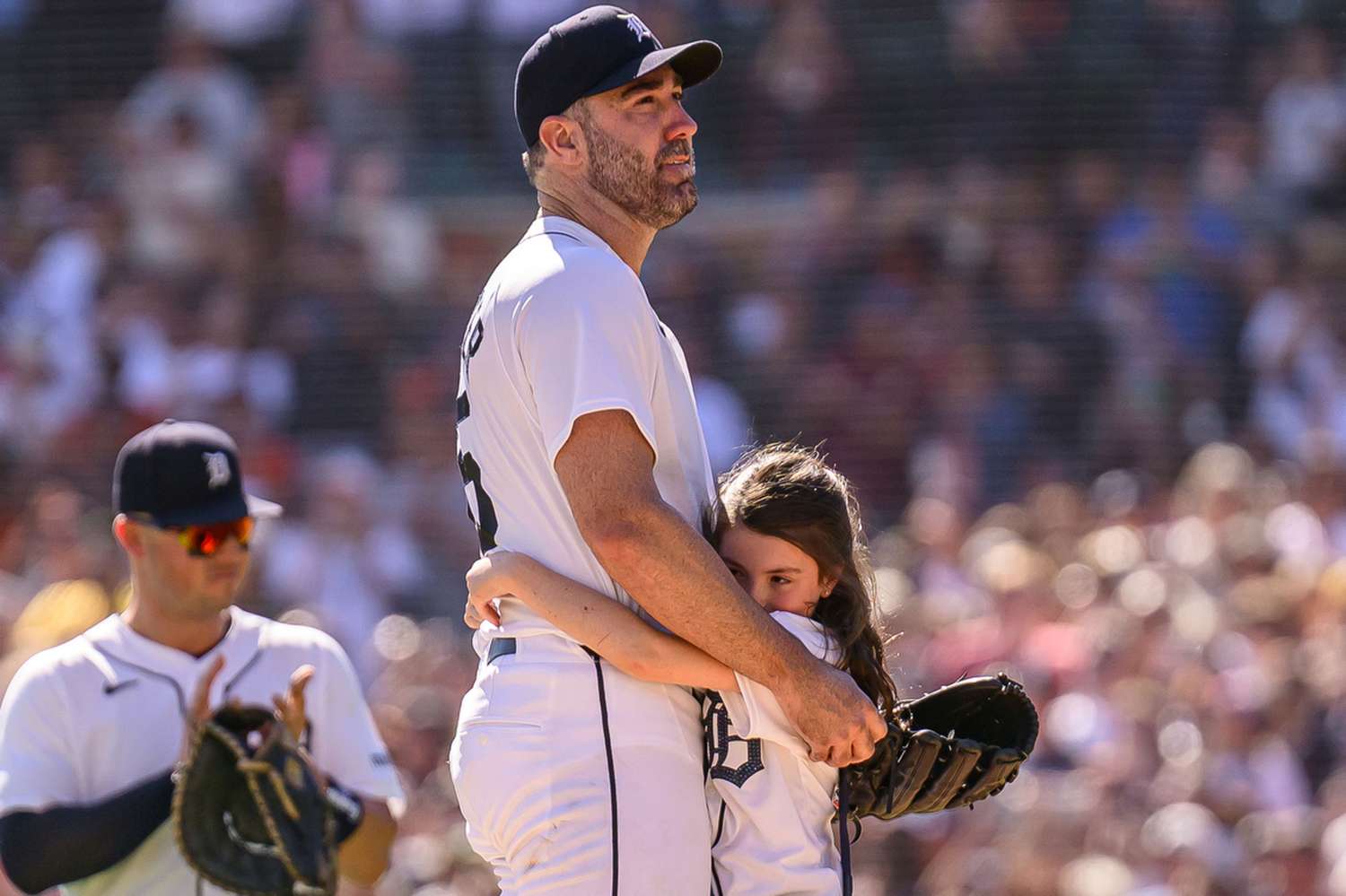
Six months without a big-league outing, a hamstring that never fully healed, and still he found 95 mph one last time at Comerica Park. Then his seven-year-old ran to the mound.
DETROIT
For days, the Detroit Tigers had joked about sending Justin Verlander off like Billy Chapel, the fictional, fading Tigers ace Kevin Costner played in the 1999 film For Love of the Game, who throws a perfect game in the last start of his career. On Saturday, reality came remarkably close.
In the 557th and final start of a 21-season career, Verlander worked 5 1/3 innings against the Pittsburgh Pirates, struck out six, allowed two runs on a pair of solo home runs and, at 43, reached back for a 95-mph fastball he had been chasing since spring training. When manager A.J. Hinch came out to take the ball in the sixth, it was not a coach or a catcher who met the pitcher on the mound. It was his seven-year-old daughter, Genevieve, sprinting from the first-base side for a long, tearful embrace in front of a sellout crowd.
Then, in case the afternoon needed a final flourish, rookie Eduardo Valencia hit a two-run walk-off homer in the ninth to give Detroit a 4-3 win.
A Start Nobody Could Predict
The odds were stacked against a vintage performance. Verlander re-signed with the Tigers last winter for a homecoming season, but hip and hamstring problems wiped out almost all of it; Saturday was only his second start of 2026. He had not faced an opposing hitter since June, and his ramp-up consisted of a 21-pitch simulated game in which, he admitted, his fastball topped out at 92. In July he announced this would be his final season.
It was also his first start as a Tiger at Comerica Park since August 2017, just before the trade that sent him to Houston. Fans arrived early, many wearing Verlander jerseys that had clearly been in closets for years. Friday night the club staged a ceremony in his honor, and Genevieve threw the ceremonial first pitch to her father.
The headphones that once defined his pregame routine stayed off this time. "The vibe in the stadium, from the second I walked out there, was just really incredible," Verlander said afterward, adding that it brought back memories of the nights when the ballpark was "absolutely raucous."
Guile, Adrenaline and One More Strikeout Pitch
Pirates manager Don Kelly, a former Verlander teammate, stacked four left-handed hitters at the top of his lineup to test the old man. Verlander retired all of them. He opened the second inning by getting Oneil Cruz to chase a slider for strikeout No. 3,555 of his career. Moments later, rookie Konnor Griffin singled; Griffin was not yet born when Verlander made his big-league debut in 2005. Catcher Dillon Dingler then threw Griffin out trying to steal, a small moment that visibly fired up the pitcher, who had warned Dingler before the game that he would be slow to the plate.
The radar gun lit up with 95 on a two-strike fastball in the third. Brandon Lowe finally broke up the shutout with a first-pitch homer leading off the fourth, and Jacob Gonzalez punished a hanging curveball for another solo shot in the fifth. In between, Verlander retired five straight batters, three by strikeout, one on a called third strike from plate umpire Laz Diaz, who is also retiring this season.
"Surreal," Kelly said. "Talk about a competitor, hasn't pitched since March and going out throwing 90-plus pitches, hitting 95." He called the outing "a microcosm of his career."
The Numbers of a Generation
Verlander walks away with a career line that places him among the greatest pitchers of his era: a 266-159 record, 3,561 strikeouts and a 3.33 ERA over 21 seasons. The résumé includes the 2006 American League Rookie of the Year award, a rare 2011 season in which he won both the AL Cy Young and MVP, two more Cy Youngs with the Astros, two World Series rings and three no-hitters. He is widely expected to be a first-ballot Hall of Famer.
Valencia, meanwhile, added his own footnote. According to MLB.com, he became the first Tigers rookie to hit a walk-off home run while trailing since Lou Whitaker on July 28, 1978. "He pitched five innings. He was throwing 95. Oh my God," the rookie said of the man he had just sent home a winner.
Expert Perspective: Why This Farewell Landed
Baseball farewells are often ceremonial: a tip of the cap, an inning or two, a curtain call. Verlander's was different because it was competitive. He insisted he wanted a real outing, not a token appearance, and he got one. Dingler summed up the view from behind the plate: "You knew he was going to give it his all. The way he competed, honestly, it was something I'll never forget."
Verlander, famously hard on himself, allowed that the day met his standard. "Every time I've taken the mound, I give it everything I have until the manager decides to take the ball out of my hand," he said. "I hope that if there's one thing that people remember of me, that's it." He added that when he laid his head on the pillow that night, he expected to feel he had done everything he wanted to do.
What This Means for Fans
For Detroit, the day closed a circle. Verlander was the face of a Tigers era that produced two American League pennants and packed houses, and his return let a new generation of fans see him in the Old English D one last time. For baseball more broadly, it marks the end of a line: pitchers who routinely threw 200-plus innings and carried a staff are vanishing in an age of pitch counts and bullpen games. Verlander's 557 starts are a number few modern arms will approach.
For casual fans, the image that will endure is not a stat line. It is a father, overcome, lifting his daughter at the center of the diamond while his teammates formed a circle around them, and then walking down the dugout steps with his wife and children.
The Final Word
Hollywood gave Billy Chapel a perfect game. Real life gave Justin Verlander something arguably better: one last flash of the fastball, a crowd that remembered, a rookie's walk-off and a hug from his daughter. As MLB.com put it, years from now, when people talk about Vintage Verlander, this is what they will mean.




