World Politics
Background
For the better part of two years, the future of Greenland has been the most awkward question in the Western alliance. Donald Trump returned to the White House insisting that the world's largest island — a self-governing territory of the Kingdom of Denmark with roughly 56,000 residents — was essential to American security, and that the United States should own it. He asked Denmark to sell. He declined, repeatedly, to rule out taking it by force from a NATO ally. Danish and Greenlandic leaders answered, with equal consistency, that the island was not for sale, and condemned reports that American operatives were gathering intelligence there.
The dispute was never really about whether American forces could operate in Greenland. They already do, and have since the Second World War, when the United States occupied the island to keep it out of German hands and to protect North Atlantic shipping lanes. The 1951 Defense of Greenland Treaty formalised that presence and still governs it; under its terms Washington maintains Pituffik Space Base in the island's remote northwest, a node in American and NATO missile warning, missile defence and space surveillance. More than two-thirds of Greenland lies inside the Arctic Circle, astride the shortest routes between Russia and North America. The military logic of an American presence has not been seriously contested in Copenhagen or Nuuk for seventy-five years.
What was contested was sovereignty. And in January 2026 the argument came close to rupturing NATO from within. On 12 January Trump said the United States would own Greenland "one way or another," and administration officials briefed that Washington could act "within weeks." Two days later a high-level working group of American, Danish and Greenlandic officials was convened to test whether American security demands could be reconciled with Danish territorial integrity; participants described the talks as frank but constructive, and acknowledged that the fundamental disagreement was unresolved. By mid-January European governments were dispatching troops and scouting teams to the island, and on 19 January Denmark announced it would send a substantial number of soldiers of its own. A multinational exercise, Operation Arctic Endurance, drew contingents from a dozen European states. In February, Canada and France announced new consulates in Nuuk. Trump eventually ruled out the use of military force at the World Economic Forum in Davos, and discussed a framework with NATO Secretary General Mark Rutte, but the episode left a mark: European capitals had spent weeks quietly war-gaming a scenario in which the alliance's largest member seized the territory of one of its smallest.
Then the issue went quiet. Trump launched a military operation to remove Nicolás Maduro from power in Venezuela, and in late February joined Israel in opening a war against Iran that is now in its seventh month. Greenland slipped off the front pages — but not off the negotiating table.

Key Developments
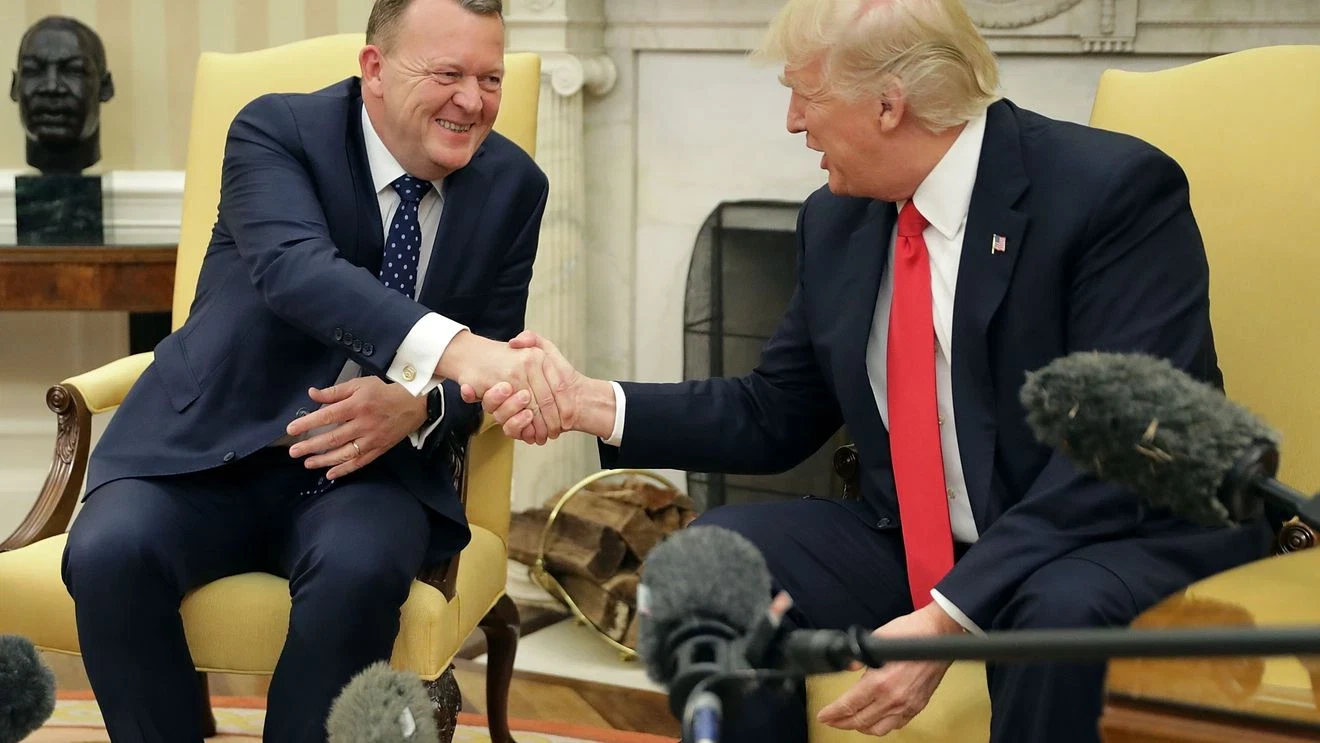
On the afternoon of Friday 18 September, Trump announced on Truth Social that the United States had reached an agreement with the Kingdom of Denmark and with Greenland. The language was characteristically sweeping. The deal, he wrote, "gives the United States permanent control over security, and all other needs, in Greenland, completely addressing ALL of our many U.S. concerns." He added that Washington had acted "to guarantee that the United States will FOREVER have the complete ability to do what is necessary in Greenland," and that "from now on, no U.S. adversary can EVER have a base in Greenland, have a military presence in Greenland, or make sensitive investments in Greenland, without our express written approval." There would, he said, be "NO COST to the United States." The administration would "immediately" begin developing a large military presence in what he called the appropriate part of the island, though he named neither a location nor a size.
The crucial point is what the announcement did not claim. Greenland stays where it is: inside the Kingdom of Denmark. After nearly two years of annexation talk, the president who said the United States would own the island "one way or another" has settled for basing rights, a veto and a security guarantee. According to a State Department official who was not authorised to speak publicly, the agreement bans any non-NATO base on Greenland, bars adversary states from stationing troops there, and creates screening mechanisms designed to block Russian and Chinese investment in sensitive sectors. NBC News reported that it grants the United States permanent access, basing and overflight rights. Fox News, citing an unnamed American official, reported that the text stops short of any transfer of sovereignty but is written to survive Greenlandic independence, should that day come.
None of this can yet be checked against the document itself, which has not been published. Everything known publicly about the agreement comes from Trump's post, from short statements issued by the Danish and Greenlandic governments, and from officials briefing anonymously — a caveat worth holding on to, because the president's characterisation of "permanent control over security, and all other needs" is considerably broader than the language Copenhagen and Nuuk have used.

Reactions
Prime Minister Mette Frederiksen's office confirmed the deal in notably cooler terms, describing it as "an agreement that strengthens our common security in the Arctic and the North Atlantic area and is therefore also good for NATO and Europe." Crucially, she added that it "recognizes the sovereignty and territorial integrity of the Kingdom and the right of the Greenlandic people to self-determination" — the two principles Denmark spent two years defending. Greenland's premier, Jens-Frederik Nielsen, struck a similar note: "It is gratifying that we are about to enter into an agreement that ensures and strengthens the security of Greenland, the Kingdom of Denmark, the United States and the Western alliance. The agreement recognizes Greenland's interests and our place in international cooperation. It is to the benefit of us all."
Secretary of State Marco Rubio was less restrained, calling it a "historic deal" and a "huge win" for the United States. "Greenland will forever be part of the strategic defense area of North America and exclude any adversary from it and the surrounding area," he said. "This deal permanently and completely addresses our national security concerns in Greenland." The timing is not incidental. With the 3 November midterm elections six weeks away and the Iran war having badly undercut Trump's promise to keep the country out of foreign conflicts, the White House has been short of foreign-policy victories to advertise.
The reaction on the island itself is the open question. Greenlanders have been consistent in polling: a January 2025 survey found 85 per cent would not want to leave Denmark to become part of the United States, and Nielsen himself said earlier in the crisis that if forced to choose, "we choose Denmark. Greenland does not want to be governed by the United States." A majority favours eventual independence from Copenhagen — one poll put support at 56 per cent — but that support falls away sharply when independence is paired with a drop in living standards. A deal that expands the American military footprint while leaving Danish sovereignty formally intact threads that needle, but it also hands a foreign power a written veto over investment decisions on Greenlandic soil, and that will be argued over in Nuuk.
European reaction has been measured rather than celebratory. Imran Bayoumi, an associate director at the Atlantic Council's Scowcroft Center for Strategy and Security, argued that the damage is not undone by a signing ceremony. "I think Americans really underestimate how damaging it was for the image of the United States in Europe," he said. "Greenlanders, Danes, Europeans saw this as a real attack on their sovereignty, and it's going to take a lot of work to repair." The European Union has been quietly reinforcing its own position, approving a funding package for Greenland worth some $232 million earlier this month; Iceland summoned the American ambassador on 8 September over a Trump social media post. The Arctic has not stopped being contested simply because Washington and Copenhagen have found a formula.
What's Next
The three governments expect to sign in New York next week, on the margins of the United Nations General Assembly — a venue that guarantees maximum visibility and allows Trump to present the agreement to an international audience. Signature, however, is not the end of the process. Both the Danish Folketing and Greenland's Inatsisartut must act before the agreement can be enforced, and the published text will be scrutinised line by line against the expansive claims already made for it. Under the 2009 Self-Government Act, Greenland controls most of its domestic affairs while Denmark retains foreign and security policy; any eventual independence would require a Greenlandic referendum and Danish parliamentary approval. A defence agreement drafted to outlast that transition raises a question Greenlandic politicians will have to answer: what exactly would independence mean if the security architecture is fixed in advance?
For Washington, the practical work begins with deciding where the promised expansion goes, what it costs, and how the claim of "no cost to the United States" survives contact with a construction budget in the High Arctic. For NATO, the episode closes with the alliance intact but its internal assumptions altered; for Greenland's 56,000 residents, a document negotiated largely above their heads now determines who may build what on their island. The threats have stopped. The argument about sovereignty has not.
Published By | News Editor