Addis Ababa/Mekelle
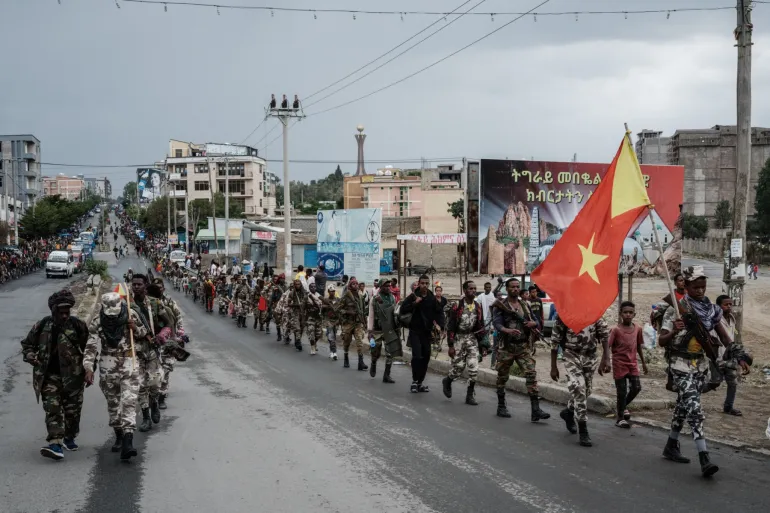
Nearly four years after a peace agreement ended Ethiopia's brutal two-year civil war in Tigray, the settlement that halted the fighting is showing signs of coming apart — not through a simple resumption of the old conflict, but through a realignment so unexpected that some of the deal's original architects and enemies now find themselves informally on the same side. Reporting published this month describes contacts between Eritrean officials and elements of the Tigray People's Liberation Front, the very TPLF that Eritrean forces fought alongside Ethiopia's federal army to defeat only a few years ago, alongside the emergence of a loose anti-federal coalition — dubbed the "Tsimdo Coalition" — that groups the TPLF with Amhara's Fano militia and the Oromo Liberation Army. The result is a political landscape in northern Ethiopia more volatile, and less predictable, than at any point since the guns fell silent in November 2022.
Background: A War Paused, Not Resolved
Ethiopia's civil war in Tigray, which began in late 2020 after a breakdown in relations between Prime Minister Abiy Ahmed's federal government and the TPLF — the regional party that had dominated Ethiopian politics for nearly three decades before Abiy took power in 2018 — killed an estimated hundreds of thousands of people and drew in Eritrean forces on the federal side, along with allied Amhara militias, against Tigrayan Defence Forces. The war formally ended with the Pretoria Agreement, signed in November 2022, which halted large-scale fighting and established an interim administration for Tigray. But as with many negotiated ceasefires that end fighting without resolving its underlying causes, the deal left the hardest questions for later: who would ultimately govern Tigray, whether Tigrayan forces would fully disarm, how displaced residents would be allowed to return home, and how the disputed territory of Western Tigray — controlled by Amhara forces since early in the war — would be resolved.
Those unresolved questions have since produced a strange internal fracture within the TPLF itself. In August 2024, Ethiopia's National Election Board refused to recognize the TPLF as a legal political party, a decision that triggered a disputed party congress that month and split the movement into two rival camps. One faction, initially led by Getachew Reda — a former TPLF spokesman who had become the interim administration's chief executive — controlled the official governing apparatus in Tigray. The other, led by TPLF chairman Debretsion Gebremichael, retained control of the party's internal structures and, critically, significant influence over armed forces still loyal to the movement. The dispute escalated through late 2024, including a failed assassination attempt in November on a Getachew-aligned regional administrator, and a January 2025 standoff in which Debretsion-aligned military commanders demanded the interim government's restructuring — a move the administration itself denounced as an attempted "coup d'état."
That internal rupture partially resolved in April 2025, when Abiy appointed Getachew to a federal advisory role overseeing East African affairs, elevating him out of the Tigray administration and installing General Tadesse Werede — a former Tigrayan Defence Forces commander — as the new interim administration head. The move signaled a degree of alignment between Tadesse's administration and the federal government in Addis Ababa, while leaving Debretsion's TPLF party structure as an increasingly independent, and increasingly frustrated, center of power. In May 2026, the TPLF moved further, reviving the regional council it had first convened in 2020 and electing Debretsion as its president — a direct challenge to Tadesse's federally backed administration and a formalization of Tigray's split into two competing, unelected claims to legitimate authority.
Renewed Fighting and a New Alignment
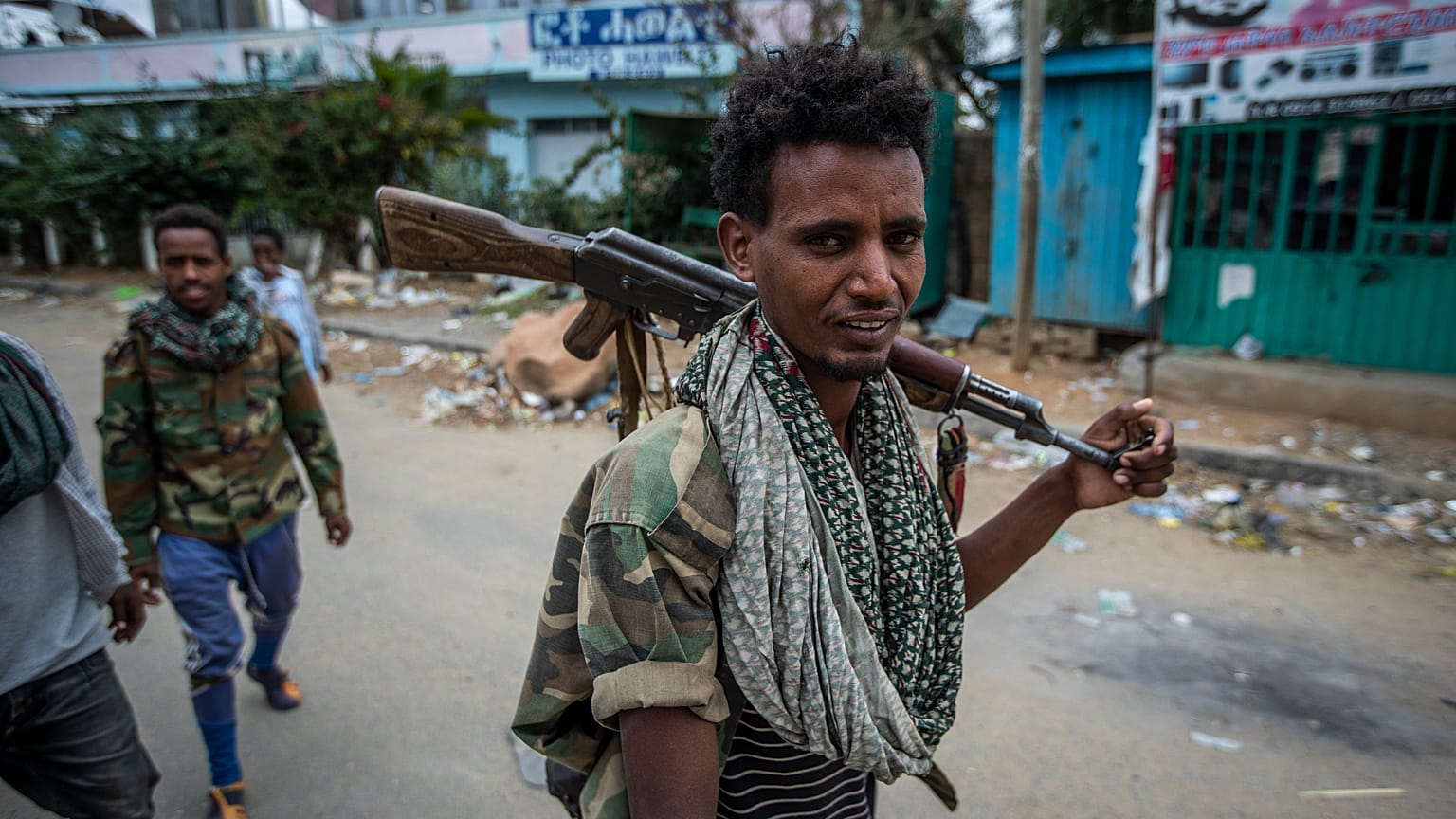
That rivalry has repeatedly spilled into armed confrontation in 2026. In late January, clashes erupted in the Tselemti district of western Tigray, with Tigrayan forces briefly capturing the towns of Alamata and Korem in southern Tigray on January 30 before drone strikes were reported near Enticho and Gendebta the following day; Tigrayan forces withdrew from Tselemti by February 1, and commercial flights to northern Tigray resumed within days. The episode, while limited in scale, demonstrated how quickly localized friction could escalate into open combat.
A more serious flare-up followed on August 1-3, when fighting broke out near the town of Sheraro in western Tigray, close to both the Eritrean and Sudanese borders. According to Al Jazeera's reporting, federal forces launched an assault at dawn on Saturday, advancing from the Shererina area near the Sudanese frontier; the Tigray regional government accused federal forces of initiating the assault and called on Tigrayan forces to prepare for what it termed "a struggle of national survival." Abraham Belay, the government minister who had led Tigray's transitional government earlier in the conflict, appealed for de-escalation, saying, "Enough war! Let us resolve our differences through dialogue." Getachew Reda, now speaking from his federal advisory post, took a sharper line, urging Tigray Defence Forces to abandon Debretsion, whom he accused of allying with both Eritrea and Amhara's Fano militia — an accusation that, remarkably, appears to have some basis in subsequent reporting.
That reporting, published by Al Jazeera in early September, describes documented contacts between Eritrean officials and elements aligned with Debretsion's TPLF faction, including meetings reported in Dubai and in Zalambessa, the Ethiopian-Eritrean border town. The rapprochement is striking given the two sides' history: Eritrea and Tigray fought a border war from 1998 to 2000 that killed tens of thousands, and Eritrean forces fought alongside Ethiopia's federal army against Tigrayan forces as recently as 2020-2022. Analysts attribute the shift to shared opposition to Abiy Ahmed's government rather than any resolution of the underlying Eritrea-Tigray territorial disputes, which remain unresolved — the 2000 Algiers Agreement that formally settled the Ethiopia-Eritrea border in a 2002 ruling has still never been physically demarcated on the ground.
Alongside the Eritrea-TPLF contacts, Fano leader Zemene Kassie has confirmed the existence of a broader anti-federal grouping — described in reporting as the "Tsimdo Coalition" — bringing together Debretsion's TPLF faction, Amhara's Fano militia networks, and the Oromo Liberation Army, an insurgent group active in Ethiopia's Oromia region. Fano itself represents a further complication: the militia network initially fought alongside federal and Eritrean forces against Tigray during the 2020-22 war, in part over the disputed Western Tigray territory that Amhara forces occupied, but has since turned against Abiy's government over separate grievances, illustrating how thoroughly Ethiopia's wartime alliances have scrambled in the years since Pretoria.
What's at Stake
The material and political stakes driving the standoff are substantial. Control of Tigray's gold mining operations and the Endowment Fund for the Rehabilitation of Tigray — a business conglomerate with deep historical ties to the TPLF — remains contested between the rival factions and the federal government. The status of Western Tigray, still under Amhara administration despite Tigrayan claims, remains one of the war's most combustible unresolved issues. Ethiopia's broader ambitions for direct access to a seaport, particularly Eritrea's Red Sea port of Assab, add a further layer of strategic interest to federal calculations in the north, one that predates and outlasts the Tigray dispute itself.
Human rights conditions in the region have also deteriorated. Human Rights Watch documented in a July 2026 report that Tigrayan authorities have engaged in forced recruitment, including of children as young as fifteen — a practice that echoes accusations leveled against multiple parties during the original war and suggests that disarmament, one of Pretoria's core unmet commitments, remains as elusive as ever. Displacement, too, remains a humanitarian crisis in its own right: roughly 1.9 million people displaced during the original war have still not been able to return to their homes, according to figures cited in September reporting, a number that has barely moved despite nearly four years since the Pretoria Agreement was signed.
Politically, neither of Tigray's two rival power centers holds a public electoral mandate. Ethiopia's national elections in June 2026 delivered Abiy's Prosperity Party 438 parliamentary seats, but Tigray did not participate in that vote, leaving the region's population — caught between a federally aligned administration under Tadesse Werede and a party apparatus under Debretsion increasingly aligned with Eritrea and Fano — without any democratically elected government of its own. Civilians appear acutely aware of the stakes: one Tigray resident quoted anonymously in September reporting said plainly, "The people of Tigray want peace; we don't want a second war," while a young Tigrayan interviewed separately captured the fear driving recruitment concerns: "The fear of being drafted is what's making many youth lose hope."
Analysis and Outlook
What makes the current moment particularly dangerous is not any single flashpoint but the compounding effect of several unresolved fault lines converging at once: an internally divided Tigray with two competing, unelected claims to power; a federal government in Addis Ababa that has alienated former allies in Fano even as it maintains uneasy ties with Tadesse's administration; and a newly plausible Eritrea-TPLF alignment that would have seemed unthinkable just three years ago, given the two sides' history of mutual hostility. Each of these dynamics individually might be manageable; together, as the International Crisis Group and other regional monitors have warned, they raise the prospect of a conflict that could draw in Ethiopia, Eritrea and multiple armed factions simultaneously — a scenario analysts have described as a "powder keg" in the Horn of Africa.
In the near term, the clearest indicators to watch will be whether the informal Eritrea-TPLF contacts translate into any material support — arms, funding or coordinated military planning — and whether the Tsimdo Coalition moves from a loose political convergence toward coordinated action on the ground. Equally important will be whether Addis Ababa and the Tadesse administration attempt renewed talks with Debretsion's faction, as Abraham Belay's public appeal for dialogue suggested some federal officials still hope to avoid a return to open war. What the Pretoria Agreement settled was the shooting; what it left unresolved — who governs Tigray, who controls its resources, and whether its displaced residents will ever go home — is precisely what now threatens to reignite the conflict it was meant to end.
Published By | News Editor