Written By | Evan Sande Ndahura

The courtroom archives of the world are filled with cases that collapsed not because the defendant was innocent, but because the prosecution ignored a small detail
By Evans Sande Ndahura
They say human behavior is a wildfire, untamed, ungovernable, uncontainable, until law draws a boundary around it. And history agrees. What seems small today, an overlooked comma in a statute, a misinterpreted clause, a legal shortcut taken in excitement or arrogance, grows into a crisis that shakes nations, topples governments, collapses businesses, and breaks societies. Because in the world of law, small things are never small.
THE DANGER OF MINOR LEGAL ERRORS
The courtroom archives of the world are filled with cases that collapsed not because the defendant was innocent, but because the prosecution ignored a small detail.
A wrong date. An unsigned page. A missing word. A misquoted statute.
And as judges say: “The law does not forgive carelessness.” In Kenya, the 2017 presidential election was annulled because of procedural irregularities, not politics, not drama, but errors in the transmission of results. One small mistake, one mismanaged process, and a whole nation returned to the ballot.
Across Europe, governments have fallen due to illegal appointments or constitutional mishandlings—prime ministers resigning over what some citizens trivialized as “technicalities,” but what jurists correctly identified as breaches of the legal order. In the United States, the Watergate scandal wasn’t just political theatre—it was fueled by legal violations that began small until they consumed an entire administration.
Worldwide, constitutions have crumbled because legislators casually inserted or deleted clauses without anticipating the future consequences. Many African nations still suffer from independence-era constitutional errors that enabled authoritarianism to rise. Law is that sensitive. Law is that unforgiving.
HOW SMALL MISTAKES CRUSH BIG BUSINESSES
Fortunes have been wiped out not by competition, but by legal ignorance.
* International companies have collapsed over misfiled tax returns.
* Billion-dollar mergers have failed due to one unread footnote in a contract.
* Investors have lost empires because they signed agreements without understanding arbitration clauses.
* Global corporations have paid fines larger than their profits for ignoring “small” compliance rules.
In 2001, Enron, once the seventh-largest company in America, collapsed over accounting manipulations executives brushed off as “minor adjustments.” The fallout shook world markets and destroyed thousands of lives. In Uganda, land disputes, collapsed family businesses, and broken partnerships often trace back to poorly written agreements, missing signatures, or ignorance of legal procedure. Law is a thin line. Step wrongly and the fall is fatal.
THE INVISIBLE TRAP: HOW COPYRIGHT IGNORANCE DESTROYS CREATORS
In the creative world, the smallest legal mistake can erase a lifetime’s work. Writers, scholars, musicians, scriptwriters, and composers have lost fortunes—and even the rights to their own creations—because they did not understand copyright law.
* Countless musicians signed contracts without reading the ownership clauses and woke up to discover they did not own their own songs.
* Scholars have been stripped of intellectual credit because they didn’t protect their manuscripts.
* Writers have lost books to publishers because they didn’t negotiate reproduction rights.
* Artists have seen their work used globally without compensation because they never copyrighted it.
For many creators, it wasn’t a lack of talent—it was a lack of legal knowledge.
History is filled with artists who died broke while their work made billions for others. All because of clauses they never read, rights they never claimed, and protections they never understood.
In a world of ideas, copyright is oxygen—and ignorance of it is suffocation.
A SOCIETY WITHOUT LAW IS A SOCIETY WITHOUT A FUTURE
No society can prosper without law. No nation can transform where law is optional, casual, or secondary.
Nations that thrive, Singapore, Norway, Japan, and Canada, do so because their people treat the law as sacred.
Their leaders respect legal boundaries. Their institutions do not bend rules for convenience.
Their citizens understand rights and obligations.
These societies invest heavily in:
✔ legal education
✔ strong constitutional courts
✔ transparent institutions
✔ civic literacy
✔ Rule-based governance. Where the law is strong, order flourishes. Where the law is weak, chaos grows like wildfire.
HOW NATIONS AND BUSINESSES CAN BE SAVED
Respect due process – Never rush legal procedures; shortcuts are expensive.
Invest in legal literacy – Citizens, leaders, entrepreneurs, and creators must understand basic law.
Strengthen drafting teams – Constitutions and statutes require sharp minds, not political appointees.
Audit all contracts – One unread sentence today becomes a billion-shilling disaster tomorrow.
Avoid emotional decisions – Law is logic; emotion destroys clarity.
Let institutions work – Nations collapse when leaders treat law as optional.
If societies want peace, development, stability, and justice, they must treat the law as the skeleton upon which the flesh of civilization grows.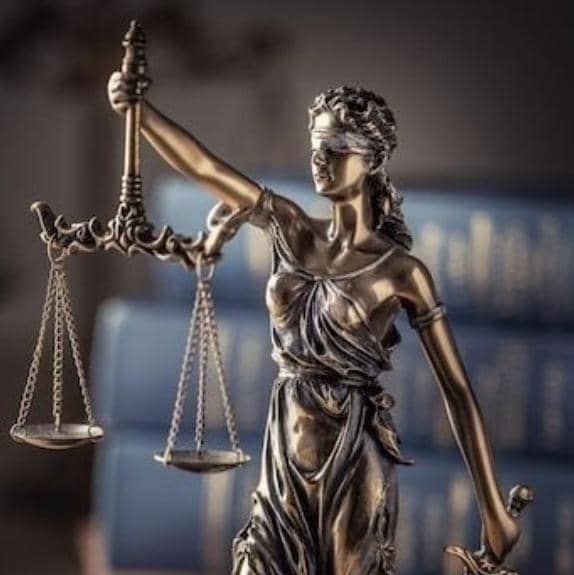
CONCLUSION: SMALL THINGS ARE BIG THINGS UNDER THE LAW
In the world of justice, in the realm of governance, in the marketplace of business, in the universe of creativity,
Every small error is a seed.
Ignored today, watered by carelessness tomorrow,
it grows into conflict, collapse, corruption, litigation, or loss.
The law is not just a rulebook.
It is the anchor of nations.
The protector of justice.
The backbone of systems.
The shield of citizens.
The guardian of ideas and creations.
And without it—
No society stands.
No nation prospers.
No artist thrives.
No future survives.
ABOUT THE WRITER
Evans Sande Ndahura is a Ugandan writer, political analyst, and commentator on governance, leadership, constitutionalism, and the legal struggles shaping African nations. His work explores how flawed systems, legal loopholes, and governance failures affect development, democracy, and social stability. He also writes about culture, creative industries, intellectual property, and the challenges facing African economies in an increasingly knowledge-based world.



