Tripoli/The Hague
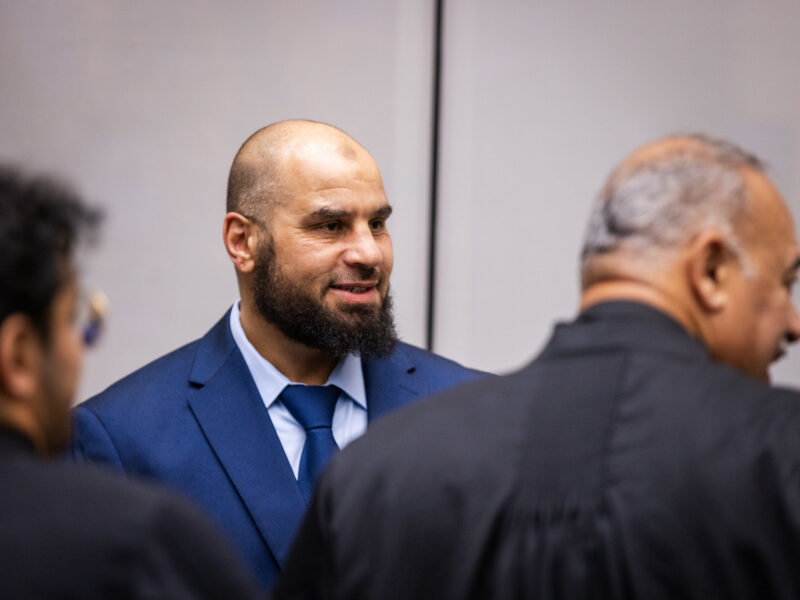
Fifteen years after the United Nations Security Council referred the situation in Libya to the International Criminal Court, the institution is finally about to try someone. On July 16, judges at the ICC's Pre-Trial Chamber I unanimously confirmed 17 counts of war crimes and crimes against humanity against Khaled Mohamed Ali El Hishri, a former Libyan security official accused of running a torture and extortion operation out of Tripoli's Mitiga prison. The case is now moving toward Trial Chamber VII, making it the first Libya-related prosecution in the court's history to reach trial. In the weeks since, human rights lawyers and survivors have pressed for the case to become something larger than the prosecution of one man: a reckoning with the European governments whose migration policies, they argue, helped fill Mitiga's cells in the first place.
Who is Khaled Mohamed Ali El Hishri
El Hishri was a senior official in the Special Deterrence Force, a militia known by the Arabic acronym RADA that has controlled Mitiga — a converted air base on Tripoli's eastern edge that doubles as Libya's main functioning airport — for years. According to the ICC's findings, El Hishri exercised general authority over the facility and direct control over its women's section. Detainees there knew him, prosecutors say, as "the angel of death."
German authorities arrested El Hishri in July 2025 and surrendered him to the ICC in December of that year following domestic legal proceedings. He has remained in ICC custody in The Hague since. Ahead of the confirmation hearing, his defense team challenged the court's jurisdiction over the case, arguing that Libya's May 2025 declaration accepting ICC jurisdiction over crimes from 2011 through the end of 2027 was invalid and that the original UN Security Council referral did not cover the specific conduct alleged against him. Judges rejected that challenge on July 15, clearing the way for the following day's confirmation of charges.
What he is accused of
The 17 confirmed counts span imprisonment, torture, cruel treatment, rape and other sexual violence, murder and attempted murder, enslavement, and persecution, allegedly committed against detainees held at Mitiga between 2015 and 2020. Prosecutors told the pretrial chamber during a May 19-21 hearing that the conduct under investigation could concern crimes against more than 900 detainees held at the facility during the period El Hishri controlled it, and that the list of alleged incidents and victims presented was not exhaustive — meaning prosecutors may introduce additional evidence and victims at trial within the scope of the charges already confirmed.
Those held at Mitiga, according to court filings and rights groups, faced severe overcrowding, prolonged detention without any meaningful legal process, arbitrary violence, and, for many, no clear prospect of release. Detainees were beaten, tortured, raped, and in some cases enslaved and forced to work. Migrants and refugees who passed through the facility — many intercepted at sea while trying to reach Europe — described particularly brutal, racialized treatment.
"I never thought these crimes would reach the ICC," said a Gambian survivor of Mitiga identified only as C. in an account provided to the European Center for Constitutional and Human Rights, which has supported victims' participation in the case. "Migrants who passed through Libya have been waiting for this justice. Anyone who violates people's rights should face the consequences."

A milestone, and a limited one
Alice Autin, international justice researcher at Human Rights Watch, called the decision to send the case to trial "a milestone for justice in Libya" after 15 years of investigation with no prior case reaching that stage. "The ICC's decision to move its first Libya case to trial opens a long-awaited door to justice for victims of Libya's abusive detention system," Autin said in a statement following the confirmation. She added that "Libyan authorities should support the proceedings and surrender remaining suspects in Libya to the court, demonstrating that they are genuine partners in ending the impunity that continues to fuel atrocities across the country."
That call points to the case's central limitation: El Hishri is one man, and the ICC's own record shows how much of its docket on Libya remains unresolved. The court has issued public arrest warrants against 14 people in connection with its Libya investigation, including El Hishri. Of the others, four have died or been killed, eight remain fugitives — some in the country's east, some in the west — and one case, against former Gaddafi-era intelligence chief Abdullah al-Senussi, was ruled inadmissible in 2014 on the grounds that Libyan courts were already handling it. That domestic case concluded in May 2026, when a Tripoli appeals court acquitted Senussi of all charges tied to the 2011 revolution, a verdict Human Rights Watch called evidence that Libyan courts remain "both unable and unwilling to genuinely try those responsible for serious crimes."
A parallel case illustrates the same gap. Osama Elmasry Njeem, another RADA-linked figure named by prosecutors as one of El Hishri's alleged co-perpetrators, was briefly arrested in Italy in January 2025 on an ICC warrant, then released after two days on procedural grounds and returned to Libya rather than transferred to The Hague. ICC judges later found that Italy had breached its cooperation obligations and referred the matter to the court's member states in January 2026. On June 21, 2026, a Tripoli criminal court sentenced Njeem domestically to seven years and four months in prison on torture-related charges — but human rights monitors say that case covered abuse of only 10 detainees and a single death, a fraction of the conduct the ICC warrant alleges, which includes responsibility for the killing of at least 34 detainees. Njeem remains outside ICC custody, and Libya has yet to confirm his detention status to the court's prosecutor.
The European question
What distinguishes the El Hishri case from a conventional war-crimes prosecution is the argument, pressed by researchers and advocacy groups including the ECCHR and Alliance with Refugees in Libya, that Mitiga cannot be understood in isolation from European migration policy. Since 2016, the European Union and member states — Italy foremost among them — have funded, equipped, and coordinated with Libyan actors, including the Libyan Coast Guard, to intercept migrants attempting to cross the central Mediterranean and return them to detention on Libyan soil. Legal researchers Allison West and Viola Castellano, writing for The New Humanitarian, argue that this arrangement created a "wider migrant containment regime" in which armed groups, traffickers, and state-affiliated detention authorities profited from capturing and confining migrants, with European support providing both the funding and the legitimacy that sustained the system.
One survivor's account illustrates the pipeline directly: a man identified as T., who fled South Sudan's civil conflict, attempted the Mediterranean crossing in 2019 and 2020 only to be intercepted by the EU-supported Libyan Coast Guard and returned to detention, eventually landing in Mitiga for nearly five months before escaping. Advocates argue that testimony from victims like him should be used at trial to place the broader system — not just El Hishri's individual conduct — before the court, and they are pressing the ICC prosecutor's office to examine the potential criminal responsibility of individual EU and member-state officials, not just Libyan ones.

An institution under pressure
The case reaches trial at an unusually fraught moment for the ICC itself. Former Prosecutor Karim Khan was removed from his post in late July following allegations of serious personal misconduct, leaving the office in transition even as it pursues its most significant Libya prosecution to date. Simultaneously, the court is contending with sanctions targeting its staff and a public campaign by the U.S. State Department, launched in July, to dismantle the ICC "brick by brick" in response to the court's arrest warrants for Israeli Prime Minister Benjamin Netanyahu and former Defense Minister Yoav Gallant. Supporters of the court argue the confirmation of charges against El Hishri is proof of the ICC's continued relevance precisely because it is the only permanent international court positioned to act when national systems — as in Libya — prove unable or unwilling to prosecute.
What to watch next
A separate panel of ICC judges must still set a trial start date for El Hishri, a process that could take months; the case itself is expected to run for years once underway. Watch for whether Libyan authorities move to arrest and surrender any of the eight remaining fugitives, a step rights groups say would test Tripoli's stated cooperation with the court under its 2025 jurisdictional declaration. Watch too for whether the ICC's Office of the Prosecutor, under new leadership following Khan's removal, opens any formal line of inquiry into European officials' roles in Libya's detention system — a step that would be unprecedented for the court and would sharply escalate diplomatic tension with EU member states already uneasy about their entanglement in Libyan migration enforcement. And watch how the case interacts with the broader assault on the ICC's authority from Washington: a court fighting for its institutional survival on one front while opening its first Libya trial on another is a juxtaposition few observers expected, and how it is resolved will shape the court's credibility well beyond North Africa.
Published By | News Editor