Written By | International News Agencies
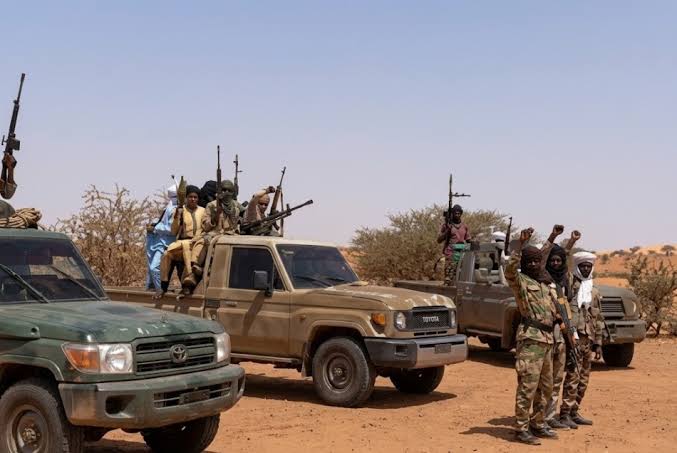
Sudanese military officials say further RSF defections are underway, with a former RSF commander, Al-Nour al-Qubba, personally receiving some of the surrendering fighters
Overview
Sudan's army-aligned government reported a string of battlefield gains this week that, while modest in the context of a war now well into its fourth year, mark one of the more notable shifts in momentum in months. On July 31, a unit of the paramilitary Rapid Support Forces (RSF) known as "Group 26" surrendered to the Sudanese Armed Forces (SAF) in Omdurman, handing over its full military equipment after traveling from Bara in North Kordofan state. The surrender followed a week of SAF advances that secured four strategic areas in North Kordofan, including Bara and Jabrat al-Sheikh, along with a vital 400-kilometer trade corridor linking Omdurman to El Obeid. Sudanese military officials say further RSF defections are underway, with a former RSF commander, Al-Nour al-Qubba, personally receiving some of the surrendering fighters.
The gains come at a moment of stark contrast within the RSF itself: even as some units defect or surrender, RSF leader Mohamed Hamdan Dagalo — widely known as Hemedti — released a video on July 30 exhorting his remaining forces to seize the capital, Khartoum, from which the RSF was pushed out in March 2025. The gap between Hemedti's rhetoric and the reality of units surrendering equipment on the battlefield illustrates the fractured, uncertain state of a conflict that has defied repeated predictions of resolution and has produced what United Nations investigators this year described as bearing "the hallmarks of genocide."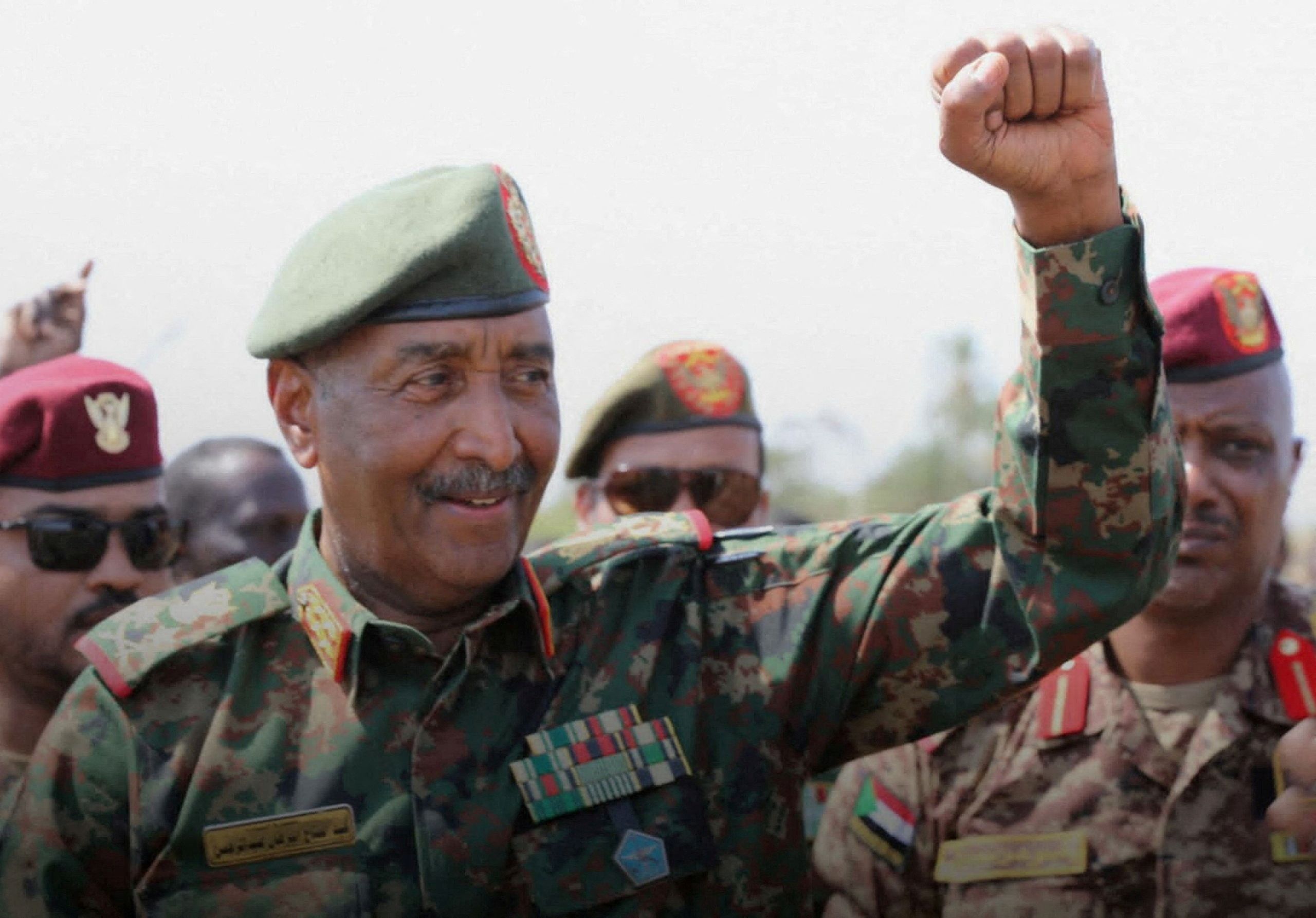
Background: Sudan's Civil War, Three Years On
The war erupted on April 15, 2023, when long-simmering tensions between the SAF, led by General Abdel Fattah al-Burhan, and the RSF, led by his former deputy Hemedti, broke into open fighting in Khartoum. What began as a power struggle between two factions of Sudan's post-2019 transitional government has since metastasized into what humanitarian officials widely regard as the world's largest and most severe humanitarian crisis. The conflict has displaced an estimated 14 million people out of a population of roughly 51 million — the largest displacement crisis on record globally — and death toll estimates range from the tens of thousands into the hundreds of thousands, with precise figures impossible to verify amid the collapse of state institutions across large parts of the country.
Famine was first formally confirmed in August 2024 at the Zamzam displaced-persons camp in North Darfur, and by 2025 aid organizations, including Doctors Without Borders, estimated more than 70 percent of children under five in the hardest-hit areas were acutely malnourished. The World Food Programme has repeatedly warned that around five million people face emergency or catastrophic hunger levels, a crisis compounded this year by disruptions to Red Sea and Hormuz shipping routes tied to the separate Iran conflict, which have complicated aid logistics.
The war's darkest chapter to date unfolded in El Fasher, the North Darfur capital and the last major city in Darfur that had remained under government control. A siege lasting roughly 18 months culminated in RSF forces overrunning the city beginning October 26, 2025, in what a UN fact-finding mission later documented as a massacre with genocidal hallmarks — an estimated 6,000 people killed within the first three days alone, with death toll estimates for the broader massacre reaching into the tens of thousands. Investigators found the RSF and allied militias had deliberately imposed conditions calculated to destroy non-Arab communities, particularly the Zaghawa and Fur ethnic groups, echoing patterns of violence in Darfur that date back two decades to the RSF's predecessor militia, the Janjaweed.
Key Developments
This week's SAF advances in North Kordofan matter both militarily and symbolically. The corridor linking Omdurman to El Obeid is a critical logistics and trade route, and its recapture, alongside the towns of Bara and Jabrat al-Sheikh, tightens government control over central Sudan at a time when the RSF's territorial position — bolstered by the fall of El Fasher — had appeared to be strengthening. The surrender of the RSF's Group 26 unit with its equipment intact, rather than in the chaos of retreat, suggests morale or command problems within at least some RSF formations, though it remains a single unit's defection rather than evidence of wholesale collapse.
Hemedti's July 30 video vowing to retake Khartoum should be read against this backdrop. The RSF was driven out of the capital by the SAF in March 2025 after nearly two years of controlling large portions of the city, and Khartoum's recapture has taken on outsized symbolic importance for both sides — the government has since relocated its full civilian and military administration back to the capital from its wartime base in Port Sudan. Whether the RSF retains the logistical capacity to mount a serious offensive on Khartoum, as opposed to issuing propaganda aimed at shoring up its own fighters' morale after a week of setbacks elsewhere, is unclear.
Sudan's judiciary has also escalated the legal dimension of the conflict: in mid-July, a Sudanese court sentenced Hemedti to death in absentia over atrocities linked to RSF operations, a largely symbolic move given that Hemedti remains at large and the government does not control the areas where he operates, but one that forecloses any near-term prospect of a negotiated settlement that would allow him a political role. Meanwhile, Amnesty International published a report in late July documenting what it called RSF atrocities in El Fasher constituting "a stain on the conscience of humanity," adding to a growing body of documentation that international prosecutors may eventually draw on.
Reactions and the Diplomatic Track
International peace efforts remain stalled. The "Quad" — the United States, Saudi Arabia, the United Arab Emirates and Egypt — has spent much of the past year pushing a peace framework calling for a three-month humanitarian truce followed by a permanent ceasefire and a nine-month transition to civilian government, alongside a halt to outside military support for both sides. U.S. envoy Massad Boulos announced in February that the Quad had reached a peace document acceptable in principle to both sides, but the SAF has since rejected the initiative outright, with al-Burhan arguing that the UAE's inclusion in the mediating group renders it inherently biased toward the RSF. That objection stems from U.S. intelligence assessments, reported since late 2025, that the UAE has been supplying the RSF with weapons — including Chinese-made armed and unarmed drones, heavy machine guns, mortars and artillery — a charge the UAE has consistently and categorically denied.
Humanitarian organizations, including the WFP and MSF, have used the past week to renew appeals for expanded access, noting that fighting in North Kordofan and repeated attacks on aid convoys and hospitals — including an armed attack that forced MSF to suspend operations at Zalingei hospital in Central Darfur amid a cholera outbreak — continue to obstruct relief efforts even as front lines shift. The African Union and Arab League have both issued statements welcoming any movement toward de-escalation while stopping short of endorsing either side's version of events in Kordofan.
What's Next
The immediate question is whether the SAF's Kordofan gains and the Group 26 surrender represent the start of a broader erosion of RSF cohesion or simply a localized setback the RSF can absorb while it regroups for an offensive elsewhere, potentially toward Khartoum as Hemedti has threatened. Sudan analysts will be watching for further defections, for whether the SAF attempts to press its advantage further into RSF-held Kordofan and Darfur territory, and for any signs that the death sentence against Hemedti or the Amnesty report shift the political calculus around future negotiations.
On the humanitarian side, the coming weeks will show whether the reopened Omdurman–El Obeid corridor can be used to move desperately needed aid into famine-affected areas, or whether continued fighting keeps it effectively closed to relief convoys. And on the diplomatic track, the newly launched dialogue between Sudan's rival assemblies — however preliminary — will be tested by whether it can survive contact with a military situation that remains defined more by battlefield momentum than by any negotiated framework. With famine conditions persisting for millions and the El Fasher massacre still fresh, the stakes of getting a durable peace process right, rather than a fragile pause that collapses as the June Iran ceasefire repeatedly has, remain exceptionally high.



