A win over the Clippers was overshadowed by a frightening lower-leg injury to one of Oklahoma City's cornerstones, and a franchise that spent a year defending a title now has to decide what it is without him.
OKLAHOMA CITY, October
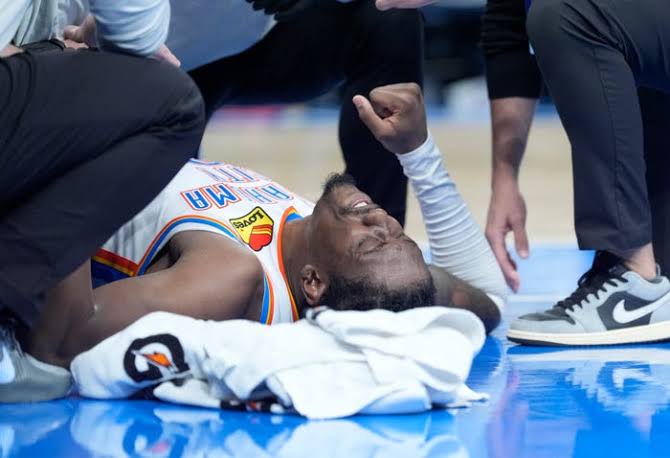
The scoreboard said the Oklahoma City Thunder beat the Los Angeles Clippers 108-101 on Sunday, October 25. Almost nobody inside the arena remembers it that way. With 1:14 left, Jalen Williams drove to the basket, was fouled, and landed awkwardly under the rim. His left ankle bent the wrong way, according to Hoops Rumors' account of the play. Within seconds, medical staff were at his side, and then a stretcher was rolled onto the court.
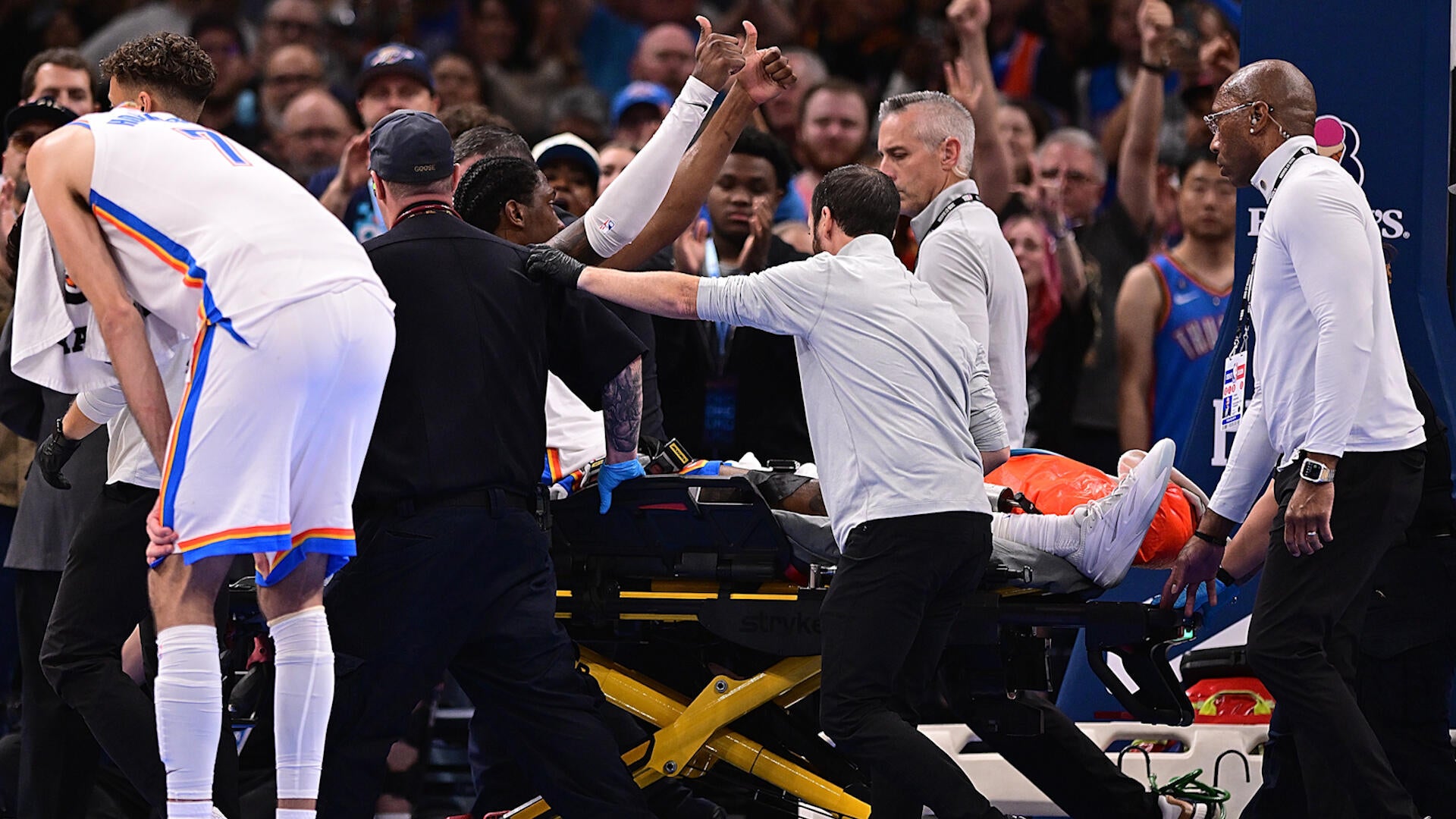
The game stopped for roughly five minutes. Towels covered his ankle. Players from both teams looked shaken, according to NBA.com's report. Williams tried to stand with the support of teammate Chet Holmgren, but trainers asked him to stay down. And then, as he was carried off, he did something that stuck with everyone watching: he raised two thumbs up to the crowd. The building chanted his nickname back at him.
What we know, and what we do not
Precision matters here, because early reports of injuries like this tend to run ahead of the facts. As of the most reliable reporting available on Monday, the Thunder had not released an official diagnosis. Head coach Mark Daigneault said the team would provide an update Monday morning, and offered only a quiet assessment: "Those are tough, man. We're not doing great."
Some outlets carried headlines suggesting a fracture, a dislocated ankle and the need for surgery, and listed Williams, along with guard Cason Wallace, as out indefinitely. The detailed articles we reviewed did not confirm those specifics, so readers should treat them as reported but unverified until the team or a credible medical source says otherwise. What is not in dispute is that this was described by the league's own site as a serious lower-leg injury, and that the severity of the scene was unmistakable.
A player the Thunder cannot easily replace
Williams is a shooting guard who averaged 18 points a game across his first 250 NBA games. He has been an All-Star and an All-NBA selection, and he was a key part of the 2025 championship team. That résumé is why Sunday landed so heavily. He is not a role player whose absence can be patched with a rotation tweak; he is one of the creators and defenders around which Oklahoma City built its identity.
The cruelty of the timing is that last season had already tested him. Williams missed 49 games, mostly with hamstring problems and recovery from right wrist surgery, and played just 33 regular-season games. A player who spent a year working his way back to full strength now faces another stretch of rehabilitation before the 2026-27 season is even two weeks old.
The locker-room response
Shai Gilgeous-Alexander, fighting back tears in his postgame interview, kept it simple. "Just feel bad for him," he said, adding, "Nothing more than that." Then came the line that quickly traveled across social media: "He's not gone forever. He'll be back better than ever, and we know it."
It was a captain's statement, and it said as much about how the team intends to handle the weeks ahead as it did about Williams. Oklahoma City Mayor David Holt also posted that the city was keeping Williams in its thoughts and prayers, a reminder that for a market this size, a franchise player's injury is a civic event, not only a basketball one.
The basketball problem
There is no time to mourn in the NBA calendar. The Thunder hosted Phoenix on Monday night, with the early-season schedule offering little breathing room. Without Williams, the burden shifts toward Gilgeous-Alexander and Holmgren, and toward a supporting cast that must now cover for two injured guards if the Wallace reports prove accurate.
Depth is the usual answer in these situations, and Oklahoma City has been built with depth in mind. Still, regular-season survival and playoff contention are different problems. A team can absorb a month without a starter; absorbing a season without one changes the conversation about trades, minutes and how hard to push other key players. Those decisions will wait for a formal diagnosis and a timeline, neither of which has been publicly confirmed.

What this means for you
If you follow the NBA casually, or play in a fantasy league, the practical advice is patience. Do not drop or trade based on the first wave of headlines; wait for the team's official statement. Williams's absence should lift the usage and production of teammates, but how much depends on the length of the injury, which we do not yet know.
If you are a recreational athlete, the episode is also a reminder of how quickly a routine landing can become a major injury, and why trainers on the court stop everything and keep a player still until a stretcher arrives. That caution looks dramatic on television. It is standard care.
The long view
Sports injuries are rarely just medical events; they are narrative turning points. The Thunder came into the season as a team whose story was continuity: a young core, a championship in the rear-view mirror, and a sense that the best was still ahead. Sunday introduced uncertainty into that story.
But the image that endures is not the stretcher. It is the thumbs up. Williams, in what must have been severe pain, chose to reassure a crowd that was frightened for him. Gilgeous-Alexander has promised that he will return better than ever. Whether that return takes weeks or most of a season, the Thunder will spend the interim answering a question every contender eventually faces: how much of a team's strength lives in its stars, and how much in the structure around them?
For now, the answer is a pause, a prayer and a wait for the medical update. The league moves on to Monday night. Oklahoma City, a little more slowly, tries to do the same.
Published By | Sports Editor