Written By | Business Experts
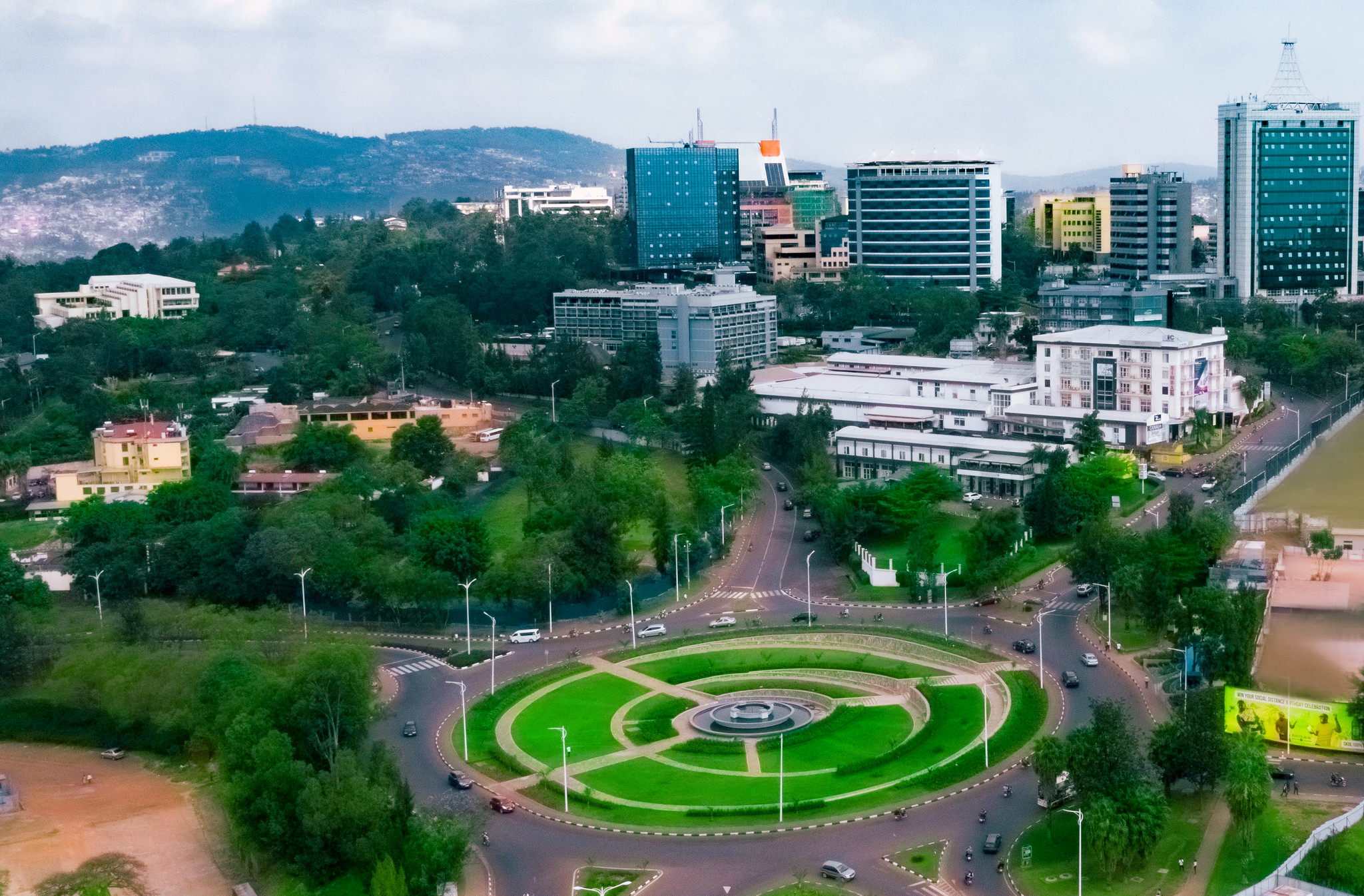
How a decade-long bet on farm productivity, export diversification and universal health coverage is reshaping East Africa's fastest-growing economy
Rwanda closed 2025 as one of the standout performers on the African continent, with the African Development Bank (AfDB) estimating that real GDP growth accelerated to 9.4 percent for the year, up from 7.2 percent in 2024. The surge was broad-based, spanning services, construction, manufacturing and agriculture, and it pushed Rwanda's economic trajectory well ahead of the East African Community average. The AfDB projects growth will moderate to 7.0 percent in 2026 and rise again to 7.4 percent in 2027, a pace that would still rank among the fastest in Sub-Saharan Africa. The International Monetary Fund's own projection for 2026, at 7.2 percent, sits close to the AfDB figure, while GDP per capita is expected to climb to roughly $1,198 in 2026, an increase of about $70 over 2025 levels.
Behind these aggregate numbers lies a deliberate policy architecture. Rwanda's National Strategy for Transformation, now in its second phase (NST2, covering 2024-2029), sets an explicit macroeconomic target of 9.3 percent average annual real GDP growth over the strategy period, with per-capita income projected to rise from $1,040 in 2023 to $1,369 by 2029. NST2 is the operational bridge toward Vision 2050, the long-term blueprint under which Rwanda aims to become an upper-middle-income country by 2035 and a high-income country by 2050.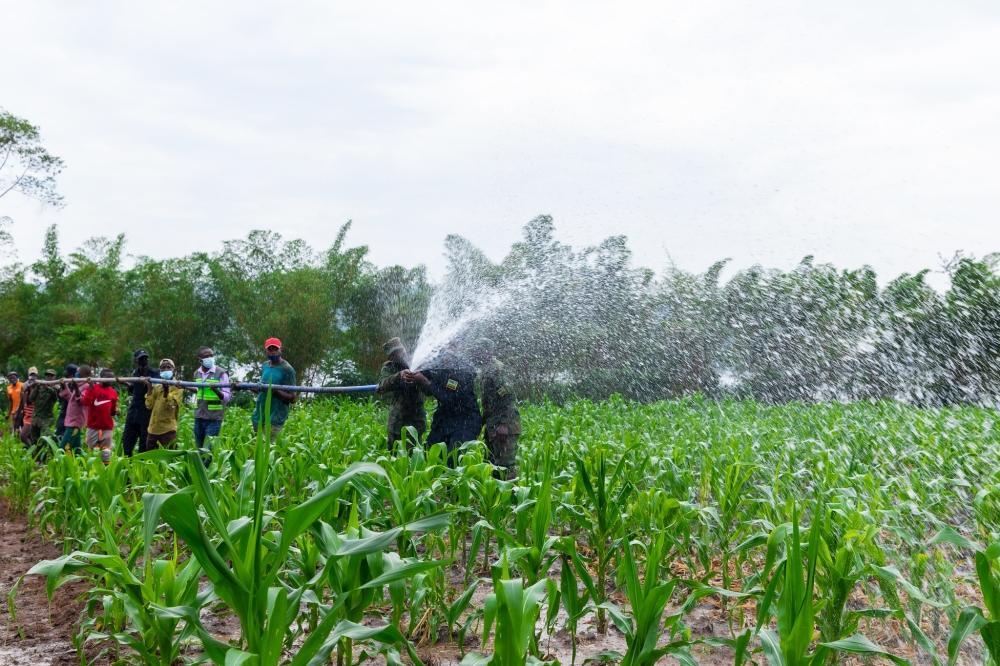
Agriculture as the Engine, Not the Afterthought
What distinguishes Rwanda's current growth phase from earlier periods dominated by services and construction is the explicit re-centering of agriculture as a growth driver rather than a residual sector. NST2's first pillar is agricultural transformation, with a stated goal of raising agricultural productivity by 50 percent over the strategy period and sustaining sector growth above 6 percent annually. That target matters in a country where the majority of the workforce still depends on smallholder farming for its livelihood, meaning productivity gains translate relatively directly into household income and food security improvements.
Export data from 2025 illustrate both the promise and the fragility of this strategy. After an exceptionally strong 2024 in which mineral, tea, coffee and horticultural exports surged, receipts softened somewhat in 2025 as global commodity prices normalized. Even so, coffee and tea remain the backbone of Rwanda's agricultural export identity: recent National Agricultural Export Development Board figures for early June 2026 show coffee exports generating roughly $3.14 million and tea exports roughly $3.31 million in that reporting window alone, underscoring how central these two crops remain to rural incomes and foreign-exchange earnings, alongside emerging high-value horticultural products entering European and regional markets.
Made in Rwanda and the AfCFTA Opportunity
Rwanda's industrial policy is increasingly framed around the "Made in Rwanda" initiative, which NST2 positions as central to reducing import dependency and building a manufacturing base capable of competing regionally. The strategy sets a target of pushing national exports above $3.3 billion during the NST2 period, with the African Continental Free Trade Area (AfCFTA) treated not as a peripheral trade agreement but as a core channel for absorbing higher-value Rwandan manufactured goods. Kigali's positioning as a diplomatic and logistics hub for regional integration — reinforced by its hosting of major continental trade and investment gatherings — gives Rwandan exporters a geographic and political advantage in reaching AfCFTA markets that landlocked neighbors without the same institutional visibility do not enjoy to the same degree.
This industrial push is not without headwinds. Rwanda remains a small, landlocked economy with a domestic market of roughly 14 million people, meaning that manufacturing competitiveness depends heavily on regional demand and on continued investment in transport and logistics corridors connecting Kigali to the ports of Mombasa and Dar es Salaam. The government's own planning documents acknowledge that job creation has not kept pace with GDP growth, and that productivity gains have been constrained by infrastructure gaps and limited innovation diffusion outside the capital region.
Poverty Reduction: Real Progress, Slowing Momentum
Rwanda's poverty trajectory over the past decade is one of the more significant social achievements in the region, though recent data suggest the pace of improvement has cooled. The seventh Integrated Household Living Conditions Survey (EICV7), conducted in 2023/24 and released by the National Institute of Statistics of Rwanda in 2025, found that 27.4 percent of the population was living in poverty by national standards, down from an imputed 39.8 percent in 2016/17 under the same methodology — a reduction of just over twelve percentage points in seven years. The World Bank has corroborated this trend, attributing much of the decline to rapid economic expansion, while cautioning that the momentum of poverty reduction has weakened relative to the pace achieved in the previous decade.
The 2025 Multidimensional Poverty Index (MPI) report, Rwanda's second such national assessment and based on the same EICV7 data, revised the 2018 MPI methodology to better capture overlapping deprivations in health, education and living standards. UNICEF's parallel analysis found that multidimensional child poverty among children aged five to fourteen had nearly halved since 2016/17, with a roughly one-third reduction among adolescents aged fifteen to seventeen — genuine progress, though the reports are candid that overlapping deprivations, particularly in rural areas, remain a substantial policy challenge. Rwanda's own planning documents flag insufficient job creation, low productivity, infrastructure gaps and climate vulnerability as the principal risks to sustaining the poverty-reduction trend through the rest of the decade.
Universal Health Coverage: Mutuelle de Santé Reformed
Rwanda's community-based health insurance scheme, known as Mutuelle de Santé, is frequently cited internationally as a model for low-cost universal health coverage, currently covering more than 90 percent of the population. The government has continued to expand and recalibrate the scheme through 2025 and 2026. Starting July 1, 2025, all cancer patients became eligible for free treatment under the CBHI framework, extending earlier expansions that added coverage for conditions such as elephantiasis, kidney transplants and prosthetic devices for people with disabilities — conditions that previously imposed catastrophic costs on affected households.
In February 2026, a Prime Minister's Order restructured Mutuelle de Santé's contribution levels, setting the annual premium at RWF 4,000 for households in the first tier of Rwanda's social registry, rising to as much as RWF 20,000 per person annually for the fifth and wealthiest tier. The reform also broadened the funding base beyond household contributions to include government subsidies and mandatory contributions from public and private sector employers, telecommunications companies, fuel distributors, banks and other private-sector actors — an attempt to build a more sustainable, diversified financing pool as the government pursues its stated goal of 100 percent universal health coverage by 2030.
Debt, Fiscal Space and the Road Ahead
The clearest fiscal risk shadowing Rwanda's growth story is public debt, which the AfDB projects will climb above 77 percent of GDP by the end of 2026. Combined with persistent inflationary pressure — driven by higher oil, fertilizer and transport costs, even as a proactive monetary stance is expected to bring inflation down to 5.6 percent in 2026 and 4.8 percent in 2027 — the debt trajectory constrains the fiscal space available for the public investment that NST2's ambitious targets assume. Rwanda's own economic planning documents are unusually candid on this point, acknowledging that high public debt, climate vulnerability and mounting pressure on natural resources could complicate the path to upper-middle-income status by 2035 and high-income status by 2050 set out in Vision 2050.
Taken together, Rwanda's 2025-26 economic and social record shows a country converting sustained GDP growth into measurable, if decelerating, poverty reduction and a genuinely expanded social safety net, while placing a specific bet on agricultural productivity and manufactured exports to broaden the base of that growth beyond services and construction. Whether that bet pays off will depend heavily on execution: sustaining agricultural productivity gains against climate variability, absorbing AfCFTA trade opportunities into real manufacturing jobs, and managing a debt load that is rising faster than many of its regional peers.



