Background
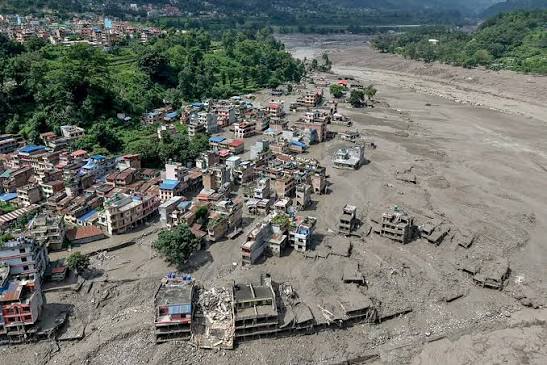
A catastrophic flash flood triggered by a high-altitude glacial collapse tore through the Nepal-Tibet border region this week, killing hundreds of people and leaving nearly 1,500 unaccounted for in one of the deadliest cross-border disasters to hit the Himalayas in years. The flood struck early Wednesday, August 26, sweeping away roads, bridges, and entire villages along the mountainous frontier between Nepal and China's Tibet Autonomous Region, an area popular both with local communities and with foreign trekkers and religious pilgrims traveling to sacred Himalayan sites.
Nepali and Chinese authorities have both pointed to the same underlying cause: a sudden collapse of glacial ice and rock at extreme altitude, which sent a torrent of water, mud, and debris rushing down narrow mountain valleys with little warning. Such glacial lake outburst floods, sometimes called GLOFs, have become an increasingly familiar hazard across the Himalayas as warming temperatures destabilize high-altitude ice formations, and scientists and disaster officials in the region have warned for years that infrastructure and early-warning systems have not kept pace with the growing risk. This week's disaster is being described by several Nepali officials as among the worst such events the country has experienced, rivaling or exceeding the toll of previous major Himalayan flood disasters in 2024 and earlier years.
The timing made the disaster especially deadly for travelers. Late August falls within the pilgrimage season for Kailash Mansarovar, a remote, high-altitude lake and mountain on the Tibetan side of the border that is considered one of the holiest sites in Hinduism, Buddhism, Jainism, and the Bon religion. Thousands of pilgrims, many of them from India, along with foreign trekkers and tour groups, pass through the border crossing area each year during the short summer window when the high mountain routes are passable. When the flood hit, an unusually large number of foreign nationals were concentrated in the affected valleys, turning what might otherwise have been primarily a domestic Nepali disaster into an international one with victims and missing persons from dozens of countries.

Key Developments
As of Friday, August 28, Nepali police put the confirmed death toll in Nepal at roughly 489, while Chinese authorities have confirmed a smaller number of deaths, around five, on the Tibetan side of the border, a discrepancy that reflects both the difficulty of accessing the more remote Chinese side of the disaster zone and differences in how each country is counting and verifying casualties. Missing-persons figures have also shifted rapidly as search efforts continue: Chinese officials reported 558 people unaccounted for on the Tibet side alone, including 260 foreign nationals, while Nepali authorities have cited overall missing figures approaching 1,500 when combined totals from both sides of the border are included, a number that international outlets including CNBC and Al Jazeera have reported as the disaster's overall missing count. Nepali officials have cautioned that these figures remain fluid and may include duplicate reports or people who have since been located but not yet confirmed safe, a common pattern in the chaotic early days of a mass-casualty disaster in remote terrain.
The list of missing foreign nationals spans an unusually broad range of countries, according to figures reported by NBC News, CBS News, and Nepali officials: at least 33 Americans, 34 Australians, 24 Canadians, 19 Malaysians, four Germans, and at least one Israeli citizen, alongside what officials believe is a much larger number of Indian nationals, many of them Hindu pilgrims traveling to Kailash Mansarovar. The U.S. State Department confirmed that approximately 90 Americans were unaccounted for shortly after the flood before that number was later narrowed as some were confirmed safe, and it dispatched a disaster response adviser to the region along with an initial $500,000 in emergency assistance.
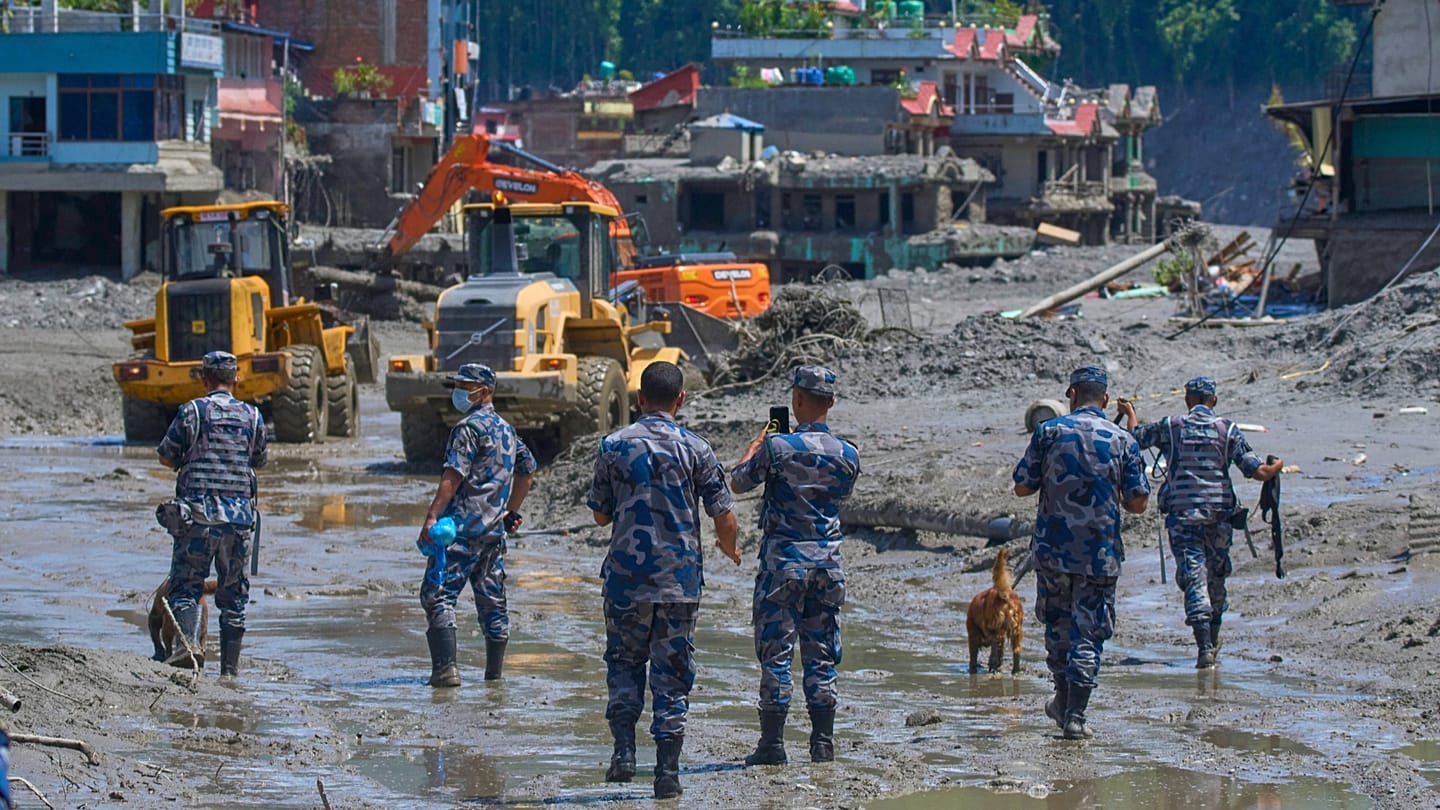
Rescue operations have been repeatedly disrupted by the same unstable terrain that caused the original disaster. Floodwaters washed away roads and bridges across the affected valleys, cutting off ground access to many of the hardest-hit villages and forcing Nepal's government to rely heavily on helicopters to reach survivors and recover bodies in areas that remain otherwise inaccessible. On the Chinese side, authorities identified a new hazard: a lake formed by debris from the original glacial collapse, located upstream near Gyirong, began to swell and threatened to overflow, forcing rescue teams to briefly suspend operations on August 27 out of fear of a second, secondary flood surge before work resumed on August 28 once the immediate threat eased. China's National Fire and Rescue Administration has deployed more than 680 firefighters, 13 search dogs, over 100 vehicles, and 47 drones to the Tibetan side of the border, among the largest rescue mobilizations China has sent to a natural disaster in the region in recent memory.
Reactions
The scale of the disaster and the unusually international makeup of the missing has drawn a broad response from foreign governments. Canadian Prime Minister Mark Carney called the floods "absolutely devastating" as Canadian officials worked to account for citizens believed to be in the area. The United Nations and its humanitarian partner agencies said they were mobilizing supplies and personnel to support affected communities in Nepal, one of the world's poorer nations and one with historically limited capacity to respond to a disaster of this scale on its own. India, given the large number of its citizens believed to have been on pilgrimage routes at the time of the flood, has faced particular domestic pressure to secure information on missing nationals and press both Kathmandu and Beijing for expanded search access, with pilgrimage associations in India publicly urging their government to intensify diplomatic engagement on the issue.
The disaster has also placed an unusual spotlight on cross-border cooperation between Nepal and China, two neighbors that do not always coordinate closely on emergency response given the sensitivity of the frontier region and the difficulty of the terrain itself. The relatively rapid deployment of Chinese fire and rescue personnel, dogs, and drones to the Tibetan side, alongside Nepali military and helicopter operations on its own side of the border, has been described by some regional analysts as a notable, if disaster-driven, moment of practical cooperation between the two governments, even as the two sides have reported different casualty figures and worked largely within their own separate command structures rather than a fully joint operation.
Within Nepal, the flood has reopened long-standing criticism of the country's disaster preparedness and early-warning infrastructure in the high Himalayas, an issue that has surfaced repeatedly after previous glacial flood events. Nepali disaster-management officials and independent glaciologists have pointed to the absence of adequate monitoring systems for high-altitude glacial lakes as a persistent gap, one that successive governments have acknowledged but not fully addressed amid competing budget priorities and the sheer difficulty of installing and maintaining sensors in some of the most remote, high-altitude terrain on Earth.

What's Next
The immediate priority for both Nepali and Chinese authorities remains search and rescue, though officials on both sides have signaled that the operation is shifting, in significant part, toward recovery rather than rescue as the days since the initial flood pass and hopes of finding additional survivors in the hardest-hit areas diminish. The continued instability of the debris-dammed lake near Gyirong on the Tibetan side remains an active concern; officials have warned that a further breach could send another surge of water downstream and have kept evacuation and monitoring measures in place even as search teams resume work in less hazardous zones.
In the coming days, expect continued revisions to both the death toll and the missing-persons count as rescue teams reach previously inaccessible villages and as foreign governments narrow down which of their nationals remain genuinely unaccounted for versus simply out of contact. Diplomatic pressure is likely to build, particularly from India given the concentration of Hindu pilgrims among the missing, for expanded access to the Tibetan side of the border and clearer, unified reporting between Nepali and Chinese authorities. Longer term, the disaster is likely to intensify an already growing debate across the Himalayan region about the adequacy of glacial lake monitoring and early-warning systems in the face of accelerating climate-driven ice melt, and about whether the seasonal pilgrimage and trekking routes that draw tens of thousands of foreign visitors into some of the most geologically unstable terrain on the planet need stronger safety oversight.
Published By | News Editor