Written By | International News Agencies
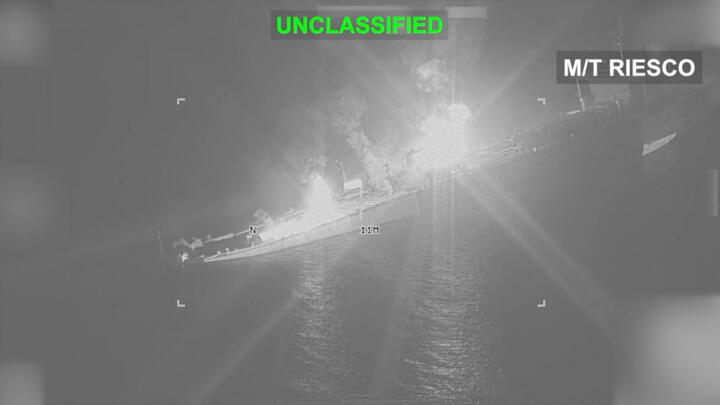
On 5 September, American forces struck three Iranian tankers near Kharg Island in retaliation for attempted missile attacks on U.S. Navy ships.
World Politics
Background
The war between the United States and Iran entered its seventh month this week with the two sides doing to each other's shipping what neither had been willing to do for most of the conflict: sink it openly, publicly, and in numbers. What began on 28 February with what President Donald Trump called "major combat operations" — a joint American-Israeli campaign against Iranian military, government and infrastructure targets — has settled into an attritional contest fought largely at sea, where Iran's principal weapon is its ability to make the Strait of Hormuz ungovernable and Washington's is a naval blockade designed to strangle Iranian oil exports.
Before the war, roughly a fifth of the world's seaborne oil and gas passed through the strait. Flows today remain far below that level. Successive attempts to restore normal traffic — the Omani-brokered shipping arrangements of August, the Qatari mediation effort, the on-again, off-again talks about a reopening formula — have each been overtaken by the next escalation. By early September the pattern had hardened into something close to a routine: an Iranian missile launch at an American warship, an American strike on Iranian vessels or coastal targets, an Iranian salvo at a Gulf air base, and another lurch upward in the price of crude.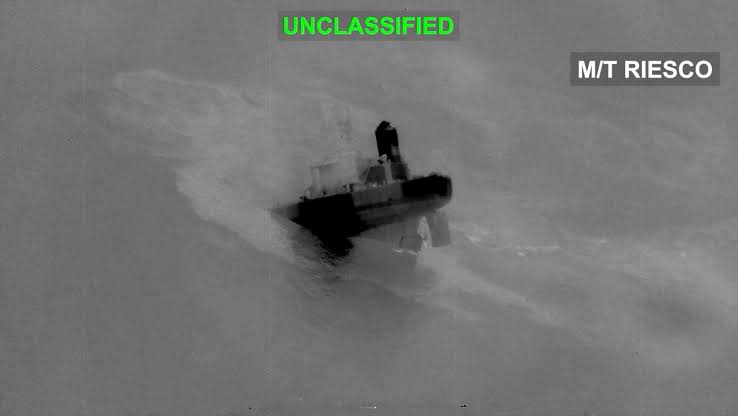
What changed this week was the scale. On 5 September, American forces struck three Iranian tankers near Kharg Island in retaliation for attempted missile attacks on U.S. Navy ships. Two days later, Tehran signalled it intended to widen the geography of the fight. Mohsen Rezaei, secretary of Iran's Supreme National Security Council, announced that Iran would declare a "restricted zone" reaching well beyond the strait itself — beginning, he said, at the line where the American naval blockade starts and extending through the Hormuz region and into parts of the Persian Gulf. An Islamic Revolutionary Guard Corps spokesman, Brigadier General Hossein Mohebbi, described a zone anchored at the southeastern port of Chabahar and taking in stretches of the Sea of Oman, the Arabian Sea and the approaches that feed into Hormuz. Vessels transiting without coordinating with Tehran, Iranian officials warned, would face measures affecting their insurance cover and their future right of passage — an attempt to mirror, in Iranian form, the sanctions architecture Washington has used against it.
Key Developments
The week's violence began away from the water. On Tuesday, 8 September, Houthi forces launched what Saudi officials described as a wave of ballistic missiles and drones against the kingdom's southern region, striking civilian and economic facilities in Abha, Jazan, Najran and Khamis Mushait. The Saudi-led coalition said 73 people were wounded, including women and children, and fires broke out at energy installations; the region hosts a refinery at Jazan with capacity of around 400,000 barrels a day. The Houthis said they had targeted Saudi Aramco sites and the King Khalid air base, and framed the attacks as retaliation for more than a hundred Saudi airstrikes in Yemen over the preceding three days — the clearest sign yet that Yemen's four-year truce has collapsed and been folded into the wider regional war.
Hours later, U.S. Central Command carried out the largest single strike on Iranian shipping of the conflict. CENTCOM said it destroyed five Iranian oil carriers — the Kaviz, the Charminar, the Horizon 1 and the Riesco in the Gulf of Oman, and the Derya near Kharg Island. American forces, the command said, directed the crews to abandon their vessels before the ships were struck and rendered inoperable, and no American personnel were harmed. Iranian state media reported that the crews of two of the tankers were brought ashore in lifeboats. The Pentagon justified the operation as a response to two Iranian attempts in as many days to hit a U.S. Navy warship with ballistic missiles.
Iran's answer came on Wednesday and was, by its own account, the broadest assault on shipping it has mounted since the war began. The IRGC said it had attacked ten vessels near the Strait of Hormuz — two American ships and eight oil tankers — striking them, it claimed, as they attempted to cross the area Tehran had just declared off limits. Taken together with the American strikes the previous day, it amounted to the biggest declared wave of tit-for-tat attacks on merchant traffic of the entire conflict.
Tehran also fired ballistic missiles at Muwaffaq Salti Air Base near Azraq in eastern Jordan, roughly 100 kilometres northeast of Amman and a central hub for American air operations in the region. Accounts of the damage diverge sharply and have not been reconciled. Jordan's military said it intercepted 18 of 20 incoming missiles and reported no immediate casualties; American officials characterised the Iranian response as largely ineffective and credited integrated air and missile defences, with more than 30 Patriot interceptors expended. CBS News, however, reported that multiple U.S. aircraft were damaged — an A-10 Thunderbolt II left with a wing torn off, and around eight F-15s sustaining minor damage before being returned to service. Iranian state outlets claimed hangars used by American fighters had been destroyed. Readers should treat the battle-damage picture as contested; the same base was hit in a far deadlier Iranian strike in mid-July that killed U.S. service members, and the assessments of that attack were also revised upward over subsequent weeks.
The market reaction was immediate. Brent crude, which had been climbing on reports of a second, undisclosed Iranian attack on U.S. Navy ships, breached $100 a barrel for the first time since July and closed at $101.21 on Wednesday, a gain of about 3.4 per cent in a single session. Analysts pointed less to the physical loss of the five Iranian tankers — Iranian exports are already heavily constrained — than to what the exchange implied: that Gulf oil flows will remain disrupted for the foreseeable future, and that the risk premium on every hull transiting the region has just been repriced.
Reactions
President Trump used an appearance at the Republican National Committee's midterm convention in Dallas on Wednesday night to predict that the war is nearly over — and to tie its ending explicitly to the American electoral calendar. "I think war is going to end immediately after the election because they can't hold out any longer," he said. "They're desperate to try and affect the election." He added that petrol prices would take "a little bit longer than the midterm" to fall, but insisted they would once Tehran sued for peace. It is a striking claim to make in the same week that Iran demonstrated it can still range a Jordanian air base and interdict shipping at will, and it fuses two questions — when the war ends and how Americans vote on 3 November — that his critics argue should be kept apart.
The president also returned to a threat he has made repeatedly in recent days: that the United States may strike Kuh-e Kolang Gaz La, the underground tunnel complex in the mountains near Natanz known in English as Pickaxe Mountain. Trump urged Iran not to "get cute" about activity at the site. His warning followed a satellite-imagery analysis published this week by the Center for Strategic and International Studies, which found more road activity at Pickaxe Mountain in 2026 than at any point in its history and what the researchers described as a clear surge in construction. The complex is associated with centrifuge assembly and was not among the targets of the initial American strikes on Iran's declared nuclear facilities — which is precisely why it now looms so large in Washington's calculations about whether Iran is reconstituting its programme.
Washington has ruled out returning to negotiations until the attacks on shipping stop, a position that has the effect of making the tanker war itself the precondition for ending the tanker war. Tehran, for its part, has shown no sign of accepting that framing; the IRGC said it would escalate further in response to any additional American strikes. Gulf states are caught in the middle. Saudi Arabia is absorbing Houthi missiles aimed at its energy infrastructure; Jordan is absorbing Iranian missiles aimed at American aircraft on its soil; the shipping industry is absorbing insurance costs that make ordinary commerce marginal.
In Congress, the constitutional argument that flared in the spring remains formally unresolved. Both chambers passed war powers resolutions in June — the House 215 to 208 on 3 June, the Senate 50 to 48 later that month — directing the president to remove American forces from hostilities with Iran absent explicit authorisation. It was the first time both chambers had done so under the War Powers Resolution. The campaign has continued regardless, and Democrats led by Senator Tim Kaine have repeatedly forced fresh votes without changing the outcome on the ground.
What's Next
Three variables will shape the coming weeks. The first is whether Iran's declared restricted zone is enforced or merely announced. Iran does not have the naval reach to police the Arabian Sea, but it does not need to: the threat alone raises war-risk premiums and deters marginal traffic, which may be the actual objective. If the IRGC does begin systematically interdicting vessels far outside the strait, the conflict expands from a chokepoint dispute into a general threat to Indian Ocean commerce, with consequences for Asian importers who have so far stayed out of the argument.
The second is Pickaxe Mountain. A strike on a deeply buried centrifuge-assembly site would be a qualitative escalation, not a quantitative one — a return to the nuclear dimension of the war after months in which oil, ships and bases have been the currency. Whether the United States possesses munitions capable of reaching it, and whether Trump is signalling intent or applying pressure, are both genuinely unclear from the public record.
The third is the American election. Trump has now publicly asserted that Iran is holding out to hurt Republicans in November and will fold immediately afterwards. That prediction creates its own political trap: if the war continues past 3 November, it becomes evidence against him; if it ends soon after, opponents will ask what was traded away and when the terms were actually agreed. Meanwhile the price of crude above $100 flows directly into the cost-of-living argument that both parties are running on. For voters, the tanker war is no longer a foreign story — it is a line on a fuel receipt.