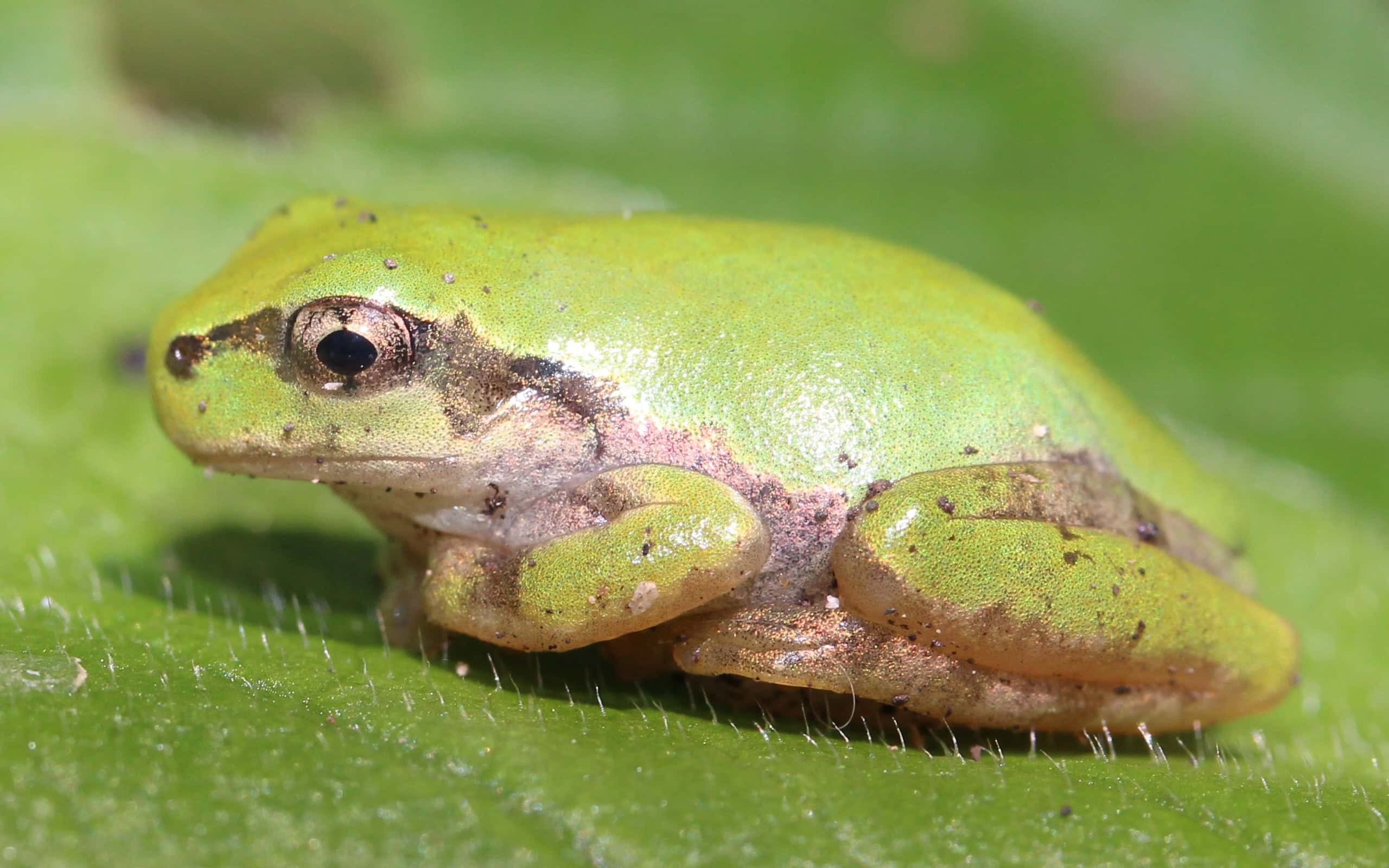
Scientists left stunned after gut bacteria from a humble Japanese tree frog wiped out 100% of tumors in mice with a single injection — beating chemotherapy and cutting-edge immunotherapy in head-to-head tests. Human trials could be next.
ISHIKAWA, Japan
Somewhere in the intestines of an ordinary Japanese tree frog, scientists say they may have stumbled onto one of the most explosive cancer discoveries in years — a microscopic assassin so effective it obliterated tumors in mice with a single shot, and did it better than chemotherapy drugs currently prescribed to cancer patients around the world.
The bacterium, a previously overlooked organism called Ewingella americana, was pulled from the gut of Dryophytes japonicus — the Japanese tree frog — as part of a sweeping search for medicine hiding inside amphibians and reptiles. What researchers found, published in the peer-reviewed journal Gut Microbes and now rocketing through headlines worldwide this week, reads less like a dry academic paper and more like science fiction: a bacterium that homes in on tumors like a heat-seeking missile, detonates cancer cells from the inside, and then calls in the body's own immune army to finish the job.
"This is a novel therapeutic strategy that could open an entirely new chapter in oncology," the research team wrote of results that left even seasoned cancer scientists doing a double take.
A Frog's Gut, A Scientist's Gamble
The discovery traces back to the lab of Professor Eijiro Miyako at the Japan Advanced Institute of Science and Technology (JAIST), a researcher with a reputation for chasing unconventional ideas most labs wouldn't touch. Miyako's team had a hunch: amphibians and reptiles, creatures that spend their lives wallowing in bacteria-laden mud, ponds, and soil, might carry gut microbes with cancer-fighting properties that mammals — including humans — simply don't have.
So they went looking. The team swabbed and cultured bacteria from the intestines of Japanese tree frogs, Japanese fire belly newts, and Japanese grass lizards, ultimately isolating 45 distinct bacterial strains. Nine of those strains showed some ability to fight tumors in early lab tests. But one strain, Ewingella americana, blew the rest out of the water.
In mice implanted with colorectal cancer tumors, a single intravenous dose of E. americana didn't just shrink the cancer. It erased it. Every treated animal in the study achieved what oncologists call a "complete response" — a 100% cure rate in the model — and when researchers later tried to reintroduce cancer cells into the same mice, the tumors didn't come back. Their immune systems, it appeared, had learned to recognize and destroy the cancer permanently.
How a Bacterium Learns to Hunt Cancer
What makes E. americana so lethal to tumors, and seemingly harmless everywhere else in the body, comes down to a piece of biology most people never think about: tumors are starved of oxygen.
Fast-growing cancerous tissue outpaces its own blood supply, leaving pockets of tumor riddled with low-oxygen, or "hypoxic," conditions that most bacteria can't survive in — but E. americana can. As what's known as a facultative anaerobe, capable of living with or without oxygen, the bacterium is drawn straight into that hostile hypoxic environment and thrives there while healthy, oxygen-rich tissue elsewhere in the body stays essentially untouched. Researchers tracked bacterial counts inside tumors ballooning roughly 3,000-fold within just 24 hours of the injection — an invasion of the cancer, and only the cancer.
Scientists believe there's likely more to the story than oxygen levels alone. Tumors are also known to flash a molecular "don't eat me" signal called CD47 that normally shields them from the immune system — and researchers suspect that same immune-dampened environment may be exactly what allows the bacterium to move in and set up camp undisturbed while the rest of the body's defenses stay on alert.
Once inside, E. americana attacks on two fronts. First, it directly kills cancer cells through toxic activity the bacterium produces on contact. Second — and this is the part that has researchers most excited — it acts like a flare, lighting up the tumor for the immune system to find. Neutrophils, T cells and B cells flood the site, pumping out inflammatory signals like TNF-alpha and interferon-gamma that push cancer cells into programmed cell death and prime the body to remember and destroy any recurrence.
In direct head-to-head comparisons, the bacterium outperformed both liposomal doxorubicin — a mainstay chemotherapy drug used against colorectal and other cancers — and anti-PD-L1 checkpoint inhibitors, the class of immunotherapy drugs that revolutionized cancer treatment over the last decade. Beating one or the other would have been a notable result on its own. Beating both, in the same study, is what turned heads across the oncology research world.

Why Colorectal Cancer Needed a New Idea
Colorectal cancer remains one of the most stubborn targets in oncology, and one of the deadliest. It's diagnosed in roughly 150,000 Americans a year and remains among the leading causes of cancer death worldwide, particularly once it has spread beyond the colon. Standard chemotherapy regimens frequently lose effectiveness as tumors develop drug resistance, and checkpoint immunotherapy — despite its game-changing success in melanoma and lung cancer — has historically underperformed in the majority of colorectal tumors, which tend to lack the high mutation burden that helps the immune system recognize cancer cells as foreign. That combination of chemo-resistance and immunotherapy-resistance is exactly why a treatment that appears to sidestep both problems at once has researchers so animated.
The Catch Nobody's Ignoring
For all the excitement, there's a serious asterisk hanging over this discovery, and the researchers know it. Ewingella americana is not some newly discovered, perfectly safe microorganism — it's a known human pathogen with a real-world track record. Clinical case reports document E. americana causing sepsis, including at least one documented case in which a cancer patient developed a life-threatening bloodstream infection after receiving a contaminated blood transfusion.
That's an uncomfortable irony sitting at the center of this breakthrough: the same immune-suppressed state that makes cancer patients vulnerable to infection is also the population this therapy would be designed to treat. A bacterium that shows "minimal toxicity" in a healthy lab mouse is a very different proposition in a human chemotherapy patient with a depleted immune system.
Miyako's team isn't glossing over that risk. Researchers say the bacterium will need extensive engineering — likely genetic attenuation to strip away its capacity to cause uncontrolled infection while preserving its tumor-killing behavior — before it could ever be tested in a person. The team's stated next steps are methodical, not a headlong rush to the clinic: broaden testing to other cancer types beyond colorectal cancer, refine dosing to control inflammatory side effects, and only then begin the yearslong, multi-phase process toward potential human trials.
Expert Perspective
Outside researchers reviewing the work describe it as a genuinely fresh direction in a field — bacterial cancer therapy — that has struggled for decades to translate promising lab results into working treatments. The idea of using bacteria to fight cancer is not new: as far back as the 1890s, physician William Coley famously injected cancer patients with bacterial toxins and observed occasional tumor regressions, a phenomenon later dubbed "Coley's toxins." Modern versions of that idea, using genetically engineered Salmonella and Clostridium strains, have shown flashes of promise in clinical trials over the past two decades but have never delivered the kind of complete, durable response Miyako's team is now reporting in mice.
What sets this study apart, oncology-watchers say, is the dual mechanism — direct cytotoxicity paired with a durable immune "memory" effect — combined with the sheer novelty of sourcing the organism from an entirely unexplored ecological niche. Amphibian and reptile microbiomes have been almost completely ignored by drug discovery efforts, despite representing, in Miyako's own words, an "unexplored biodiversity" that could be "a treasure trove" for future medicine.
What This Means for You
Here's the reality check anyone reading this needs: this is a mouse study. A single-model, single-cancer-type mouse study, at that. History is littered with cancer treatments that performed spectacularly in mice and then failed, underperformed, or proved too toxic in humans — the translation gap between rodent models and human biology is one of the most persistent and frustrating problems in oncology research. There is no confirmed timeline yet for human trials, and researchers themselves are cautious about how far off any real-world treatment remains.
Still, for the hundreds of thousands of patients worldwide facing colorectal cancer, and the broader cancer community watching for any genuinely novel mechanism, this is exactly the kind of early signal worth tracking closely — especially one that appears to sidestep both the drug resistance that increasingly undermines chemotherapy and the limited response rates that leave many patients ineligible for checkpoint immunotherapy.
If nothing else, the discovery is a reminder that the next major cancer breakthrough might not come from a billion-dollar pharmaceutical pipeline at all — it might already be living quietly in the gut of a pond frog, waiting to be found.
The Bottom Line
Ewingella americana has gone, in the space of a single study, from an obscure bacterium best known for occasionally sickening hospital patients to one of the most talked-about names in experimental oncology. Whether it becomes a genuine cancer treatment or another promising lab result that never makes it to a human bedside will depend on years of careful, unglamorous safety work still ahead. For now, scientists are calling it exactly what it is: an early, startling, and undeniably strange result — and one absolutely worth watching.
This article is for informational purposes and does not constitute medical advice. Readers with questions about cancer treatment options should consult a qualified oncologist.
Published By | Features Editor