Written By | Health News Agencies
Northwestern researchers followed more than 6,000 adults for a decade. The trendy coronary calcium scan barely beat a free online calculator — with one crucial exception
HEALTH
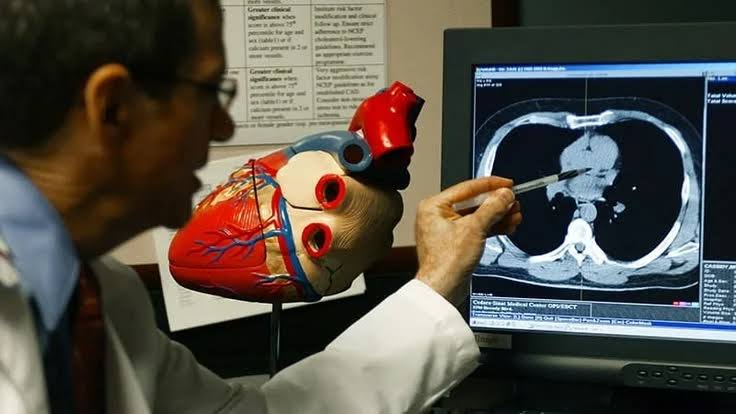
It has become the status symbol of the health-anxious middle-aged: the heart scan. A few hundred dollars, ten minutes flat on your back in a CT scanner, no needles, no treadmill, no hospital gown. You walk out with a number — your coronary artery calcium score — and that number, the pitch goes, tells you whether the thing that kills more Americans than anything else is already growing quietly inside your chest.
Radiology chains advertise it. Executive health programmes bundle it. Podcast hosts swear by it. Demand has climbed steadily as prices have fallen.
And now a team at Northwestern Medicine has done the unglamorous thing that almost nobody does with a popular test: they followed thousands of people for ten years and checked whether the scan actually told doctors anything they did not already know.
For most people, the answer was: barely.
WHAT THE RESEARCHERS DID
The study, published in JAMA on 26 August and pushed into wide circulation this weekend, drew on the Multi-Ethnic Study of Atherosclerosis — MESA — one of the most intensively studied cardiovascular cohorts in the world.
The team examined data from more than 6,000 adults aged 45 to 79. At the outset, every single participant got two things. First, a coronary artery calcium scan, producing a calcium score. Second, a PREVENT estimate — the American Heart Association's cardiovascular risk calculator, which requires no scanner at all, only routine information: age, sex, blood pressure, cholesterol and other commonly available measures.
Then the researchers waited, and watched what actually happened to those 6,000 people over the following decade.
Over ten years, 6 per cent of participants had a heart attack or a stroke. The question was simple: did knowing their calcium score, on top of their PREVENT score, help predict which ones?
THE NUMBER AT THE HEART OF IT
Statisticians measure this with something called discrimination — how well a model separates the people who will have an event from the people who will not. A score of 0.5 is a coin toss. A score of 1.0 is perfect prophecy.
PREVENT alone scored 0.73.
PREVENT plus the calcium scan scored 0.75.
Two hundredths of a point. For a test involving a CT scanner, a dose of ionising radiation and, for most people, a bill.
"Coronary artery calcium scans are becoming more widely available and less expensive," said the study's senior author, Dr Nilay Shah, assistant professor of medicine in the division of cardiology at Northwestern University Feinberg School of Medicine. "Our findings suggest that not everyone necessarily needs or would benefit from a coronary artery calcium scan for the purpose of predicting risk of heart attack and stroke."
THE EXCEPTION THAT CHANGES EVERYTHING
Here is where this story stops being a debunking and becomes something considerably more useful.
When the researchers narrowed their focus to a specific slice of the population — people whose PREVENT score placed them in the borderline or intermediate categories, meaning a 3 to 9 per cent estimated chance of cardiovascular disease within ten years — the calcium score suddenly earned its keep. For that group, adding it produced a meaningful improvement in predicting who would go on to have an event.
"For patients at borderline risk, knowing their calcium score can help determine whether their risk is actually lower or higher than initially estimated, which can help guide treatment decisions," Shah explained.
Think of it as the uncertain middle ground. If you are clearly low risk, the scan is unlikely to change anything. If you are clearly high risk, the scan is unlikely to change anything either. But if you and your doctor are genuinely on the fence — the awkward conversation that begins "well, you're borderline" — that is precisely where a number from inside your own arteries can break the tie.
WHY A TEST THAT ADDS NOTHING CAN STILL DO HARM
A test that fails to help is not neutral. Shah was explicit about this, and it is the part of the study most likely to be lost in the noise.
"Routinely using a calcium scan in people who are at low risk may result in unnecessary radiation exposure, testing and costs with unclear clinical benefits," he said.
The radiation is real, if modest. Professional guidance recommends that the effective dose for a calcium scan should average roughly 1.0 to 1.5 millisieverts and stay below 3.0 — but audits have found doses at some sites ranging considerably higher. It is not a chest X-ray. It is not nothing.
The money is real too. A coronary artery calcium scan typically runs $100 to $400 in the United States, and — critically — most insurance plans, including original Medicare, do not cover it. Out-of-pocket costs commonly land somewhere between $50 and $250. For a test being marketed to the worried well, that is a meaningful sum to spend on two hundredths of a point.
And then there is the cascade. Any CT of the chest can pick up something incidental — a lung nodule, a shadow, an oddity — that then demands its own follow-up scan, its own specialist appointment, its own weeks of waiting. The scan you bought to reassure yourself can generate a new thing to worry about.
THE HIGH-RISK PARADOX
The other half of Shah's argument is the one that will surprise people who assume that the sicker you are, the more testing you need.
"Using calcium scans in people who are at high risk is likely to result in unnecessary testing because these individuals are recommended to start a statin regardless of what the calcium scan shows," he said.
In other words: if the guidelines already say you should be on a cholesterol-lowering drug, a calcium score of zero does not un-recommend it, and a calcium score of 400 does not recommend it any harder. You have already arrived at the decision. The scan is a spectator.
This is the classic failure mode of enthusiastic testing — ordering the investigation at the two ends of the spectrum where the answer cannot move you, and skipping it in the middle where it could.
WHAT PREVENT IS, AND WHY IT MATTERS THAT IT HELD UP
There is a quieter, arguably bigger finding buried in this paper: PREVENT worked.
Introduced by the American Heart Association in 2023, the PREVENT equations estimate cardiovascular risk over both ten and thirty years, and were designed to replace the older Pooled Cohort Equations that had guided prevention decisions for a decade. The 2026 American College of Cardiology/American Heart Association multisociety dyslipidemia guideline has since adopted PREVENT for ten-year risk estimation.
So a great many clinical decisions now rest on this calculator. Shah noted that the results support its usefulness — that even without any scan results at all, PREVENT performed well at predicting who would have a cardiovascular event.
It costs nothing. It runs in a browser. It requires numbers your doctor almost certainly already has in your file. And in this ten-year test against real outcomes in real people, it did most of the work.
EXPERT PERSPECTIVE: WHO WROTE THIS PAPER MATTERS
It would be easy to read this study as an attack on calcium scanning by sceptics. The author list says otherwise.
Alongside the Northwestern team — Xiaoning Huang, Lucia Petito, Norrina Allen, Dr Philip Greenland and Dr Sadiya Khan — the paper carries names including Ron Blankstein, Roger Blumenthal, Josef Coresh, Amit Khera, Donald Lloyd-Jones and James Stein. Several of these are among the most prominent figures in preventive cardiology and cardiac imaging in the United States. This is not an outside broadside. It is the field auditing its own most popular tool.
That matters because the message is not "calcium scans are useless." It is considerably more surgical: calcium scans are a tie-breaker, and tie-breakers should be reserved for ties.
The work was supported by the American Heart Association and the National Heart, Lung, and Blood Institute — public and non-profit funding, with no scanner manufacturer footing the bill.
WHAT THE STUDY CANNOT TELL YOU
The researchers were careful about their own limits, and so should we be.
Everyone in this analysis was between 45 and 79 when the study began. Nothing here tells you what a calcium score is worth in a 38-year-old with a terrifying family history — a group increasingly being scanned, and one for which the evidence remains thin.
Shah also flagged the need for more research in higher-risk groups, specifically naming South Asian and Filipino adults, where existing risk equations have historically performed less well and where the added value of imaging may differ.
And this is a study of prediction, not of treatment. It asked whether the scan forecasts events better. It did not run a trial in which one group got scanned, the other did not, and researchers compared how many people in each arm ended up having heart attacks. That trial has still not been done.
WHAT THIS MEANS FOR YOU
If you have been thinking about booking a heart scan — or if a clinic has been advertising one at you — this study gives you a straightforward way to think about it.
Start with the free thing first. Ask your doctor to run your numbers through PREVENT. It takes minutes, it costs nothing, and it uses information already sitting in your chart.
If it puts you at low risk, a calcium scan is unlikely to change your care. Spend the money on something else and revisit your numbers in a few years.
If it puts you at high risk, the conversation is about starting treatment, not about buying another picture. The scan will not tell your cardiologist anything that changes the plan.
If it puts you in that 3 to 9 per cent borderline-to-intermediate band — and a great many middle-aged adults land exactly there — then this is your moment. That is the one group in which a decade of real-world data says the scan genuinely sharpens the picture, and where it may be the thing that settles whether you start a statin or not.
One more thing worth holding onto. About 10 per cent of US adults aged 30 to 79 have cardiovascular disease, and it remains the country's leading cause of death — but as Shah points out, a great many heart attacks and strokes are preventable. The point of all this measuring is not the measurement. It is deciding who gets treated.
THE BOTTOM LINE
Six thousand adults. Ten years. Six per cent of them had a heart attack or a stroke. And the fashionable scan that millions of people are being encouraged to buy moved the needle from 0.73 to 0.75 — unless you happened to be sitting in the uncertain middle, in which case it mattered a great deal.
That is not a scandal. It is something rarer and more valuable: a precise answer to the question of who a test is actually for.
The free calculator does most of the job. The scan finishes it — but only for the people who were genuinely undecided in the first place. Everyone else is buying certainty they already had.



