Written By |
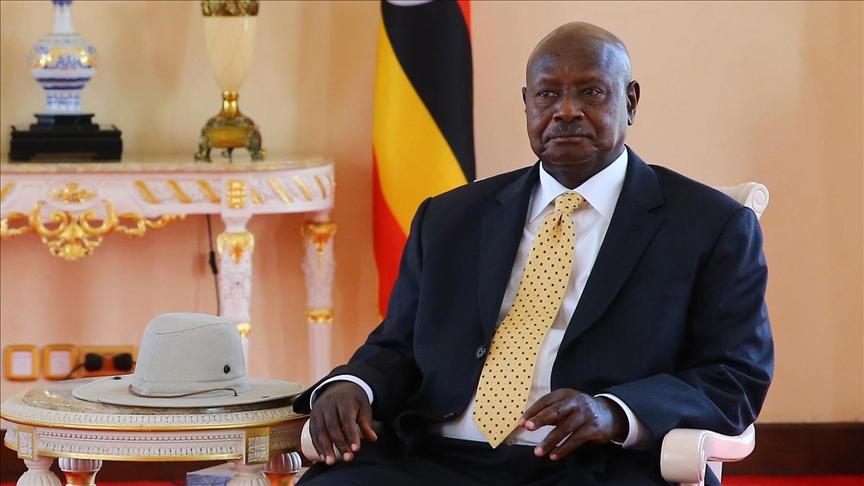
Museveni, has been the president of Uganda since 1986
By Bosco Bakwatanisa Muto
Uganda’s future post-President Museveni and the National Resistance Movement (NRM) regime has become a subject of much scholarly and expert debate. After more than three decades in power, Museveni's regime has shaped Uganda’s political, social, and economic structures in a unique and profound way. Scholars and political experts alike have speculated on the possible trajectories the country could take after Museveni, who has been at the helm since 1986. While opinions vary, the conversation often revolves around governance, democracy, political stability, and socio-economic development.
Historical context of Museveni’s NRM regime
Since taking power in 1986 after a protracted guerrilla war, Museveni’s NRM has established a political framework that blends a mix of authoritarianism and controlled democratic processes. Scholars like Mahmood Mamdani have described Uganda under Museveni as a "hybrid regime"—one where elections are held, but significant power is concentrated in the presidency. The NRM has maintained dominance through the suppression of opposition, manipulation of electoral laws, and limitations on term limits, effectively securing Museveni's extended rule.
Political analysts like Andrew Mwenda and Frederick Golooba-Mutebi have highlighted how Museveni's regime has capitalized on military control and political patronage to maintain power. However, Mwenda suggests that Museveni's brand of governance, though stabilizing, may not provide a sustainable model for Uganda’s future. Once Museveni is no longer in power, the possibility of a political vacuum could arise, creating uncertainty about the country’s stability.
Transition challenges and the role of the NRM
One key issue discussed by experts is the transition of power. Uganda, like many African nations with long-serving leaders, faces the risk of instability during a transition period. Political scientist Ali Mazrui argues that African states with entrenched leadership face significant challenges during transitions, especially when the leader has tightly controlled state institutions. This can result in weak governance structures, power struggles within ruling parties, and potential civil unrest. The NRM, under Museveni, has fostered a system where loyalty to the president often supersedes institutional loyalty, raising concerns about how the ruling party will handle a transition. Scholarly opinions suggest that without strong institutions, the NRM’s continued dominance may wane after Museveni’s departure. Joseph Oloka-Onyango has noted that "personalization of power" under Museveni has weakened Uganda’s institutional framework, suggesting that succession could be turbulent if the NRM fails to reform its governance structures.
Democratic prospects post-Museveni
Several scholars point to the potential for democratic growth in Uganda once Museveni’s regime ends. Nic Cheeseman, a professor of democracy and governance in Africa, argues that prolonged authoritarian regimes often limit political pluralism, but transitions can create openings for democracy. Cheeseman emphasizes that transitions from entrenched leadership can either lead to greater democratization or authoritarian relapse, depending on the strength of civil society and opposition forces.
The growth of opposition leaders, such as Robert Kyagulanyi (Bobi Wine), reflects the potential for democratic change. Kyagulanyi’s emergence as a significant political player demonstrates the desire for political change, especially among Uganda's youth. His People Power Movement has garnered significant support, particularly in urban areas. However, experts like Mwenda warn that without political and institutional reforms, Uganda risks a cyclical return to authoritarianism, even with new leadership.
Institutional weakness and socio-economic implication
Institutional weakness is another concern for Uganda’s future. Scholars like Sam Wilkins have examined how Museveni’s government has weakened institutions such as the judiciary, electoral commission, and legislature. The absence of strong, independent institutions makes governance highly reliant on individuals rather than systems. Without robust institutions to support a democratic transition, Uganda could face challenges similar to those seen in Zimbabwe or Sudan, where transitions resulted in prolonged instability.
Economically, Uganda faces both opportunities and challenges. Museveni's economic policies, particularly his liberalization strategies of the 1990s, have led to significant growth. However, high levels of youth unemployment, income inequality, and underdeveloped sectors like agriculture continue to hinder social-economic transformation. As Kwesi Prah argues, without addressing socio-economic inequities, political transitions could exacerbate existing economic problems, particularly if a new regime fails to implement inclusive development policies.
Uganda’s future post-President Museveni, especially considering the prevailing political and socio-economic conditions, raises significant concerns and opportunities. My opinion aligns with the critical analyses from various scholars but also draws from the current situation within Uganda. Uganda faces challenges related to political succession, governance, and economic inequalities, which are more pronounced than ever. The recent rise of youth-led political movements, such as Bobi Wine’s National Unity Platform (NUP), reflects a growing discontent with the status quo, highlighting the urgency for political reform and modernization.
The ruling NRM has consolidated power around Museveni for over three decades, making any transition potentially volatile. I believe the country must focus on strengthening its political institutions to handle the shift smoothly. The current electoral processes are perceived as compromised, with widespread allegations of rigging and political repression. This not only undermines the legitimacy of the democratic process but also fuels unrest and disillusionment among the youth. Without meaningful reform, Uganda risks a fragile transition, echoing experiences in neighboring countries like Sudan.
On the socio-economic front, Uganda's population is predominantly youthful, with high unemployment rates and limited access to quality education and health services. In my view, political transition alone will not solve Uganda’s challenges unless it is accompanied by robust economic policies aimed at reducing poverty and inequality. Economic diversification, investment in education, and infrastructure development are critical areas that any future government must prioritize to harness Uganda’s potential.
How Uganda can avoid the downsides of political transition
To navigate the post-Museveni era, scholars suggest a range of solutions. First, political reforms, particularly around the electoral process, are vital. Cheeseman and others emphasize the need for independent electoral commissions to ensure free and fair elections, which would give legitimacy to future leadership transitions.
Secondly, civil society's role will be critical. According to Oloka-Onyango, empowering civil society organizations (CSOs) can create a check on government power and foster accountability. A strong civil society can also facilitate dialogue between the government and the opposition, potentially smoothing over the transition. Third, economic diversification and development are essential to ensuring Uganda’s future stability. Scholars like David Booth recommend focusing on sectors like agriculture, infrastructure, and education to create inclusive growth. Economic empowerment, particularly among the youth, can reduce political tensions and prevent post-transition violence.
In conclusion, Uganda’s post-Museveni future remains uncertain, with a wide range of possible outcomes. Scholars and political experts agree that the country’s ability to transition successfully will depend on political reforms, institutional strengthening, and economic development. While Uganda has the potential to democratize and prosper, it must address its historical challenges of authoritarianism, weak institutions, and socio-economic inequalities. Only by doing so can it ensure a stable and prosperous future in the post-Museveni era.
The writer is a Doctoral student scholar and a Pan-Africanist