Written By | News Agencies
Tensions between Iran, Israel and the United States escalated sharply after nuclear negotiations in Geneva collapsed, building on a shorter, twelve-day air war between Israel and Iran in 2025.
The fragile truce that had quieted, if not ended, the 2026 Iran war shattered this week after Iranian forces struck three commercial vessels in the Strait of Hormuz and the United States responded with a fresh wave of military strikes across Iranian territory. The exchange, which unfolded over roughly 24 hours beginning Tuesday, marks the most dangerous escalation in the region since a U.S.-brokered interim agreement in mid-June appeared to have halted the fighting that began in February. President Donald Trump, speaking as the crisis unfolded, said the ceasefire arrangement with Tehran was now “over,” even as he left open the possibility that talks could continue.
Background
The current crisis is the latest chapter in a conflict that has convulsed the Gulf region for nearly half a year. Tensions between Iran, Israel and the United States escalated sharply after nuclear negotiations in Geneva collapsed, building on a shorter, twelve-day air war between Israel and Iran in 2025. On February 28, 2026, the United States and Israel launched a joint air campaign against Iranian nuclear and military infrastructure — an operation the U.S. military referred to internally as Operation Epic Fury. Iran responded by effectively closing the Strait of Hormuz, a narrow waterway through which roughly a fifth of the world's oil supply normally passes, warning ships away, laying sea mines and attacking merchant vessels with its Revolutionary Guard Corps navy.
A large wave of attacks on March 11 damaged at least three vessels, including a Thailand-flagged ship whose crew had to be rescued by Oman's navy after several crew members were confirmed dead. Between April 13 and May 29, the U.S. mounted a naval blockade of Iranian ports that the Pentagon estimated cost Iran roughly $4.8 billion in lost oil revenue, stranding dozens of tankers loaded with Iranian crude in the Gulf. The war formally wound down after Trump and Iranian President Masoud Pezeshkian signed a memorandum of understanding on June 17 intended to end hostilities. Since then, the Strait has remained split into rival shipping corridors: a southern route hugging Oman's coast, patrolled by the U.S. Navy, and a northern route that Iran has insisted ships must use instead, threatening to target vessels that do not comply.
Key Developments
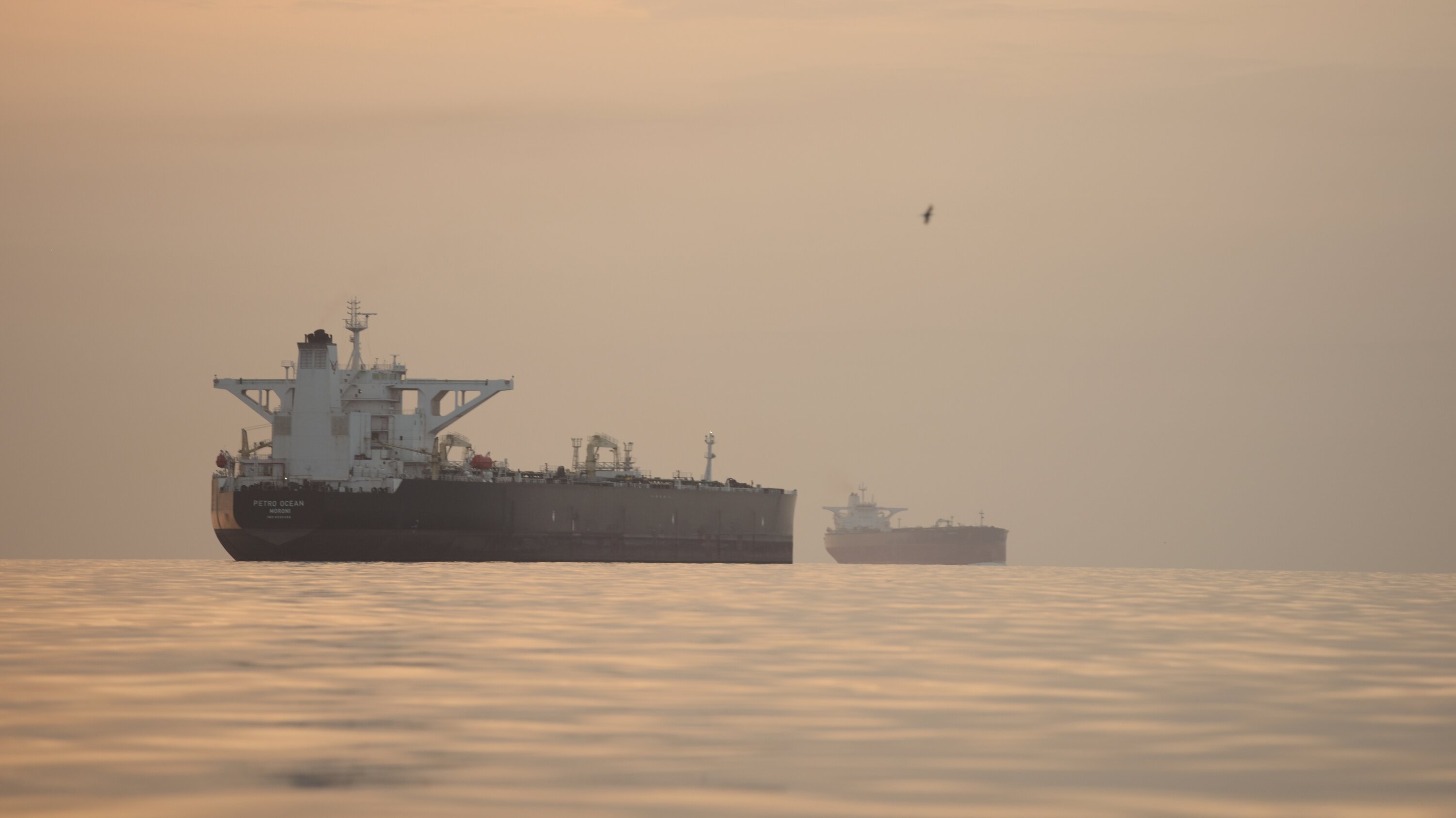
The truce unraveled early this week when three merchant ships — reportedly including Qatari and Saudi-linked tankers — were struck in or near the Strait of Hormuz off the coast of Oman. One tanker caught fire after being hit; British maritime authorities said the other two vessels sustained damage but no casualties were reported, and both were able to continue on their way. Qatar publicly blamed Iran for the attack. The U.K. Maritime Trade Operations centre raised the regional threat level to “severe.”
Hours later, U.S. Central Command said it had launched a “series of powerful strikes” on Iranian territory, hitting more than 80 targets. According to CENTCOM, the strikes hit Iranian air defense systems, command-and-control networks, coastal radar installations, anti-ship missile batteries and more than 60 small boats operated by the Islamic Revolutionary Guard Corps in and around the Strait. Simultaneously, the U.S. Treasury Department revoked a sanctions waiver that had allowed Iran to sell oil and petrochemicals on the global market under the terms of the June interim deal, giving buyers until July 17 to wind down any remaining purchases of Iranian crude.
Iran responded within hours. Its Revolutionary Guard said it conducted a joint missile-and-drone operation against roughly 85 U.S.-linked military sites, singling out Bandar Salman — the base area used by the U.S. Navy's Fifth Fleet in Bahrain — and Ali Al Salem Air Base in Kuwait. Kuwait's military said its air defenses were actively engaging incoming missiles and drones, and Bahrain's Interior Ministry activated emergency sirens across the country. Both attacks were confirmed to have struck within the territory of U.S. partner nations rather than U.S. soil directly, but the strikes on Gulf Arab states' territory represented a significant widening of the conflict beyond the U.S.-Iran dyad.
Trump, addressing the escalation, said the ceasefire agreement reached in June was “over” following the exchange of strikes, though he suggested diplomatic channels remained open. The developments came as Trump was simultaneously traveling to Turkey for a NATO summit in Ankara, adding a layer of complexity to the U.S. response, since American attention and diplomatic bandwidth were divided between the Gulf crisis and alliance politics in Europe.
Reactions
International reaction split along now-familiar lines. The United Nations Security Council passed a resolution condemning Iran's retaliatory strikes on Gulf states, and the U.N. secretary-general's office called for immediate de-escalation. Kuwait's Foreign Ministry condemned what it termed “heinous” Iranian aggression as a violation of Bahraini and Kuwaiti sovereignty, while the United Arab Emirates' defense ministry, though not directly targeted in this round, called the attacks “a dangerous escalation and a cowardly act that threatens the security and safety of civilians.” Most Middle Eastern governments criticized the Iranian strikes; several Asian governments called for peace without assigning blame; and European reactions were mixed, with a majority condemning Iran's retaliation while some voices criticized the underlying U.S.-Israeli campaign as having provoked the crisis in the first place. Russia, though allied with Iran, characterized the U.S. and Israeli strikes as destabilizing but signaled no appetite for direct intervention.
Financial markets registered the escalation immediately. Brent crude, the international oil benchmark, rose roughly 0.9 percent as traders priced in renewed doubts about a return to normal shipping through Hormuz, a chokepoint for a significant share of global seaborne oil and liquefied natural gas trade. Analysts noted that the revocation of the U.S. sanctions waiver on Iranian oil sales, layered on top of the military escalation, compounds the economic uncertainty by removing a release valve that had briefly allowed some Iranian crude back onto world markets.
Perhaps the most consequential reaction has been a quieter, longer-term one: several Gulf capitals, according to regional reporting, are increasingly questioning the wisdom of relying on a U.S.-centric security architecture that has repeatedly left their territory exposed to Iranian retaliation for strikes they did not order and, in some cases, did not support. That sentiment could accelerate a diversification of Gulf security partnerships in the months ahead, even as those same states continue to host U.S. forces and rely on American air-defense umbrellas.
What's Next
The immediate question is whether the June memorandum of understanding can be salvaged or whether the region is sliding back into sustained conflict. Trump's declaration that the ceasefire is “over” suggests the formal truce framework may not survive in its current form, but his simultaneous suggestion that talks could continue leaves room for renewed diplomacy, possibly brokered by Gulf intermediaries such as Qatar or Oman, both of which have previously played mediating roles between Washington and Tehran.
In the near term, shipping industry attention will focus on whether Iran attempts further attacks on vessels using the U.S.-patrolled southern corridor near Oman, and whether the July 17 deadline for winding down Iranian oil purchases produces a scramble among remaining buyers, chiefly in Asia, to secure alternative supply. Gulf states will be watching closely for any further Iranian strikes on their territory and calibrating how forcefully to press Washington for guarantees, even as they weigh the costs of being drawn deeper into a conflict not of their making. Meanwhile, the crisis is likely to weigh heavily on discussions at the NATO summit in Ankara, where allies were already grappling with fractures over defense spending and Ukraine; several officials have suggested the Iran crisis has made the alliance's ability to project unified crisis management even more consequential.
Longer term, the durability of any settlement will hinge on whether the underlying disputes that triggered the February war — primarily Iran's nuclear program and the collapse of the Geneva talks — can be addressed diplomatically, or whether the region has entered a pattern of recurring flare-ups punctuated by short-lived truces. For now, the Strait of Hormuz remains split into contested corridors, Gulf states remain on heightened alert, and global energy markets remain exposed to a conflict whose resolution appears no closer than it did in February.



