Written By | International News Agencies
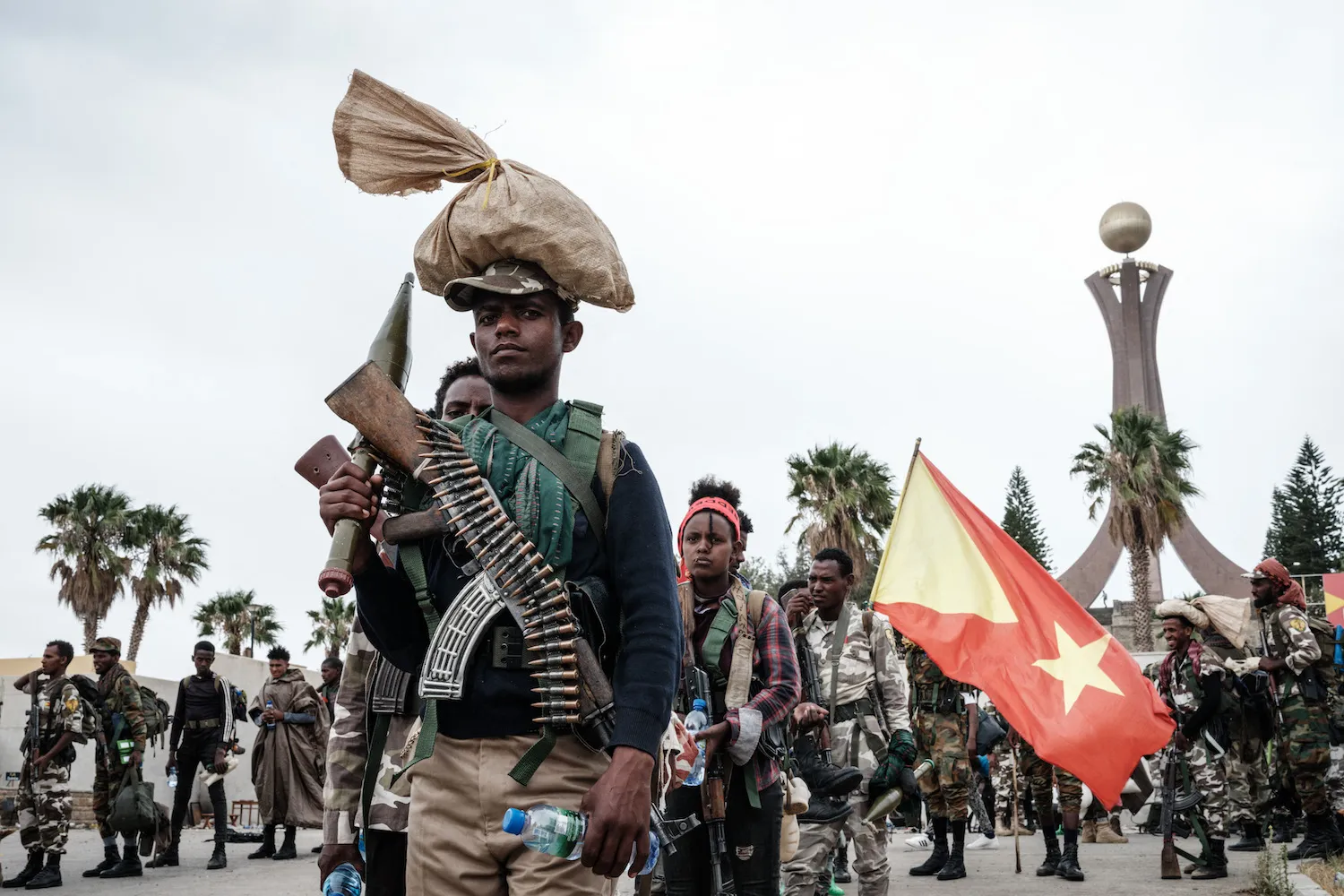
Meanwhile, in Tigray, the 2022 Pretoria Agreement that ended a war estimated to have killed 600,000 people is being tested by shelling, drone strikes and disputed territory
ADDIS ABABA, Ethiopia
Ethiopia is preparing to attempt the most far-reaching redesign of its political system in a generation at the precise moment its northern peace settlement is coming apart. A national dialogue that concluded on Aug. 22 has recommended replacing the country's parliamentary arrangement with an executive presidency merging the powers of the prime minister and the currently ceremonial head of state. Those recommendations could reach parliament when it reconvenes in October — a parliament in which Prime Minister Abiy Ahmed's Prosperity Party holds 438 of the 486 seats filled in the June election.
Meanwhile, in Tigray, the 2022 Pretoria Agreement that ended a war estimated to have killed 600,000 people is being tested by shelling, drone strikes and disputed territory. On Aug. 20, two drone strikes hit Mekelle, the regional capital, wounding at least 13 people. Fighting broke out in western Tigray near the Sudanese border at the start of August, with the federal government and the Tigray People's Liberation Front each blaming the other for starting it.
Those two developments are usually reported separately. They belong in the same frame. A constitutional overhaul that concentrates authority in one office is being contemplated by a state that currently cannot exercise ordinary authority across several of its own regions.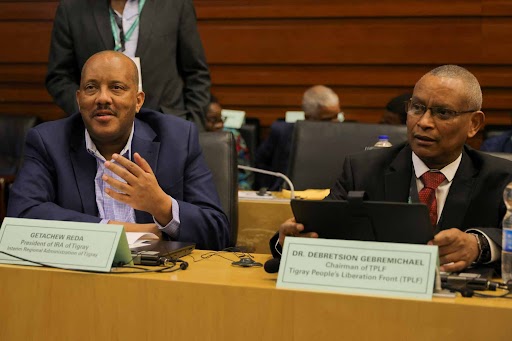
What the national dialogue recommended
More than 4,000 delegates took part in the weeks-long process, which examined Ethiopia's political tensions, ethnic divisions and armed conflicts. Delegates overwhelmingly endorsed a proposal to abolish the split between prime minister and president and create a single executive presidency combining both roles.
Supporters make a genuine argument. Ethiopia's prime minister is, by constitutional design, elected as a parliamentary representative from a particular constituency — in Abiy's case, from Oromia. A president chosen to represent the whole federation, the argument runs, could function as a unifying national figure standing above the ethnic-federal arithmetic that has structured Ethiopian politics since 1995. The dialogue also recommended reducing state funding for ethnically based political parties in favor of parties with a broader national platform, which points in the same direction.
Critics see a different mechanism. Under the proposal, the executive president would be chosen by parliament — the same parliament dominated by the Prosperity Party. Abiy did not attend the dialogue, but few observers doubt he would be the leading candidate for the office if it is created.
The political analyst Befekadu Hailu said the reforms could effectively allow Abiy to assume the executive presidency while concentrating power in a single office, according to Africanews. The comparison most often drawn is to Turkey, where Recep Tayyip Erdogan moved from the premiership to a newly created executive presidency.
The dialogue's legitimacy is contested on procedural grounds as well. Key opposition parties boycotted it, and armed groups were excluded altogether. Merera Gudina, chairman of the Caucus of Opposition Parties, said the process could not guarantee Ethiopia's two most pressing needs: lasting peace and democratic governance. The peace-building specialist Naga Tesfaye argued the recommendations should be accompanied by negotiations involving the government, armed groups and opposition parties to end the violence rather than proceeding in parallel with it.
Even inside the tent, some questions proved intractable. The status of Addis Ababa — constitutionally self-governing but surrounded by Oromia, which has long claimed the city and its hinterland — triggered walkouts by several delegates. The dialogue did not resolve it.
The election that produced this parliament
The June 1 general election supplies the political context. The Prosperity Party won 438 seats. The National Election Board of Ethiopia reported turnout of 95.70 percent, with 51,734,193 votes cast from 54,057,861 registered voters. The Ethiopian Citizens for Social Justice (EZEMA) took 13 seats, the National Movement of Amhara six, and independents eight; a scatter of smaller parties took one to three seats each.
Those figures come with a substantial asterisk. Only 486 of the 547 seats in the House of Peoples' Representatives were contested. Sixty-one were left vacant because voting did not take place: all 38 Tigray seats, eight constituencies in Amhara withheld over concerns about interference by the Fano militia, five in Oromia over insecurity linked to fighting with the Oromo Liberation Army, and ten more across Sidama, South Ethiopia, Central Ethiopia and Somali regions. Security incidents interrupted voting in at least 143 polling stations.
An outcome in which the ruling party takes 90 percent of the contested seats on a reported 95.70 percent turnout, in an election that could not be held in one entire region and parts of three others, is the foundation on which the proposed executive presidency would rest. That is the crux of the objection: the body that would select the new president was itself elected in a process that excluded roughly one in nine seats.
Why Tigray is unravelling again
The Pretoria Agreement of November 2022 called for a permanent cessation of hostilities, the disarmament, demobilisation and reintegration of Tigrayan forces under Article 6, political dialogue, and the return of displaced people. Article 7 required the TPLF to refrain from conscription, training, deployment and mobilisation, and from preparations for renewed conflict.
Nearly four years on, the large-scale war is over but its underlying disputes are not. Tigrayan forces handed over heavy weapons and thousands of former combatants entered demobilisation programs, but the region's military structures were never fully dismantled. Reports emerged in 2026 of renewed recruitment and forced mobilisation in Tigray — activity that, if confirmed, would breach Article 7 directly rather than merely leave Article 6 incomplete.
The political track fractured in parallel. Getachew Reda was removed as head of the interim administration in 2025 and replaced by Lt. Gen. Tadesse Werede. In May 2026 the Tigray regional council was reinstated and elected Debretsion Gebremichael as president, consolidating the faction around him.
Then came the military sequence. In January, forces aligned with the Tigray Defence Forces crossed the Tekeze River into the disputed Tselemti district and clashed with federal troops; Ethiopian Airlines suspended flights to Tigray on Jan. 29 and restored them on Feb. 3. TDF-aligned fighters subsequently took Alamata and Korem after a federal command post withdrew. By August, fighting had resumed in western Tigray near the Sudanese border. On Aug. 20, the twin drone strikes on Mekelle hit the Hawelti sub-city near St. Mary Church, according to Addis Insight, wounding at least 13 people.
Perhaps the most consequential shift is diplomatic. Eritrea and the TPLF fought a border war from 1998 to 2000, and Eritrean forces fought alongside Ethiopian federal troops against the TPLF from 2020 to 2022. Since Pretoria, there have been reports of contacts between Eritrean officials and elements of the TPLF, including meetings in Dubai and at Zalambessa. Ethiopia accuses Eritrea of backing the TPLF as a proxy; Eritrea rejects the characterization.
Alongside that has come Tsimdo, a loose convergence of groups opposed to the federal government. Reporting identifies cooperation involving the TPLF, the Amhara Fano movement and the Oromo Liberation Army, among others. The Fano leader Zemene Kassie has confirmed the coalition exists while saying Eritrea is not currently part of it. The significance is not that these groups share a political program — they emphatically do not, and Tigrayan and Amhara actors remain divided over Welkait and other contested territory — but that they are willing to set those differences aside to increase pressure on Addis Ababa.
The war displaced about 1.9 million people, many of whom still cannot return, particularly to Welkait, Tsegede, Humera and Raya. Neither the federal government nor the TPLF has delivered what Pretoria required of it.
Civilians are the constituency least represented in any of this. "The people of Tigray want peace; we don't want a second war," a civilian in Tigray told Al Jazeera on condition of anonymity in an analysis published Sept. 5. A young man from the region put the practical fear more plainly: "The fear of being drafted is what's making many youth lose hope."
Analysis: two clocks running at different speeds
Ethiopia now has two political processes moving on separate timetables toward the same October.
The constitutional clock is procedural and predictable. Parliament reconvenes; recommendations arrive; a chamber where the ruling party holds an overwhelming majority considers a change that would let it select a head of state with combined executive authority. Nothing about that sequence requires drama, and its very smoothness is what worries its critics.
The security clock is neither procedural nor predictable. Localized fighting in Tigray, an insurgency in Amhara, an unresolved conflict in Oromia and an Eritrea whose posture can change quickly — any of these can escalate on a timescale measured in days.
The two clocks interact. A government facing armed challenges in three regions has a defensible reason to want clearer lines of command, which is the strongest argument for the executive presidency. But a state that has just held an election in which one region did not vote, and that is now exchanging drone strikes with forces in that region, will struggle to persuade its critics that a more concentrated executive is about unity rather than control. Constitutional change and civil conflict have a poor record of running side by side; the party excluded from the constitution-writing is usually the party doing the fighting.
What to watch
Whether the recommendations are actually tabled when parliament reconvenes in October, and in what form — an executive presidency can be drafted with meaningful checks or without them, and the text will matter more than the concept.
Whether the federal government opens any negotiating track with the TPLF, Fano or the OLA before then. Naga Tesfaye's point stands: recommendations unaccompanied by negotiations leave the armed actors outside the settlement they are being asked to accept.
Whether Tigray's fighting stays localized. ACLED has assessed the renewed hostilities as more contained than the 2020–22 war. That assessment holds until it does not, and the Aug. 20 strikes on Mekelle show how quickly containment can erode.
And whether Eritrea's posture clarifies. Asmara's alignment was the hinge of the last war. It may be the hinge of the next one.



