LOS ANGELES
The trick with a secret screening is that everyone knows there is a secret. What nobody at the 53rd Telluride Film Festival knew, as they queued on the evening of Sunday, September 6, was that A24 would be collecting their phones at the door.
Not silencing them. Collecting them. No devices went into the theatre. What went in instead was a packed house with no idea what it was about to watch, and what came out, roughly two hours later, was the first genuine bombshell of the 2026 awards season: "You Can See Everything," a documentary directed by Nathan Fielder and Lance Oppenheim about Elizabeth Holmes.
Thirty-four days, then three years
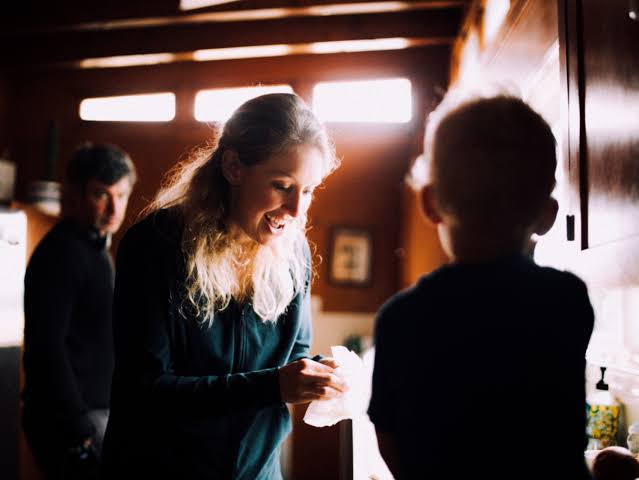
The premise is almost absurdly simple, and that is the problem. In 2023, in the weeks before she reported to federal prison for defrauding Theranos investors, Elizabeth Holmes invited a film crew to document her. Fielder and Oppenheim were given access to Holmes, to her partner Billy Evans, to their two young children, and to the rented house in San Diego where the family spent her final thirty-four days of freedom.
Had the film stopped there, it would have been a curiosity: a fly-on-the-wall portrait of a convicted fraudster in domestic limbo, cooking dinner and reading bedtime stories with a prison date on the calendar. It did not stop there. A24 describes what followed as a three-year journey, and the film's structure reflects that — an intimate portrait that keeps going long after the subject has been removed from the frame, blurring, in the distributor's phrasing, the boundaries between observation, performance and reality.
Which is to say: it is a Nathan Fielder film. Anyone who watched "The Rehearsal" or "Nathan for You" will recognise the method — a comic premise pursued past the point of comedy and into something that is genuinely difficult to categorise, let alone defend. Oppenheim, whose "Some Kind of Heaven" and "Ren Faire" established him as one of the sharpest documentary stylists of his generation, is not a moderating influence. He is an accelerant.

The Amanda Seyfried problem
The film's most-discussed device is also its strangest. Substantial portions of the documentary involve exchanges between Fielder and Holmes that occurred off-camera — including correspondence and conversations after she entered the federal facility in Texas. Rather than use voiceover or title cards, the filmmakers re-create them, and the re-creations feature Amanda Seyfried, who won an Emmy for playing Holmes in the Hulu miniseries "The Dropout."
An actress who once dramatised Elizabeth Holmes, now performing Elizabeth Holmes inside a documentary about Elizabeth Holmes, in scenes reconstructing a real person's real words. Variety's critic called the result shameless and fascinating in the same sentence, describing it as a reality-television snake eating its own tail. IndieWire called it boundary-pushing and absurd. Deadline's review ran within twenty-four hours of the screening, which tells you something about how quickly the festival's word of mouth travelled.
None of these are pans. All of them are, in their way, warnings.
What it means for the Oscar race
Telluride has an outsized role in setting the documentary conversation, and "You Can See Everything" arrived as the only unannounced title on the programme — a positioning choice that guaranteed maximum attention with zero advance criticism. Variety's awards column declared within a day that the film had detonated the Best Documentary Feature race.
There is a complication, and it is a familiar one. The Academy's documentary branch has historically been cool towards films that trade on celebrity, or on proximity to celebrity. A documentary whose principal draws are a famous comedian, a famous fraudster and a famous actress playing the fraudster is, on paper, exactly the kind of project that branch has passed over before. Whether that instinct survives contact with a film this widely discussed is the season's first real test.
A24, for its part, is behaving like a distributor that believes it has something. The theatrical release is set for October 16 — early enough to build word of mouth through the autumn festival circuit, late enough to stay fresh into voting. The trailer, released this week, has done the rest.

The ethics nobody has resolved
The hardest question the film raises is one it may not be able to answer: what does Elizabeth Holmes get out of this?
She invited the cameras. She sat for three years of a process she could not control. Somewhere in that arrangement is either a woman submitting to genuine scrutiny or a woman attempting one more act of narrative management — and the film, by most accounts, refuses to tell you which. Critics who have seen it describe a portrait of entitled duplicity that is nonetheless unable to fully close the case on its own subject, in part because Fielder's presence in the frame keeps raising the question of who is performing for whom.
Holmes was convicted in January 2022 on four counts of defrauding investors and sentenced to more than eleven years. Her company, once valued at $9 billion, was built on blood-testing technology that did not work. Those facts are not in dispute and the film does not dispute them. What it does, apparently, is sit with the person those facts belong to for far longer than is comfortable, and then keep sitting.
What this means for you
If you have followed the Theranos story through John Carreyrou's reporting, through "The Dropout," through the trial coverage, you have probably assumed there was nothing left to learn. This is not a film that offers new evidence. It offers new access — and, more to the point, it offers a demonstration of what access does to the person granting it and the people receiving it.
It is also, more prosaically, the first must-see title of the autumn. Between now and October 16 you will read a great deal about whether it is exploitative, whether Fielder is a documentarian or a prankster wearing a documentarian's clothes, and whether Seyfried's participation is a masterstroke or a gimmick.
Those arguments are the point. Fielder has built an entire career out of making people argue about what they just watched. He has never had a subject this large before.
Published By | Entertainment Editor