FASHION
There's a particular kind of magic trick fashion and jewelry houses have been performing for years: taking an old ritual and quietly rewriting what it means. Tiffany & Co.'s newest campaign performs that trick with one of the most familiar gestures in the romantic canon — "he loves me, he loves me not" — and hands the entire ritual back to the person doing the asking.
The campaign, part of Tiffany's broader Love & Celebration platform, centers on a cinematic film starring Academy Award-winning actress Mikey Madison. In it, Madison sits at a vanity in a classic black dress as soft music plays. She opens a signature Tiffany Blue Box, slides on the new Sixteen Stone by Tiffany solitaire diamond ring — not on her ring finger, but on her middle finger — and looks directly into the camera to declare, simply: "I love me."
A 1959 Design, Reborn
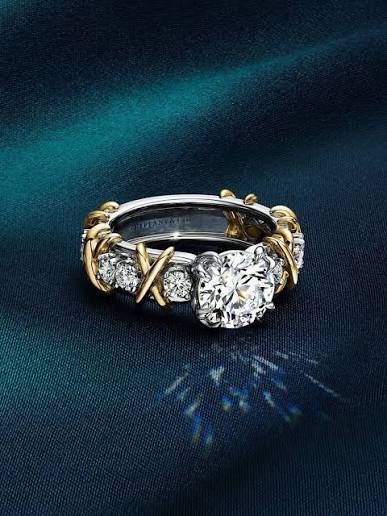
The ring at the center of the campaign carries real design pedigree. It's a reinterpretation of French jewelry designer Jean Schlumberger's original Sixteen Stone design, first introduced by Tiffany in 1959 as a wedding ring. Schlumberger, whose family were textile manufacturers in Alsace, France, became renowned across his career for translating textile techniques — woven ropes, tassels, ribbons, cross-stitches — into precious metal and gemstones. The Sixteen Stone design channels that lineage directly: eight cross-stitches, rendered in gold or platinum, elegantly frame sixteen diamonds arranged in a continuous circle, with Schlumberger's signature X motif intended to symbolize love's nurturing forces.
The craftsmanship behind the piece is notably specialized. According to Tiffany, assembling the ring's iconic cross-stitch pattern requires the skill of expert artisans with over two decades of training — a detail the brand has leaned into as evidence that its high jewelry credentials extend well beyond marketing language. The reissued Sixteen Stone collection is available in multiple configurations, pairing 18k gold cross-stitches with round brilliant diamonds, or alternating sapphires and diamonds around the signature X pattern, giving the piece range across different price points and personal styles.

Broadening What "Love" Means in Luxury Marketing
What makes this campaign notable isn't just the ring — it's the strategic shift underneath it. Tiffany has explicitly framed the Love & Celebration platform as an effort to broaden its storytelling beyond traditional romantic love, extending the brand's language to self-love, family bonds and chosen community. That's a meaningful departure for a house whose entire commercial identity has, for generations, been built on the language of engagement, proposal and marital devotion — the little blue box as the physical manifestation of "will you."
Reframing that same box, and that same ring format, around an act of self-affirmation is a calculated bet that luxury consumers — particularly younger ones — respond more to authenticity and personal narrative than to inherited romantic scripts. Industry watchers have noted this isn't happening in isolation. Earlier this summer, three of the world's most storied luxury houses — Tiffany, Valentino and Chanel — each rolled out campaigns that deliberately moved away from pure aspirational messaging in favor of what one industry analysis described as "emotional truth." In an environment where luxury spending has faced real headwinds, houses appear to be betting that emotional specificity sells better than abstract glamour.
Mikey Madison's Growing Tiffany Relationship
Madison's involvement isn't a one-off casting choice. She joined Tiffany as a house ambassador last year, following the breakout awards-season run that came with her Oscar-winning performance, and this campaign marks her second turn fronting Tiffany's storytelling — her first was the HardWear by Tiffany campaign, shot alongside actress Greta Lee and artist Anna Weyant. That earlier campaign leaned into boldness and modern edge; this one leans into intimacy and quiet confidence, giving Madison a chance to demonstrate range within the same brand relationship. For Tiffany, pairing a rising, critically credentialed actress with a design as historically loaded as the Sixteen Stone ring signals an attempt to hold both heritage and cultural relevance at once — a balancing act every legacy luxury house is currently trying to master.
Why This Campaign Resonates Right Now
The self-love framing arrives at a moment when the broader jewelry and bridal industry has been quietly reckoning with shifting consumer behavior. More people are purchasing significant jewelry for themselves, independent of relationship status or major milestones — sometimes as a personal celebration, sometimes simply because they can. Brands that ignore this shift risk looking out of step; those that lean into it, as Tiffany has here, position themselves as attuned to how their customers actually think about adornment and personal meaning.
There's also a subtler point embedded in the "he loves me, he loves me not" reference. That childhood rhyme — plucking petals to determine whether someone else loves you — has always placed the answer outside your own hands, dependent on someone else's feelings. Tiffany's campaign takes that same structure of uncertainty and resolves it internally instead: the ring goes on, and the answer is already known before the ritual even begins.
What This Means for Shoppers
For anyone shopping the Sixteen Stone collection this season, the appeal is twofold: a design with genuine archival weight — not a fleeting seasonal shape, but a 65-year-old Schlumberger silhouette that has quietly outlasted numerous jewelry trend cycles — paired with a contemporary permission structure that doesn't require an occasion, a partner, or an anniversary to justify the purchase. Pieces span a range of metal and gemstone combinations, meaning the collection can flex from a modest entry point to a serious high-jewelry investment depending on configuration.
For the broader fashion and luxury industry, the campaign is worth watching as a bellwether. If Tiffany's bet on self-directed love resonates commercially the way its Valentino and Chanel counterparts hope their own emotional-truth campaigns will, expect the rest of the luxury sector to keep moving away from purely aspirational imagery and further into personal, specific storytelling — jewelry not as a promise from someone else, but as a promise you make to yourself.
Published By | Features Editor