The largest Ebola outbreak ever recorded in the Democratic Republic of the Congo has crossed borders again, with imported cases in Nairobi and Abuja, a patient airlifted to Switzerland, and a vaccine race that has only just begun.
LONDON / KINSHASA / NAIROBI / ABUJA
More than 10,000 people have now tested positive for a virus with no approved vaccine and no approved cure, and the numbers are still climbing. The Bundibugyo strain of Ebola, a close and lesser-known cousin of the Zaire strain that terrorised West Africa a decade ago, has turned the eastern Democratic Republic of the Congo into the epicentre of the biggest Ebola emergency the country has ever faced. This week it reminded the world that borders mean little to a pathogen: Kenya has reported nine cases, Nigeria has confirmed its first, and a patient has been flown to Europe for treatment.
According to the European Centre for Disease Prevention and Control (ECDC), whose latest update covers data to 26 October, the DRC has recorded 10,141 confirmed cases and 4,928 deaths. About 2,708 confirmed patients have recovered, and 999 are currently being treated in isolation. The World Health Organization (WHO) says the crude case fatality rate sits at roughly 48 per cent. In plain English: nearly one in two confirmed patients has died.
A Five-Country Problem
The outbreak was declared in the DRC on 15 May 2026. Within two days, on 17 May, WHO designated it a public health emergency of international concern, the highest alarm the organisation can sound. Africa CDC followed on 18 May with its own declaration of a Public Health Emergency of Continental Security. Nearly six months on, the emergency has not eased.
WHO's most recent Disease Outbreak News bulletin, published on 23 October, confirms that Nigeria is now the fifth country to report cases since the outbreak began, joining the DRC, Uganda and France, with Kenya's imported cluster also on the list. Each new country has arrived by the same route: a traveller, a health worker or a patient moving faster than the virus can be tracked.
Inside the DRC, the virus has been confirmed across eight provinces and 66 of the country's 178 health zones. Ituri province is the epicentre, with 7,247 cases and 3,388 deaths as of the latest ECDC tally. Neighbouring Nord-Kivu has recorded more than 2,100 cases, and its death rate, at nearly 56 per cent, is the highest of any province. Haut-Uélé and Tshopo have also reported infections, and the most recently affected province, Nord-Ubangi, has logged its first cases.
The towns of Mandima, Beni and Bunia have been the hottest of the hotspots in recent weeks. In the three weeks covered by WHO's last update alone, the DRC added 976 new confirmed cases and 482 deaths. Of those deaths, 307 happened in the community rather than in treatment centres, a worrying sign that many sick people are dying at home, where they can infect family members and the neighbours who wash and bury the body.

The Nairobi Cluster
The case that rattled East Africa began quietly. On 3 October an adult man arrived in Nairobi after travelling from the DRC through Uganda. Two days later he was dead. Kenya reported its first imported case on 6 October, and what followed was a textbook example of how Ebola spreads through the people who care for the sick.
Eight further infections were traced directly to that first man: four of his family members and four health and care workers. That means that half of the secondary cases in Kenya were people whose job is to protect others. According to WHO, Kenya has confirmed nine cases in total, and the ECDC reports two deaths as of 26 October. The last new case was reported on 20 October, and all 135 identified contacts have been traced and quarantined.
Kenyan authorities carried out a safe and dignified burial, one of the most important and most sensitive steps in any Ebola response, because traditional funeral rites often involve touching the body of someone who has just died, when the viral load is at its highest. They are also working with Uganda and the DRC to reconstruct the man's movements. Screening has been enormous: by 22 October, 709,093 travellers had been checked and 461 samples tested across five laboratories. Cases are being treated at two designated facilities.
The ECDC reports that 60 contacts in Uganda linked to the Kenyan case completed their 21-day follow-up on 25 October without incident, a small piece of good news. Uganda, which suffered its own earlier outbreak in this epidemic, was declared free of it by WHO on 27 August.
Abuja: Africa's Most Populous Nation Is on Alert
If Kenya raised eyebrows, Nigeria raised pulses. On 20 October the Nigeria Centre for Disease Control confirmed an imported case in the Federal Capital Territory, Abuja. The patient, a woman, had recently travelled from Uganda. According to the UN, she developed symptoms on 7 October, four days after arriving, and sought care at a private health facility in Abuja on 11 October. Laboratory confirmation did not come until 20 October, nine days after she first walked through a clinic door.
That gap is the heart of the problem. Early Ebola symptoms, such as fever, weakness and aches, look like malaria, typhoid or any of a dozen common illnesses. A diagnosis that takes nine days leaves a long window for exposures. Nigeria's authorities have identified 44 contacts, a figure that had grown to 54 by 26 October according to the ECDC, and all are being monitored. Infection prevention measures have been stepped up at the facility where she sought care.
Nigerian health officials have activated their national and state incident management systems, with case investigation, contact tracing and protective equipment for health workers all under way. WHO is supporting the effort and helping to supply personal protective equipment. Investigators are still trying to work out where she caught the virus.
The story took a further turn on 26 October, when the patient was medically evacuated to Switzerland. She and her husband, a close contact, were treated in Geneva and isolated in Zurich, according to the ECDC.
Europe's Quiet Evacuation Pipeline
The Swiss evacuation is only the latest in a string of cases that have reached Europe through carefully managed medical transfers rather than ordinary travel. A DRC-based health worker was flown to the Netherlands on 29 September and discharged on 9 October. An asymptomatic resident was evacuated to the UK as a precaution on 21 July. A US citizen was evacuated to Germany on 13 July, after earlier US cases were treated there in May. A US contact was transferred to Czechia in May, and in late June a humanitarian doctor returning from the DRC tested positive in France.
The ECDC's verdict for ordinary people in Europe is reassuring. It rates the overall risk to the general EU and European Economic Area population as very low, and the likelihood of sustained transmission after an imported case as very low. Infection risk for Europeans living in or visiting affected areas is rated low. The agency also says that screening returning travellers from the DRC and Uganda would not be effective at preventing introduction, and has sent three experts to Nigeria since 26 October.
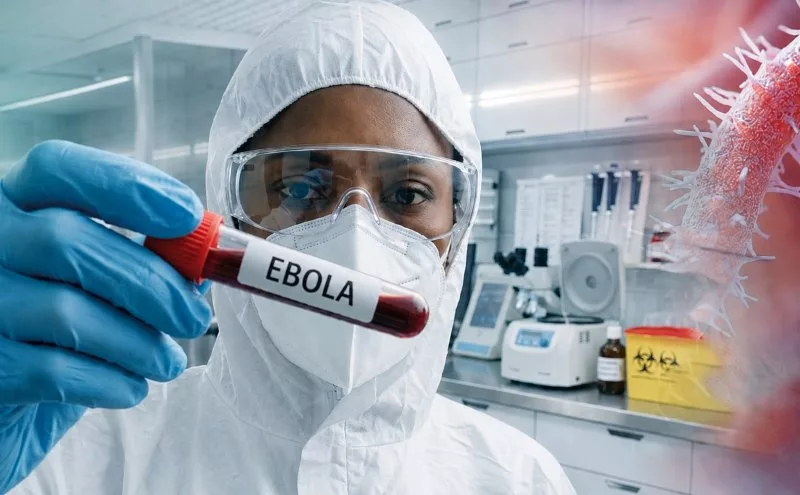
No Vaccine, No Cure
What makes Bundibugyo so frightening is what is missing. There is no licensed vaccine and no specific treatment. Ervebo, the vaccine credited with helping to bring the huge West African Zaire-strain epidemic under control, is licensed only for Zaire ebolavirus. It is not a proven shield against Bundibugyo.
Earlier outbreaks of this strain were severe. Case fatality was about 30 per cent in Uganda in 2007 and about 50 per cent in the DRC in 2012, according to WHO. The current death rate of roughly 48 per cent is toward the upper end of that range, and the current outbreak is the largest Ebola disease outbreak ever recorded in the DRC, regardless of virus species.
On 23 October, a pivotal Phase 2/3 vaccine study called TUMAINI began enrolling volunteers in Bunia, Ituri, with WHO support. It is testing several candidates, including Ervebo. The vaccine has also been used since 27 August in a campaign for frontline workers in Kisangani. Other candidates, from Oxford, Moderna, IAVI, PHV and Minapharm, are still in preclinical or early clinical development. Trials of this type take time to produce answers, and the outbreak is not waiting.
Why Is It So Hard to Stop?
Three things stand out in WHO's latest data. First, contact tracing is falling short. In the DRC, 30,130 contacts are being followed across six provinces, but only 79.7 per cent were seen in the last 24 hours, well below the 95 per cent target. In Nord-Kivu the figure was just 73.3 per cent, and in Ituri seven contacts under follow-up became suspected cases themselves.
Second, the true size of the outbreak is probably bigger than the official count. The ECDC says so directly, noting that the epidemic in the DRC is likely larger than reported. Conflict, mobility and mistrust in parts of eastern DRC make it hard to find every case.
Third, money. WHO says donor engagement and resource mobilisation are continuing to address funding gaps. Surveillance, laboratories, infection control, clinical care and community engagement are all being scaled up, but each costs money, and funding gaps in an outbreak tend to be paid for in lives.
What the Experts Are Saying
WHO continues to push a message of calm vigilance rather than panic. The organisation's bulletin states plainly: "WHO advises against any restriction of travel to, or trade with, affected countries." It also notes that "sustained, high-level transmission continues in the Democratic Republic of the Congo," and urges stronger cross-border surveillance, monitoring at points of entry, laboratory capacity and rapid-response readiness across the region.
WHO's risk assessment, last issued on 14 August and now being revised, rated the risk as very high in the DRC, high in countries that share a land border with it, and low for the rest of the African region and the world as a whole. With cases now confirmed in Kenya and Nigeria, that assessment is expected to change.
The agency's guidance on what works is simple and unglamorous. Rapid recognition of cases, prompt testing and good supportive care can reduce deaths and, crucially, improve community acceptance of health care. When people believe a clinic can save their relative, they come early, and early arrivals infect fewer people.

What This Means for You
For the vast majority of readers, the immediate risk is extremely low. Ebola is not an airborne virus like flu or Covid. It spreads through direct contact with the blood or body fluids of a person who is sick or has died, and people are not infectious until they develop symptoms. The incubation period runs from two to 21 days, which is why contacts are monitored for three weeks.
If you are travelling to or from the DRC, Uganda, Kenya or Nigeria, follow national travel health advice and take any official health screening seriously. If you fall ill with fever within 21 days of leaving an affected area, call a health service before going to a clinic and tell them where you have been. That single sentence can protect an entire waiting room.
Fruit bats are suspected to be the natural reservoir of the virus, so avoiding contact with bats and with bushmeat in affected regions is sensible. Beyond that, the best thing anyone can do from afar is to treat reliable sources, such as WHO, the ECDC and national health agencies, as the place to check facts, and to ignore the rumours that tend to travel faster than the virus does.
The Bottom Line
This outbreak is now more than five months old and shows no sign of burning out. It has infected more than 10,000 people, killed nearly 5,000, spilled into new countries and prompted the first major trial of vaccine candidates against a strain the world has never been able to vaccinate against.
The good news is real but modest. Kenya's cluster has been contained for more than a week without a new case, Uganda's earlier outbreak ended, and the Netherlands' patient went home healthy. The bad news is that the epicentre is still generating dozens of new confirmed cases a day, with 67 reported in a single 24-hour period in WHO's latest bulletin, and every one of them is a possible spark.
Health officials in Kinshasa, Nairobi and Abuja are betting on the oldest tools in the book: find the sick, trace their contacts, bury the dead safely and earn the trust of the people they are trying to protect. The vaccine trial now under way in Bunia offers hope that newer tools may follow. Until then, the world is watching a race between a virus that needs only one missed contact and a response that cannot afford to miss any.
Published By | Features Editor