Written By | International News Agencies
The strike is the latest and most dramatic episode in a rivalry that has been building since the fall of Bashar al-Assad's government in December 2024
ISRAEL
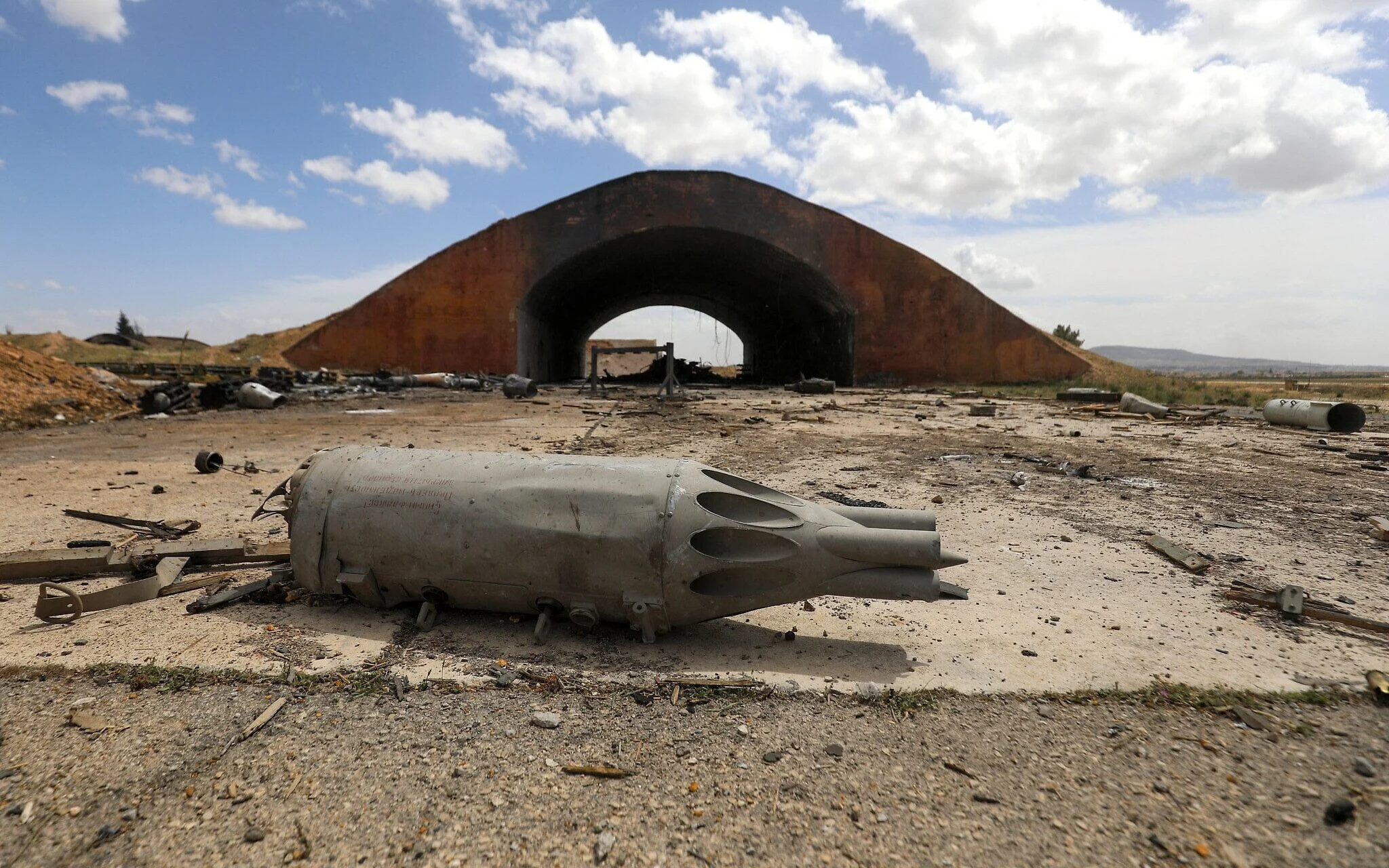
Israeli warplanes struck a military airbase in northwestern Syria in the early hours of August 18, an operation Israel says was designed to stop Turkish forces from establishing a foothold there. The eight strikes hit the runway and storage facilities at the Abu al-Duhur airbase in Idlib province, roughly 70 kilometers south of the Turkish border, causing significant damage but no reported casualties. The attack has escalated a simmering rivalry between Israel and Turkey over the future of post-Assad Syria into one of the most serious direct confrontations yet between two of the Middle East's most powerful militaries, and it has forced Washington to scramble for a way to keep the dispute from spiraling into open conflict between a NATO member and a close American security partner.
Background
The strike is the latest and most dramatic episode in a rivalry that has been building since the fall of Bashar al-Assad's government in December 2024. Syria's new interim president, Ahmed al-Sharaa, took power after leading the rebel offensive that toppled Assad, and in the eighteen months since, both Israel and Turkey have moved aggressively to shape the country's trajectory — and to make sure the other does not gain the upper hand in doing so. Israel has carried out hundreds of strikes across Syrian territory since Assad's fall, seizing a buffer zone in the south, striking military assets it says could threaten it, and repeatedly warning Damascus against allowing any foreign military presence — Turkish or otherwise — to take root within reach of its border.
Turkey, meanwhile, has emerged as one of al-Sharaa's most important patrons. Ankara has trained elements of the rebuilt Syrian army, helped restore government institutions and infrastructure, and provided diplomatic cover for the new Damascus government on the international stage. Turkish officials have made little secret of their ambition to secure basing rights and an expanded military footprint inside Syria, both to project influence and to counter Kurdish militias in the country's north that Ankara considers a security threat. That ambition has put Turkey on a collision course with Israel, which has told Damascus in no uncertain terms — according to Prime Minister Benjamin Netanyahu's office — that it would not tolerate the establishment of what it considers a hostile military presence anywhere in Syria, let alone one it fears could eventually extend toward its own border.
The immediate trigger for the strike, according to Israeli officials, was a visit by Turkish military officers to the Abu al-Duhur base and what Israel characterized as preparations to deploy Turkish personnel, radar and air-defense systems there. Netanyahu's office said Israel and Syria had reached an informal understanding on a security 'status quo' that Damascus was on the verge of violating by allowing the Turkish deployment, and that Israel had repeatedly warned Syria against it before acting. Syrian officials have denied that any such formal understanding existed, and Turkey has denied that it had finalized plans to station troops at the base, though Syria's foreign minister acknowledged that Turkish officers had visited the site.
Key Developments
The strike itself unfolded quickly and, by regional standards, was unusually overt. Eight Israeli munitions hit the Abu al-Duhur runway and adjacent storage buildings, rendering the airfield unusable for the deployment Israel says it was intended to prevent. Turkish radar reportedly detected the Israeli aircraft as they approached, and for a tense period Ankara considered how — or whether — to respond militarily, according to U.S. officials briefed on the episode. American diplomats intervened to head off a direct clash, and the immediate crisis passed without a Turkish counter-strike, but the episode revealed how close the two militaries came to a direct confrontation over Syrian territory neither formally controls.
Analysts examining the strike have described Israel's approach as a doctrine of 'denial before emplacement' — destroying the infrastructure needed to receive advanced military assets before those assets arrive, rather than waiting until Turkish troops, aircraft or air-defense systems are physically present. That timing was deliberate: striking after Turkish personnel had already deployed would have risked Turkish casualties, a far more dangerous escalation, and potential complications for the United States given Turkey's NATO membership. By acting first, Israel avoided that scenario while still sending an unambiguous message to both Damascus and Ankara about where it believes its red lines lie.
The timing carried an added layer of significance because the strike came just days after Turkey signed a mutual-defense pact with Saudi Arabia and Pakistan in Mecca, an agreement establishing an Article 5-style collective-defense clause among the three Muslim-majority states — the first arrangement of its kind since the Cold War-era Baghdad Pact. Some regional analysts and commentators have suggested Israel's strike was partly intended to test, and undercut, Ankara's credibility as a security guarantor for Damascus at the very moment Turkey was showcasing its expanding alliance network. Israeli officials have increasingly described Turkey in terms once reserved almost exclusively for Iran, with some voices in Israel's security establishment referring to Ankara as a 'new' strategic threat, reflecting how sharply the bilateral relationship has deteriorated.
Defense Minister Israel Katz was blunt in his public comments following the strike, warning that Turkish President Recep Tayyip Erdogan was 'dragging Turkey into dangerous adventures in Syria' and declaring that Israel 'will not allow any entity to threaten its security.' Netanyahu, for his part, said Israel's position on the limits of Turkey's role in Syria had been 'better understood' in the aftermath of the strikes — a pointed suggestion that Israel views the attack as having achieved its deterrent purpose. Reports also indicated that Israel's Mossad chief made contact with Syrian officials ahead of the strike, suggesting an effort to manage Damascus's response even as Israel acted without warning Turkey directly.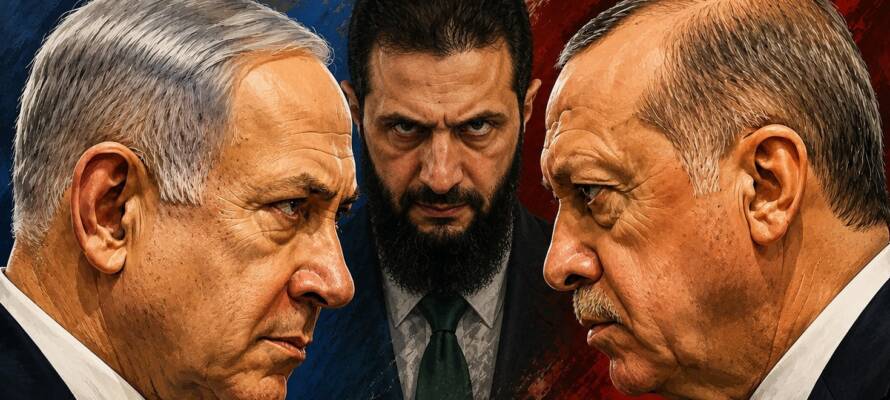
Reactions
The regional and international response was swift and largely critical of Israel. Syria's government condemned the strikes as a violation of its sovereignty, while Turkey's foreign ministry called on 'the international community to take a more decisive stance to end Israel's escalating aggression against Syria and to ensure accountability.' Qatar, Egypt, Saudi Arabia, Jordan and the United Arab Emirates all issued statements condemning the attack, with the UAE explicitly describing it as a violation of Syrian sovereignty and international law. The breadth of the condemnation — spanning Gulf states that have in other contexts sought closer ties with Israel — underscored how isolating the strike proved to be for Israel diplomatically, even as it achieved the military objective of denying Turkey the airbase.
Washington's response was notably pointed given the closeness of the U.S.-Israel relationship. Tom Barrack, the U.S. ambassador to Turkey and special envoy for Syria, said he was 'deeply concerned' that the strikes constituted 'an unnecessary escalation that does not advance regional stability.' Barrack later disclosed that the U.S. had worked urgently behind the scenes to prevent the episode from escalating further, noting that Turkey had detected the incoming Israeli aircraft and that 'calm heads were able to prevent the situation from deteriorating.' That the U.S. felt compelled to publicly criticize an Israeli military operation — even in measured terms — reflects the depth of Washington's concern about a direct Israel-Turkey clash, given Turkey's status as a NATO ally with the alliance's second-largest standing army.
Turkey, notably, opted for strong rhetoric over immediate military retaliation, a restraint that U.S. officials credited to intensive diplomatic engagement in the hours after the strike. Turkish officials have continued to deny that Ankara had finalized any deployment to Abu al-Duhur, framing the visit by its officers as preparatory or exploratory rather than an active troop movement — a characterization Israel disputes. Syria's foreign minister, in comments to Axios, called the Israeli bombing 'unjustified,' while maintaining that Damascus remains interested in reaching a broader de-escalation arrangement with Israel, provided Israel is willing to reciprocate rather than act unilaterally.
What's Next
In the strike's immediate aftermath, the Trump administration moved to establish what U.S. officials describe as a more robust deconfliction mechanism among Israel, Turkey and Syria — an expanded version of an existing informal U.S.-facilitated communication channel, intended to give the three parties a faster and more reliable way to flag military movements and avoid miscalculation. Barrack has indicated Washington sees this as urgent, but building durable trust between Jerusalem and Ankara, whose relationship has deteriorated sharply since the Gaza war, will be a slow and uncertain process, and any mechanism will only be as effective as the two sides' willingness to actually use it rather than act unilaterally, as Israel did in this case.
The underlying dispute — over how much military infrastructure Turkey is permitted to build inside Syria, and how far south its influence can extend — remains entirely unresolved. Syria's government, dependent on both Turkish support for its reconstruction and reeling from repeated Israeli strikes on its territory, is caught between two increasingly assertive patrons with incompatible visions for the country's security architecture. Whether al-Sharaa's government can manage that balancing act, or whether further incidents at other Syrian military sites will test Israel's 'denial before emplacement' doctrine again, is likely to shape the next phase of Syria's fragile post-Assad transition. Analysts are also watching whether the episode accelerates a broader realignment in which Turkey, buoyed by its new defense pact with Saudi Arabia and Pakistan, positions itself more explicitly as a counterweight to Israeli power in the region — a dynamic that would have implications well beyond Syria's borders.



