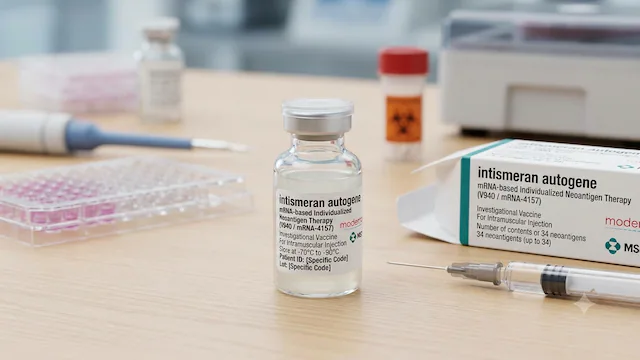
The same technology that powered COVID vaccines has just delivered a landmark result against skin cancer, cutting the risk of death or relapse by 42 per cent in a trial unveiled at Europe's biggest cancer conference.
For decades, a cancer vaccine was the medical dream that never quite came true. This weekend, it took a very large step closer to reality.
At the European Society for Medical Oncology (ESMO) congress, Europe's biggest cancer meeting, researchers presented the first Phase 3 trial of a personalised mRNA cancer vaccine. According to Cancer Research UK's round-up of the conference, published on 23 October 2026, adding the vaccine to standard immunotherapy cut the risk of death or the cancer coming back by 42 per cent over two years, compared with immunotherapy alone.
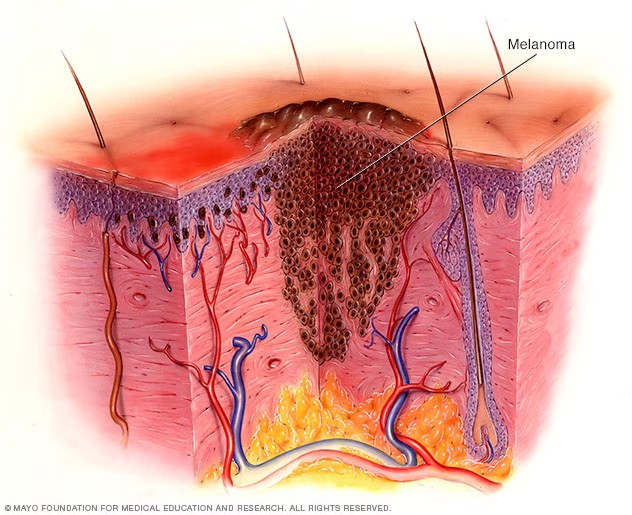
The patients were people with melanoma, the deadliest form of skin cancer. And the technology behind the jab is the same family of science that gave the world the COVID-19 vaccines.
What Exactly Is This Vaccine?
The treatment is called intismeran autogene, also known by the codes mRNA-4157 and V940. It is being developed jointly by the drug companies Moderna and MSD, which is known as Merck in the United States and Canada. Unlike a flu jab, it is not one-size-fits-all. It is made individually, for one patient at a time.
Here is how it works. After a patient's tumour is surgically removed, a sample is analysed to find the mutations that make the cancer different from healthy cells. Those mutations produce unusual proteins called neoantigens, which can act as flags that the immune system can recognise. The vaccine is built around up to 34 of these neoantigens, encoded in messenger RNA, the same molecular messenger used in COVID-19 vaccines. The idea is to train the immune system to hunt down any stray cancer cells that survived surgery.
The vaccine is given alongside pembrolizumab, sold as Keytruda, an immunotherapy drug that takes the brakes off the immune system. Think of it as one treatment teaching the body's defences what to look for, while the other makes sure they are free to attack.
The Trial: INTerpath-001
The study, called INTerpath-001, is the first Phase 3 trial of its kind. It enrolled people with stage 2, 3 or 4 melanoma that had been surgically removed but carried a high risk of returning. Practical Dermatology reports the population was stage IIB, IIC, III or IV disease with no prior systemic therapy. Patients received either the personalised vaccine plus pembrolizumab, or pembrolizumab alone, which is the current standard of care.
The headline came first on 19 August 2026, when the companies announced the trial had met its primary endpoint of recurrence-free survival, as well as a key secondary endpoint, distant metastasis-free survival, meaning the cancer spreading to other parts of the body. At the time no numbers were released. Moderna's chief executive Stéphane Bancel called the findings "a pivotal moment for the field of cancer research," and Moderna's share price nearly doubled on the news.
This weekend at ESMO came the first figure to put on it: a 42 per cent reduction in the risk of death or cancer return over two years. The companies said the safety profile was consistent with earlier studies of the combination, with no new safety signals reported.
Why Scientists Are Excited
This is the first time any mRNA-based cancer vaccine, or any individualised neoantigen therapy, has delivered positive Phase 3 results. Phase 3 trials are the large, rigorous studies that regulators rely on when deciding whether to approve a treatment. A Phase 2 result can hint at promise, but many treatments that shine in smaller trials fail at this stage.
The earlier Phase 2b study, known as KEYNOTE-942, gave a strong signal. After five years of follow-up it showed a 49 per cent reduction in the risk of recurrence or death (a hazard ratio of 0.51) and a 59 per cent reduction in the risk of distant metastasis or death (hazard ratio 0.411). The Phase 3 result now backs that up in a far bigger and more demanding setting.
Dr Catherine Elliott, Director of Research at Cancer Research UK, said the COVID-19 science "is now showing promise in treating cancer." The trial coordinator for the UK, Dr Heather Shaw, was among those involved. For investors, the reaction was even more dramatic. Trevor Polischuk, a portfolio manager at Worldwide Healthcare Trust, called it "a true watershed moment for cancer immunotherapy."

The Fine Print: Not a Cure, Not Yet
Before anyone rushes to the doctor, there are some important caveats, and the researchers themselves are making them.
First, the full data is still being presented. The trial must also keep running to find out whether the vaccine helps people live longer overall, a measure known as overall survival, which is considered the gold standard. The study will continue per protocol to assess this and other secondary endpoints.
Second, this is a treatment for people whose melanoma has already been removed by surgery but who are at high risk of relapse. It is designed to prevent the cancer coming back, not to shrink large tumours in patients with advanced disease.
Third, personalised vaccines are difficult, expensive and time-consuming to make. Every dose starts with a patient's own tumour and has to be sequenced, analysed and manufactured for one person. Scaling that up for tens of thousands of patients is a huge logistical challenge, and the cost is unknown.
Fourth, regulators still have to weigh in. The companies have said they will begin talks with the US Food and Drug Administration and other regulators about bringing the combination to market, but no filing or approval timeline has been announced. Cancer Research UK notes that regulatory review could take several years.
Fifth, as with any immunotherapy combination, patients and doctors will want to see the complete safety picture when the full data is published, including how many people had to stop treatment because of side effects. The early message is reassuring, but a press-release summary is not a peer-reviewed paper, and the scientific community will be reading the details closely when they arrive.
Beyond Melanoma
If it works for skin cancer, the obvious question is: what about other cancers? Moderna's wider neoantigen programme includes trials in lung, kidney and bladder cancer. Melanoma was an obvious starting point because it tends to carry a large number of mutations, giving the immune system plenty of targets. Whether the approach works as well in cancers with fewer mutations is an open question.
Analysts have suggested the vaccine could generate billions of dollars in sales if approved, and Moderna has been building its commercial infrastructure ahead of possible launches. For a company that has struggled since the COVID-19 boom faded, and which has faced disputes with the US government over its flu and COVID-19 vaccines, the result is a lifeline as much as a scientific milestone.
Also at ESMO: Hope in Stomach Cancer
The melanoma vaccine was not the only headline from Europe's biggest cancer meeting. Researchers from China and Japan also presented an interim Phase 3 analysis of a drug called arcotatug tavatecan, in a trial named G-HOPE-001.
The drug is an antibody-drug conjugate, a type of treatment that works like a guided missile. An antibody locks onto a protein on the cancer cell, in this case one called Claudin 18.2, and delivers a toxic payload straight to it. It was tested in people with advanced stomach and gastro-oesophageal cancers whose earlier treatments had stopped working.
According to Cancer Research UK, people on the new drug lived on average about three months longer than those given other approved drugs. Tumours shrank in almost four in 10 patients, compared with fewer than one in 10 on the comparison drugs, and the rate of severe side effects was slightly lower. Dr Graham Cadwallader, CRUK's head of clinical research, said the results point to another option that could give people more time. Researchers still need to confirm that the benefits last and apply to people beyond China and Japan.
In breast cancer news, the antibody-drug conjugate Enhertu was recently recommended by NICE for about 1,000 more women a year on the NHS, another sign of how fast targeted cancer medicine is moving.
What This Means for You
If you or someone you love has had melanoma removed, the most useful thing to do today is talk to your oncology team about your individual risk and what clinical trials are open. The vaccine is not available outside a trial, and nobody should seek it out from unregulated sources.
For everyone else, the best cancer prevention advice for melanoma has not changed. Protect your skin from sunburn, avoid sunbeds, and get any new or changing mole checked promptly. Melanoma caught early is usually curable with surgery, and that remains far better than any vaccine.
The broader message is that cancer treatment is shifting from one-size-fits-all towards therapies built around the biology of an individual patient's tumour. The idea that your own cancer could be used to design your own protection is moving from science fiction into late-stage clinical research.
The Bottom Line
A 42 per cent reduction in the risk of death or relapse over two years is the kind of number that makes oncologists sit up. It comes with the usual cautions: data still being fully presented, overall survival still to be proven, manufacturing hurdles, and regulators yet to rule.
But the symbolism is hard to miss. After decades of promises, a personalised cancer vaccine has cleared the highest bar medicine sets. The next chapter will be written in regulators' offices, manufacturing plants and the follow-up data from the patients still in the trial.
Published By | Features Editor