Written By | Evan Sande Ndahura

Evan Sande Ndahura is a Ugandan writer and public affairs commentator known for rigorous time-based political analysis and grassroots-centered critique.
National Affairs | Response & Counter-Response Column
In politics, as in life, time does not argue—it reveals.
This column responds directly to the predictable counterarguments raised in defense of the NRM following the earlier time-based evaluation of its four-decade rule. It does not restate the original case; it answers the rebuttals.
Counter-Argument One: “NRM Inherited a Ruined Country.”
This defense collapses under historical honesty.
The NRA/M itself took a rebellion path in the process of seeking power.
In doing so, it became part of the forces that destroyed what existed before. Obote, as the constitutionally recognized leader at the time, was fighting an armed rebellion to protect the state. The devastation of infrastructure during the bush war cannot be selectively assigned.
Key national assets were damaged, dismantled, or later privatized after the war:
Uganda Railways fell into disrepair and functional collapse, severing a critical national logistics artery.
Uganda Airlines, which was functioning, was destroyed rather than maintained—only to be restored decades later under questionable and unstable management.
If its restoration is now cited as an achievement, the unavoidable question remains: Why was it destroyed in the first place instead of being reformed and preserved?
Numerous cooperatives, public factories, and marketing boards that supported rural economies were dismantled or sold off, shrinking the productive base that villages depended on.
To argue inheritance without ownership of destruction is to tell half a history.
As Machiavelli warned, “One who becomes master of a city accustomed to freedom and does not destroy it may expect to be destroyed by it.” Power seized by force bears responsibility for both what it breaks and what it rebuilds. 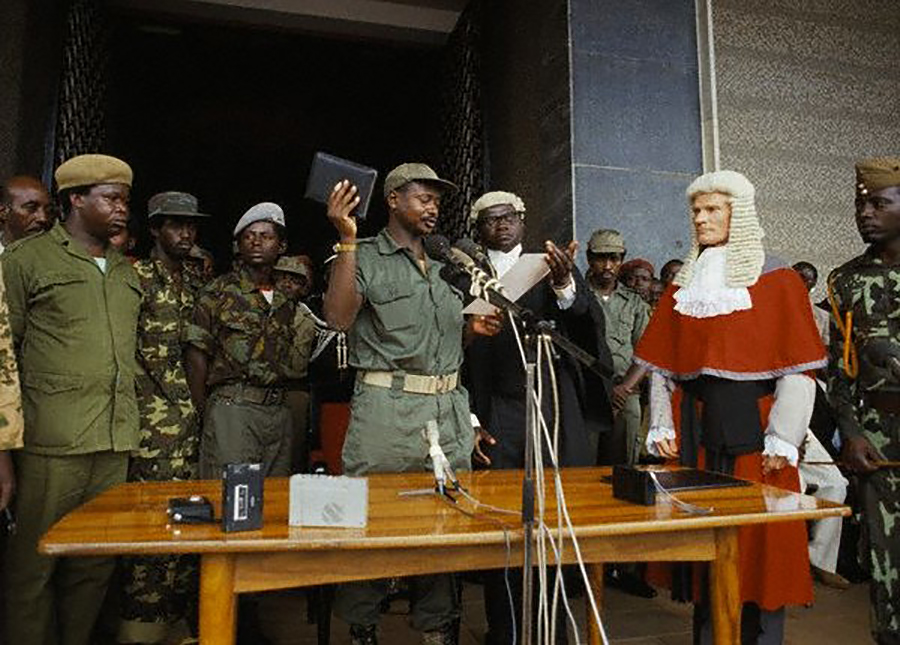
Counter-Argument Two: “NRM Restored Stability and Security.”
This claim, too, requires temporal honesty. NRM restored a stability it had itself disabled for approximately five years during the protracted war. The Luwero Triangle registered massive civilian deaths—numbers that remain among Uganda’s darkest statistics. These were not natural disasters; they were consequences of a self-proclaimed revolutionary war. Stability restored after self-inflicted collapse cannot be presented as a singular moral triumph. As Hannah Arendt cautioned, “Violence can destroy power; it can never create it.”
Security that emerges after devastation does not erase the cost of the devastation itself.
Counter-Argument Three: “Development Is Evident—Look at the Roads, Power, and Growth.”
Development must be measured by time and reach, not announcements.
After forty years, government presence remains invisible in many villages where most Ugandans live.
Safe water, electricity, healthcare, and maintained roads are still absent across large rural expanses.
Safe water is preventive healthcare. Its absence sustains non-communicable and water-borne diseases, forcing families into avoidable medical poverty.
Electricity is economic oxygen. Without it, villages cannot industrialize, preserve food, weld, refrigerate medicine, or access information.
Uganda exports electricity while villages remain dark. Yaka is not free; connections generate revenue. Why, then, the delay?
The pattern is politically revealing: NRM thrives electorally in rural areas deprived of information and opportunity, while opposition strength grows in urban centers with electricity, media access, and diversified livelihoods. Plato warned long ago that “Those who tell the stories rule society.” Darkness limits stories.
Counter-Argument Four: “Urban Congestion Is a Global Trend.”
Only partially true. Congestion in Uganda is also a policy failure.
If villages had power, water, healthcare, and roads, rural-urban migration would slow. Many informal urban hustles exist only because villages were denied the means to sustain them.
Development withheld at the source creates crisis at the destination.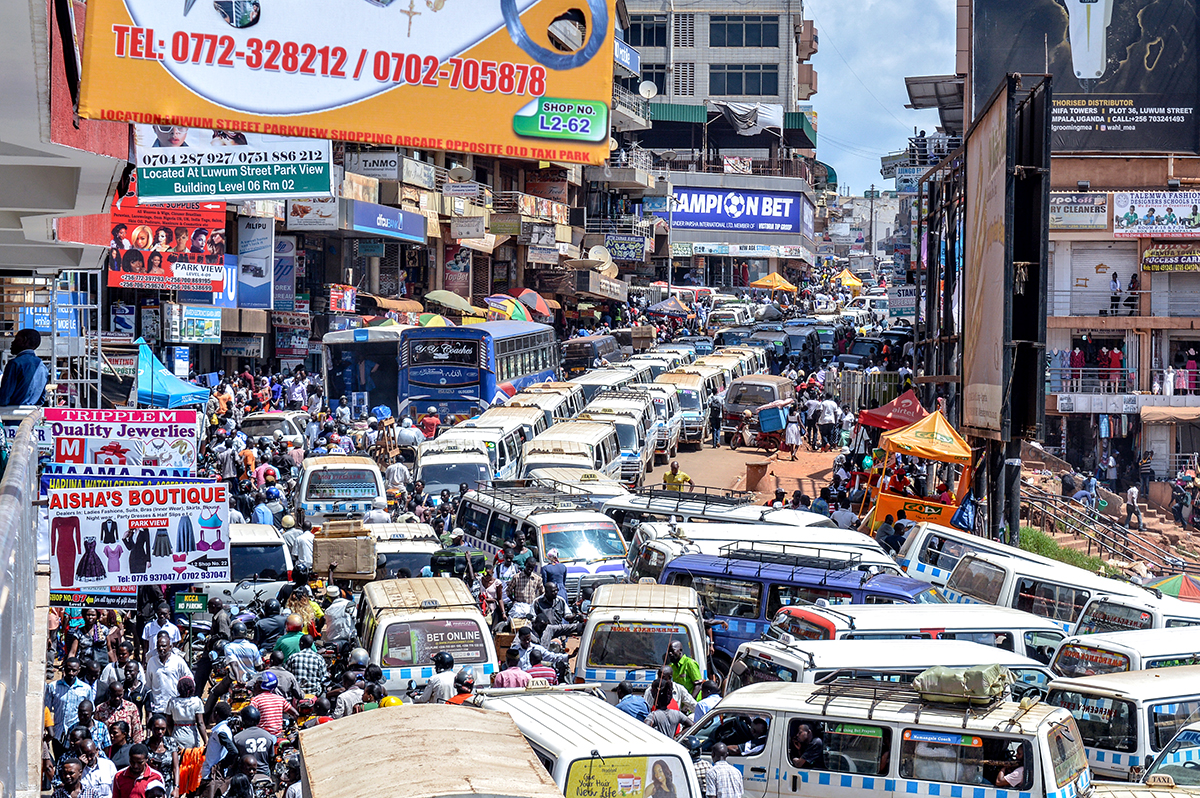
Counter-Argument Five: “Corruption Exists Everywhere.”
Scale and duration matter. Under NRM’s prolonged tenure, corruption, fraud, commercial crime, and unresolved court cases have expanded. Billions of shillings remain trapped in undecided commercial litigation, stalling investment and eroding trust. Justice delayed becomes development denied. A regime that has governed for four decades owns systemic outcomes. As Montesquieu observed, “When the judiciary is not separated from the executive, liberty disappears.”
Lessons Ignored
Lee Kuan Yew transformed Singapore within a compressed timeframe through discipline, merit, and integrity. Malaysia industrialized by extending infrastructure beyond elite enclaves. Time mattered. Urgency mattered. Leadership mattered. Uganda’s tragedy is not a lack of resources, but misused time.
Conclusion
After forty years, the central question remains unanswered: Why is government presence still invisible where most Ugandans live?
Until villages receive safe water, electricity, healthcare, and roads, development claims remain speeches, not experiences. Time has already delivered its verdict.
“In politics, as in life, time does not argue—it reveals.”
About the Writer
Evan Sande Ndahura is a Ugandan writer and public affairs commentator known for rigorous time-based political analysis and grassroots-centered critique. Across his essays and poems—ranging from examinations of governance, power, social justice, and rural marginalization—he consistently interrogates leadership not by slogans, but by lived outcomes.
His work insists that history be confronted honestly, that development be measured where citizens reside, and that time remain the ultimate auditor of power.



