The biggest review of its kind has found that people with ADHD are almost 50 per cent more likely to suffer gut problems — with four times the odds of one childhood condition families are often too embarrassed to mention. A medical student at Warwick spotted the gap in the literature. What she found has doctors rethinking a question they have never bothered to ask.
HEALTH
Ask any parent of a child with ADHD what the appointments are about and you will get a predictable list. Focus. School. Homework that never gets handed in. Sleep, sometimes. Medication doses, almost always.
What you will almost never hear is: the constipation.
And yet, according to a study published this week by researchers at the University of Warwick, the constipation may be one of the most consistent and most overlooked features of the condition. Their analysis — the largest of its kind ever assembled, drawing on data from more than 1.9 million people across 23 separate studies — found that people with ADHD are almost 50 per cent more likely to experience gastrointestinal symptoms than people without it.
For some specific problems, the association is considerably stronger than that. And one number in the paper is startling enough that it is already being passed around among paediatricians.
The symptom that never makes it into the notes
The study, published in the Journal of Attention Disorders on 10 September, is the first systematic review devoted specifically to gastrointestinal symptoms in ADHD. That is a remarkable sentence to have to write in 2026, given that ADHD is estimated to affect around 5 per cent of children and 3 to 4 per cent of adults worldwide, and that reported diagnosis rates have risen sharply over the past 40 years.
Digestive problems in autism spectrum disorder have been thoroughly documented for years. A growing body of evidence has built up around the so-called gut-brain axis, the two-way biological conversation linking digestive health to neurodevelopmental conditions more broadly. But for ADHD specifically — the most commonly diagnosed neurodevelopmental condition on the planet — nobody had ever pulled the evidence together and counted.
The Warwick team did. They gathered studies conducted around the world, including in the United States, Sweden, Germany and South Korea, covering people from the age of 2 all the way to 65. Then they ran the numbers.

What 23 studies, stacked together, actually show
The headline figure is the almost 50 per cent increase in overall gastrointestinal symptoms. But the condition-by-condition breakdown is where the pattern becomes hard to dismiss as noise.
People with ADHD had nearly double the odds of constipation. They had a 58 per cent increase in irritable bowel syndrome — a condition that already affects roughly one in ten people globally and is notoriously difficult to treat. They had 88 per cent higher odds of stomach pain. They had 52 per cent higher odds of indigestion. And they had 82 per cent higher odds of other stomach or bowel problems.
Co-lead author Sarah Blake, a medical student at Warwick Medical School, put the finding in the plainest possible terms. “Almost every gut symptom we looked at — constipation, IBS, even indigestion — appeared to be associated with ADHD,” she said. “These symptoms can have a real impact on daily life, but they could easily be overlooked if the focus is on ADHD itself.”
That last clause is the quiet indictment in the whole paper. Not that the symptoms are undetectable. That nobody is looking.
The number that stops you: four times the odds
Then there is encopresis.
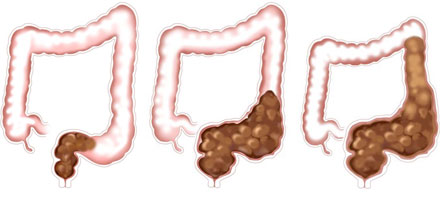
It is a word most people have never heard, which is part of the problem. Encopresis means the involuntary loss of bowel control — soiling — in a child who is old enough to be reliably toilet-trained. It is one of the most distressing things that can happen in a family and one of the least discussed. Children are humiliated by it. Parents frequently interpret it as defiance. It gets hidden from teachers, from relatives, and very often from doctors.
The Warwick analysis found that people with ADHD had more than four times the odds of encopresis.
Four times. Not a marginal signal. Not a statistical curiosity requiring careful interpretation. A fourfold difference, in a condition that families are often too ashamed to raise in a ten-minute appointment, in a group of patients whose appointments are already fully occupied by discussions of attention and behaviour.
It is worth pausing on what that could mean in practice. A child who soils is a child who is being told off. A child who is being told off for something they cannot control is a child whose behaviour deteriorates. And a child whose behaviour deteriorates is, in the eyes of the clinic, an ADHD case that is not responding well to treatment — which may prompt a dose increase, of a medication that can cause constipation, which is a leading cause of the overflow soiling that presents as encopresis in the first place.
The Warwick paper does not claim that this loop is happening. It does not have the data to. But it is exactly the kind of loop that the paper implies clinicians should start looking for.
Three explanations, and not one of them is settled
So why would a condition of attention and impulse control show up in the bowel? The researchers lay out several possibilities, and are careful not to pick a favourite.
The first is behavioural, and it is the least exotic. ADHD-related traits such as impulsivity and irregular eating patterns may simply contribute to digestive symptoms. People who forget meals, eat at chaotic hours, under-hydrate, hyperfocus through the urge to use the toilet, and graze on whatever is fastest are people whose digestive systems are being handed a difficult job. No neurobiology required.
The second is pharmacological, and it is the most uncomfortable. Medications used to treat ADHD are known to produce gastrointestinal side effects, constipation prominently among them. Stimulants suppress appetite, which changes what and how much people eat, often shifting intake toward highly palatable processed food — which in turn changes the gut. Earlier research has found the association between chronic constipation and ADHD to be strongest among patients taking methylphenidate, though even that finding is ambiguous: it could reflect a direct drug effect, or it could simply reflect that more severe ADHD tends to be treated with that particular medication.
The third is biological, and it is the one that will get the headlines. There is existing evidence linking ADHD to differences in gut bacteria. Those bacterial differences may influence the gut via the vagus nerve, one of the body's major lines of communication between the digestive system and the brain — the physical cable underneath all the gut-brain axis talk. Bacteria in the gut produce metabolites that stimulate nerve endings in the intestinal wall, and those signals travel upward.
It is a genuinely plausible mechanism. It is also, at this stage, a hypothesis rather than a finding, and this paper does not test it.
Expert perspective: striking, not settled
Dr Saran Shantikumar, Associate Clinical Professor at Warwick Medical School and senior author on the paper, drew the line carefully and refused to step over it.
“We cannot yet say ADHD causes these gut problems, or exactly what is driving the link, but the pattern is striking enough to warrant attention,” he said. “Clinicians caring for people with ADHD may want to consider asking about gastrointestinal symptoms, particularly if they may be affecting quality of life.”
That is about as far as a meta-analysis of observational studies can responsibly go, and it is notable that the authors went no further. The paper's own conflict-of-interest statement records no competing interests. The recommendation it makes is modest to the point of being almost unglamorous: doctors treating people with ADHD should be alert to gut symptoms and consider asking about them during consultations, and those with more complex symptoms may benefit from input from a dietitian or a gastroenterologist.
No new drug. No new diagnosis. Just a suggestion that a question gets asked.

What this study does not prove
Honesty requires a full accounting of the limits here, because this is a finding that will be over-read within days.
First and most importantly: this is an association, not proof that ADHD causes digestive problems. The researchers state this explicitly and repeatedly. A meta-analysis pools existing observational studies; it cannot manufacture the causal evidence those studies never collected.
Second, the medication problem is not resolved and may be the single biggest confounder in the entire dataset. If a substantial share of the constipation signal is a side effect of treatment rather than a feature of the condition, the clinical implication changes completely — from “ADHD affects the gut” to “we are causing this.” The researchers call explicitly for further work to disentangle biological factors from the effects of medication. Until that work is done, anyone claiming the gut symptoms are intrinsic to ADHD is going beyond the evidence.
Third, there is the reverse-causation question that meta-analyses of this kind can rarely settle. A child in chronic abdominal discomfort is a child who fidgets, cannot settle, sleeps badly and struggles to concentrate — which is to say, a child who looks rather like a child with ADHD. How much of this association runs from gut to diagnosis rather than from diagnosis to gut is an open question.
Fourth, pooling studies from the United States, Sweden, Germany and South Korea, covering ages 2 to 65, delivers impressive statistical power at the cost of precision. Diagnostic practice for ADHD differs enormously between those countries and has shifted over the decades the constituent studies span. The encopresis figure, in particular, is necessarily driven by paediatric data and should not be read as applying to adults.
What this means for you
If you have ADHD, or you are raising someone who does, the practical takeaway from this paper is unusually simple: mention it.
Mention the constipation. Mention the stomach pain that has been there so long it has stopped registering as a symptom. Mention the bloating, the indigestion, the bathroom problems, the child who has started soiling again and is mortified about it. These are not embarrassing side issues that waste the appointment — they are, on this evidence, part of the clinical picture, and they are strongly enough associated that a clinician who knows about this study should not be surprised to hear them.
If you are on ADHD medication and your gut has been worse since you started, that is worth raising directly rather than enduring. Constipation is a recognised side effect, it is manageable, and there are options — dose timing, formulation, hydration, fibre, and in some cases a genuine conversation about whether the trade-off is right for you. That conversation belongs to you and your prescriber, and nothing in this article is a reason to stop or change a medication on your own.
If your symptoms are complex or long-running, the Warwick team's own recommendation is the right one to take into the room: ask whether input from a dietitian or a gastroenterologist would help. And if you are a clinician, the ask here is a single sentence added to a consultation. It costs almost nothing and, on these numbers, it will find something in a meaningful fraction of patients.

The bottom line
There is something instructive about the fact that this study was co-led by a medical student. Sarah Blake did not discover a molecule or invent a technique. She noticed that in a field with tens of thousands of papers, nobody had systematically asked a basic question about one of the most common conditions in medicine — and then she asked it.
The answer, drawn from 1.9 million people, is that gut symptoms travel with ADHD far more often than the clinical literature has bothered to record. Nearly 50 per cent more gastrointestinal symptoms overall. Double the constipation. More than four times the odds of a childhood condition that families hide.
Nobody yet knows why. It might be biology, it might be behaviour, it might substantially be the medication, and it is most likely some braided combination of all three. Untangling that will take years and studies this one cannot substitute for.
But the fix for the immediate problem does not require waiting for any of that. It requires a doctor asking about the stomach, and a patient being willing to answer.
Published By | Health News Editor