Written By | International News Agencies
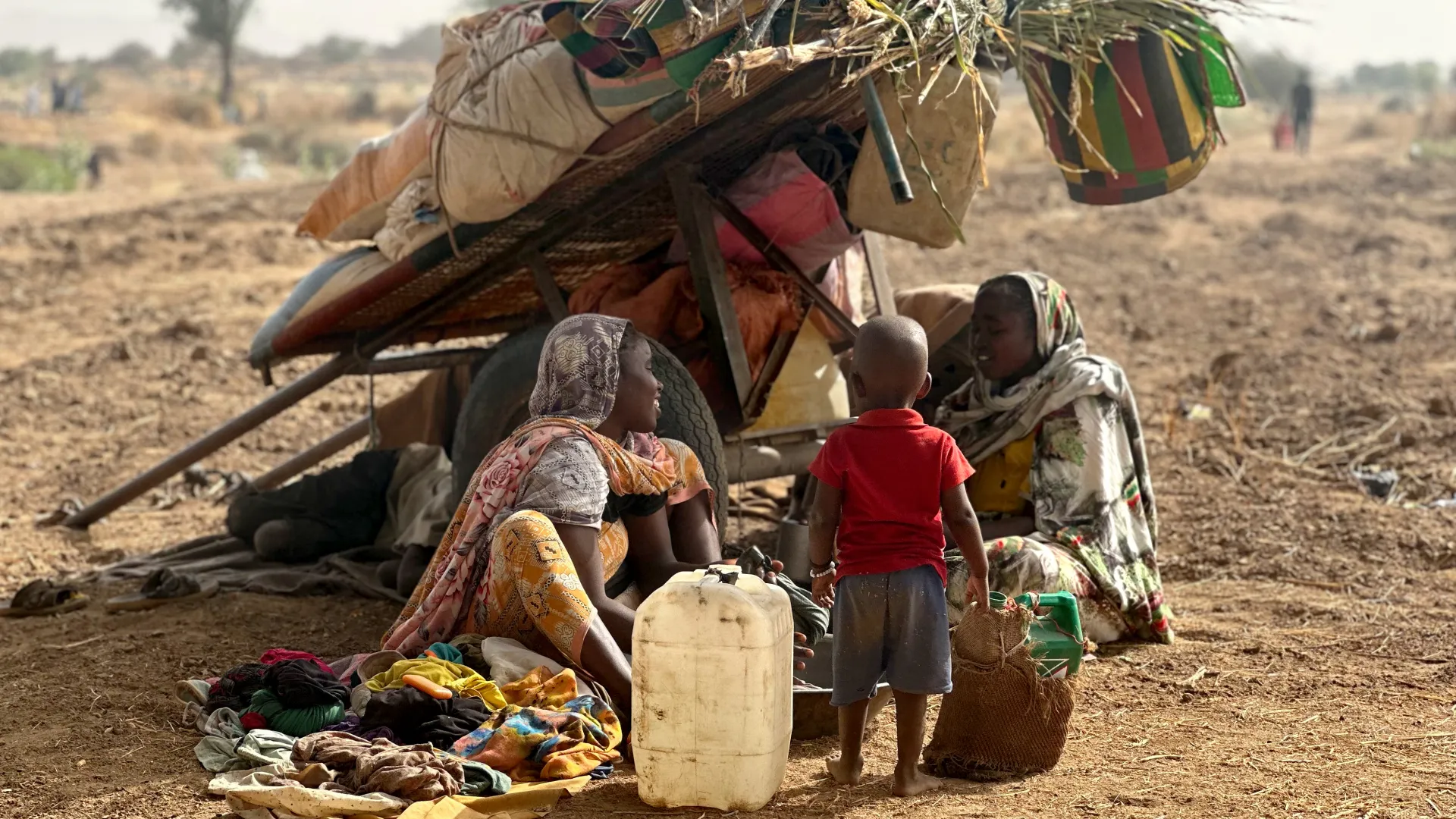
Sudan has already lost a generation to its earlier wars, and it is losing another one now,
KHARTOUM, Sudan
Sudan's military and allied Darfur rebel factions say they have blunted a series of Rapid Support Forces assaults on a strategic corridor west of el-Geneina this week, a battlefield shift that could set up a decisive fight for one of the paramilitary group's last strongholds in the region. The apparent momentum comes as the United Nations warns that the 16-month-old civil war is inflicting catastrophic, possibly irreversible damage on Sudan's children, and days after a Sudanese army drone strike on a rural court session in North Darfur killed 35 people, according to a Sudanese rights group.
The two threads — a war grinding toward a new phase on the ground and mounting evidence of its human cost — capture where Sudan's conflict stands as it approaches its 1,210th day, the figure U.N. Deputy Secretary-General Amina Mohammed cited this week in a stark appeal to the Security Council. "Sudan has already lost a generation to its earlier wars, and it is losing another one now," she told a Security Council Arria-formula meeting on Aug. 7, according to U.N. News.
Background: a war without an endgame
The conflict between the Sudanese Armed Forces (SAF) and the Rapid Support Forces (RSF) erupted in April 2023 after a power struggle between the country's two top generals collapsed a fragile transition to civilian rule. It has since become, by U.N. accounting, the world's largest displacement crisis, with more than 13 million people driven from their homes. The RSF, a paramilitary force descended from the Janjaweed militias that fought in Darfur in the 2000s, seized much of the western region over the course of the war, including el-Fasher, the capital of North Darfur state, which fell to the RSF in October 2025 after a punishing siege.
The RSF and its allies have since declared a rival administration, known as the Tasis government, in opposition to the SAF-aligned government based in Port Sudan. That parallel-government split has hardened the war into something closer to a partition, with each side controlling separate territory, taxing separate populations and claiming separate legitimacy — a dynamic that makes any near-term negotiated settlement more difficult even as fighting continues to shift the map.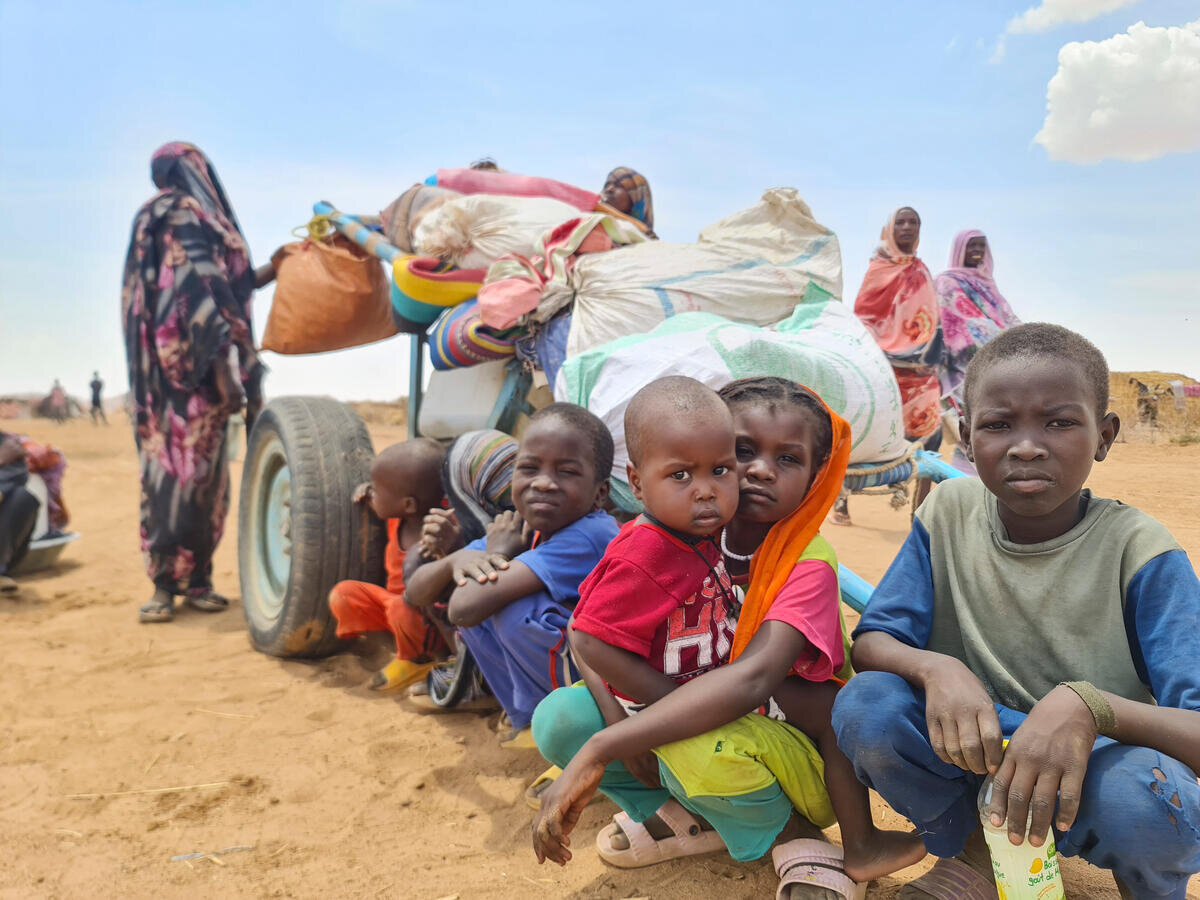
This week's developments: Bir Saliba and the road to el-Geneina
In early August, Sudan's military and allied groups repelled two successive RSF attacks in the Bir Saliba region, according to Sudanese officials, a stretch of territory lying about 30 kilometers (nearly 20 miles) north of el-Geneina, the capital of West Darfur state and, per Al Jazeera's reporting from Khartoum, the RSF's last stronghold in the region. General Bahr al-Din Adam Karama, the governor of West Darfur state, said the area's road network links the state capital with the northwestern districts of Jebel Moon and Kulbus, making control of Bir Saliba pivotal to any advance on el-Geneina itself.
Darfur's regional governor, Minni Arko Minnawi, said the RSF attempted to encircle Bir Saliba this week, with one force advancing from north of Kulbus and another from the direction of Sileia in the Jebel Moon area before launching a large-scale assault on the Joint Force of the Armed Struggle Movements — a coalition of former Darfur rebel groups that signed the 2020 Juba Peace Agreement and now fights alongside the Sudanese army. "[The RSF] bet on the element of surprise to break through the Joint Force's defenses, but they received another lesson," Minnawi said.
Minnawi also announced that Major General Mahdi Adam, known by the nom de guerre "Jebel Moon" and one of the RSF's most prominent field commanders in the west, had been killed in the fighting — a claim the RSF has not confirmed but which, if accurate, would leave a significant leadership gap on the paramilitary's western front. Major Mutawakkil Ali Wakil Abu-Ja, the Joint Force's spokesman, told Al Jazeera that his fighters destroyed more than 38 RSF combat vehicles and seized 27 others during the campaign, and that the commander leading the attacking RSF force was also killed, with surviving fighters fleeing and abandoning their dead. Abu-Ja said efforts were under way to secure the western axis ahead of what he called a "decisive battle for el-Geneina." Separately, Major General Othman Siraj said army air strikes had hit an RSF convoy traveling near the Chadian border, further isolating the paramilitary group from a key supply route.
The gains follow a broader pattern of army advances in recent weeks. On July 27, Sudan's military claimed control of the highway linking Khartoum and el-Obeid, a major supply artery the RSF had relied on before its recapture. Fadel Kaya, an adviser with the Sudan Liberation Movement/Army – Transitional Council, another Juba Agreement signatory now aligned with the army, told Al Jazeera that the Joint Force's recent victories in West Darfur suggested the RSF had shifted from trying to hold and expand territory to retreating from key positions. In North Kordofan, Amin Ishaq Zakaria, a spokesman for the same faction, said the RSF's growing reliance on drone strikes — rather than direct ground engagements — reflected "a predicament on the ground and an inability to engage in direct confrontations after losing vital positions." He said army forces had seized a number of RSF attack drones along the Jabra al-Sheikh axis during the counteroffensive.
The fighting has not been without cost to civilians. The International Organization for Migration reported that more than 6,650 people from 11 villages in the Sirba locality of West Darfur have been displaced by the escalation around Bir Saliba. Al Jazeera said it contacted both the RSF and the Tasis government for comment on the fighting but had received no response by the time of publication.
The Aug. 2 drone strike and the war on civilians
The battlefield gains came days after one of the deadliest single incidents of the war's recent phase. On Aug. 2, the rights group Emergency Lawyers said a Sudanese army drone strike hit a customary court session in the village of al-Zawiya Ghara, in the Garra al-Zawaya locality of North Darfur state — RSF-held territory — killing 35 people. The group said the strike hit at around 1 p.m. local time, while community leaders were holding a court session under a tree, and that the dead included four tribal leaders and two RSF commanders. The RSF's Tasis government condemned the strike as "a horrific crime," giving a higher toll of 37 dead and 50 wounded; the Sudanese army did not immediately respond to the allegations, according to Al Jazeera's reporting.
The strike underscored a pattern that has defined the war's recent months: both sides have increasingly used drones — the RSF to compensate for lost ground forces and supply lines, the SAF to strike deep into RSF-held territory — with civilian gatherings repeatedly caught in the crossfire.
The generational toll
Away from the front lines, the war's slower-moving catastrophe was the subject of Mohammed's appeal to the Security Council on Aug. 7. She said at least eight million school-age children remain out of the classroom, with a disproportionate impact on displaced children, including those who have fled to neighboring countries. In Darfur alone, she said, nearly three-quarters of schools have been damaged, destroyed or otherwise rendered non-functional since the war began in April 2023. "Five children in every six are out of school, and parents will tell you they would rather keep their children at home than send them to a classroom, because home for them is the only place left where they can keep them safe," Mohammed said.
She added that the U.N. has verified more than 67 attacks on schools since 2024 and documented more than 154 instances of schools being used for military purposes, "though the true scale is undoubtedly greater." More than half of Sudan's teachers have gone unpaid, she said, yet many continue teaching. The U.N. and its partners have brought more than a million Sudanese children back into some form of learning this year, Mohammed said, "but it is simply not enough." She closed with a direct appeal: "Sudan's children have waited 1,210 days for the war to end. They should not have to wait any longer."
Analysis: military momentum, political stalemate
The convergence of battlefield movement and humanitarian alarm illustrates the central paradox of Sudan's war: tactical shifts on the ground have so far done little to alter the war's fundamental political geometry. The army's push toward el-Geneina, if it culminates in an assault on the city, would be a significant symbolic and strategic win — reclaiming the last major RSF-held urban center in West Darfur and potentially disrupting RSF supply lines running through Chad. But the RSF's parallel Tasis government, its continued control of large stretches of Darfur and Kordofan, and its evident ability to sustain drone warfare even while losing ground suggest the paramilitary group retains both the capacity and the intent to keep fighting rather than negotiate a settlement that recognizes the SAF's authority.
For Sudanese civilians, the practical consequence is that neither military progress nor diplomatic statements have translated into protection. The Aug. 2 strike on a customary court — a traditional, community-level dispute-resolution forum rather than a military target — illustrates how thoroughly the war has eroded the boundary between combatants and civilians in contested areas.
What to watch
Analysts and Sudanese officials alike are watching whether the army's push around Bir Saliba develops into a full offensive on el-Geneina, which would test whether recent SAF gains are durable or merely the product of RSF overextension. Also worth tracking: whether the reported death of RSF commander Mahdi Adam is confirmed, given his prominence on the western front; whether the RSF's growing drone campaign in North Kordofan signals an emerging pattern of asymmetric warfare as it loses ground positions; and whether the Security Council's Arria-formula discussion on education translates into any concrete diplomatic push — from the U.S., African Union or Gulf mediators — to revive stalled ceasefire talks. With more than 13 million people displaced and eight million children out of school, the human cost of further delay continues to compound daily.



