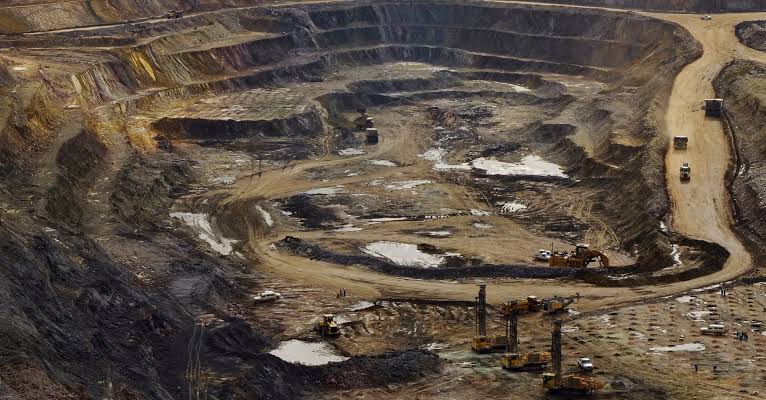
Kinshasa, Democratic Republic of Congo
The Democratic Republic of Congo has banned exports of copper and cobalt concentrate, a government order made public this week that marks the sharpest escalation yet in President Félix Tshisekedi's drive to force foreign mining companies to process more of the country's mineral wealth on Congolese soil rather than shipping it abroad in raw form. The order, dated June 29 but only reported publicly on Aug. 6 after Reuters reviewed a copy, lands at a moment when Tshisekedi's government is simultaneously trying to leverage the country's mineral riches — Congo is the world's largest cobalt producer and its second-largest copper supplier — into security guarantees against a war in the country's east that has ground on for more than two years without a durable resolution.
What the order does
The order, signed by Mines Minister Louis Kabamba Watum, Foreign Trade Minister Julien Paluku Kahongya and Economy Minister Daniel Mukoko Samba, states plainly that "the export of copper and cobalt concentrates is prohibited." The ban took effect immediately upon signing. Alongside it, the government introduced a new tax regime covering economically significant mining by-products, with a three-month transition period before it takes full effect — part of a broader push to increase state revenue from a mining sector that has historically exported the bulk of its value in unprocessed form. The mines minister retains discretion to grant one-year export waivers in "strategic" circumstances, a carve-out that will likely determine how disruptive the policy actually proves to be in practice.
The companies most exposed include China's CMOC, the world's largest cobalt producer by volume; Glencore; Huayou Cobalt; Zijin Mining; Ivanhoe Mines; and Eurasian Resources Group — a roster that spans Chinese, Swiss, Canadian and Kazakh capital, illustrating how thoroughly internationalized Congo's mining sector has become even as Kinshasa pushes to claim more of its value domestically.
Ivanhoe Mines, the Canadian operator of the Kamoa-Kakula copper complex, moved quickly to reassure investors that the policy was less novel than the Reuters report suggested. In a statement issued the same day, the company said a ban on exporting unbeneficiated — that is, unprocessed — concentrate has actually been in place and enforced in Congo for close to a decade, and that since Kamoa-Kakula began production in 2021, the government has repeatedly granted one-year derogations allowing the export of that mine's copper concentrate. Currently, Ivanhoe said, Kamoa-Kakula's concentrate is smelted either at its own on-site smelter or at the Lualaba Copper Smelter in Kolwezi, while its separate Kipushi mine — which produces zinc, copper, germanium and silver — holds its own derogation permitting zinc concentrate exports. The clarification suggests the new order tightens and formalizes an existing framework of case-by-case waivers more than it represents a wholesale, unprecedented shutdown of the concentrate trade, though the by-product tax regime attached to it is new.

Two Congos, one balance sheet
It matters, for understanding this story, that the mines affected by the concentrate ban sit almost entirely in Congo's southern Copperbelt — the Lualaba and Haut-Katanga provinces — which is geographically distinct from the conflict zone convulsing the country's east. That war, centered in North and South Kivu, pits Congolese government forces against the AFC/M23 rebel alliance, which Kinshasa and independent U.N. experts have long accused of receiving backing from neighboring Rwanda. M23 has seized significant territory in the Kivus since 2021 and has continued offensives despite repeated diplomatic efforts to stop it: by one recent accounting, the group's operations have killed more than 1,500 civilians and displaced hundreds of thousands more since December alone.
The most significant recent diplomatic milestone came on Nov. 15, 2025, when the DRC government and the AFC/M23 signed the Doha Framework for a Comprehensive Peace Agreement, brokered by Qatar with backing from the United States and welcomed by both the African Union and Rwanda's government. But the framework is explicitly non-binding — a roadmap toward a comprehensive deal rather than the deal itself — and analysts tracking the talks describe negotiations over its substantive "pillars" as tense and slow, with neither side showing much appetite to abandon maximalist positions. M23 appears content entrenching de facto control over the Kivus while it negotiates; Congo's government has resisted political concessions to a group it considers illegitimate. A parallel process — the Washington agreements between the DRC and Rwanda, alongside separate Doha talks and what Tshisekedi has called the "Montreux commitments" — is meant to reinforce the same goal from a different angle, but Tshisekedi himself has made clear he views all of it skeptically until it produces results. In his June 30 Independence Day address marking Congo's 66th anniversary, he declared the country's sovereignty "non-negotiable" and said the various agreements "only make sense if they produce concrete, verifiable, and irreversible results" — namely, an end to the fighting, a halt to foreign armed support for the rebels, and the withdrawal of foreign forces from Congolese soil.
Minerals as leverage, and as liability
That framing — minerals as the lever Congo can pull to extract security commitments from the outside world — has become central to Tshisekedi's diplomacy well beyond the concentrate ban. In a June 16 meeting in Houston, he welcomed a proposed national mineral-mapping initiative using advanced aerial imaging, but insisted that "data sovereignty is non-negotiable" and that any partnership had to serve Congo's goal of turning raw resources into durable industrial development rather than simply extraction for export. The government has also pursued a broader minerals-for-security arrangement with Washington, under which access to Congolese critical minerals is explicitly tied, in the administration's framing, to American engagement on stabilizing the east.
That strategy has drawn skepticism from researchers and advocacy groups who question whether mineral deals can actually deliver the security outcomes Congo wants. Analysts writing for outlets including the Council on Foreign Relations and Friends of the Congo have argued that minerals-for-security arrangements risk entrenching a familiar pattern in which foreign capital extracts value from Congolese resources without the promised security dividends materializing, and that ordinary Congolese in mining regions have seen little benefit even as new deals are announced. An Al Jazeera investigation published in February carried testimony from Congolese workers and communities who said they felt "exploited" by the pace and terms of the new minerals agreements, notwithstanding the government's insistence that processing requirements and by-product taxes will eventually translate into local jobs and revenue.
The market and political calculus
For now, the concentrate ban and its accompanying tax regime read as a continuation of a strategy Congo has pursued with growing confidence over roughly the past year: using its dominance of global cobalt supply and its status as the second-largest copper exporter to compel foreign miners to build local smelting and refining capacity rather than exporting ore or concentrate for processing elsewhere, chiefly in China. Congo has taken a similar approach previously with raw cobalt hydroxide, moving in recent years from an outright export ban toward a quota system designed to support global cobalt prices depressed by oversupply — a separate policy track from Thursday's order, but one that reflects the same underlying instinct: that Congo's leverage lies in restricting the raw material rather than simply taxing its export.
Whether this latest measure holds firm or is quickly softened through waivers, as Ivanhoe's clarification suggests has happened before, will be an early test of how far Kinshasa is willing to push its major mining partners. A hard line risks near-term disruption to global copper and cobalt supply chains and could complicate Congo's relationships with CMOC and other Chinese operators at a moment when Beijing remains the dominant buyer and processor of Congolese ore. A softer approach, heavy on strategic waivers, would blunt the policy's practical bite while still letting Tshisekedi claim a sovereignty win domestically ahead of further rounds of the Doha and Washington-brokered talks over the war in the east.
What to watch
The most immediate signal will be how quickly, and to whom, the mines minister grants the one-year strategic waivers the order allows — a pattern that, if it mirrors the derogations already issued to Kamoa-Kakula and Kipushi, could show the ban functioning more as a renegotiation tool than an absolute prohibition. Longer term, the real test of Tshisekedi's strategy is whether tightening control over the mineral trade in the peaceful south can be converted into diplomatic leverage that actually changes the trajectory of the war in the east, where the Doha Framework's substantive pillar negotiations remain unresolved and M23 shows no sign of relinquishing the territory it holds. Congo's government is, in effect, betting that its resource wealth can buy security it has not yet been able to secure through negotiation alone — a bet that, so far, has produced frameworks and declarations more readily than it has produced peace.
Published By | News Editor