Written By | International News Agencies
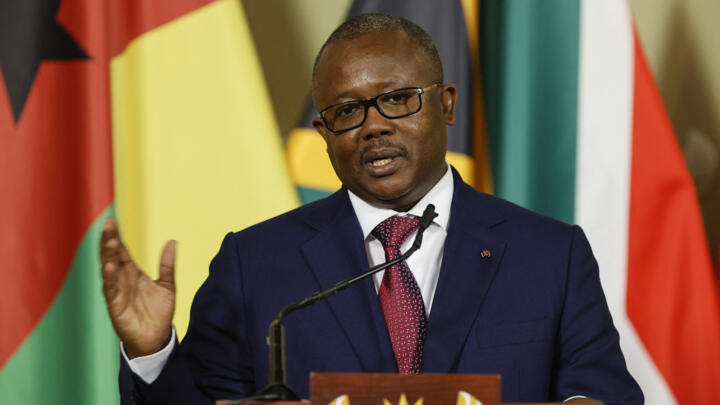
Embaló has been living in exile in Morocco since he was overthrown
BISSAU, Guinea-Bissau
Guinea-Bissau's military high command has blocked former president Umaro Sissoco Embaló from returning from exile ahead of the December 6 elections that the junta has billed as the road back to civilian rule. The decision, announced Thursday, came days before Embaló's planned homecoming on Sunday, October 4, and has exposed disagreements inside the transitional authorities, unease within the security forces and unresolved questions about who will be allowed to compete in the vote.
The decision
In a communiqué, No. 07/ACM/2026, the military high command said that "necessary security conditions were not in place" for Embaló's return, Africa Briefing reported. Africanews, citing the military, reported that the decision was "based on national security, public order and the need to preserve social stability." The high command also confirmed that bans on political demonstrations and gatherings remain in effect.
Embaló has been living in exile in Morocco since he was overthrown. He announced that he would "be a candidate in the presidential election" and said he planned to return on October 4, according to AFP reporting summarized by the Rio Times. The reporting reviewed for this story does not say when, or whether, the high command would consider his return safe.
How the country got here
The military seized power in November 2025, days after a presidential vote in which Embaló was seeking re-election, and one day before results were due to be released. The coup halted the electoral process. The junta, led by General Horta N'Tam, said at the time that it had intervened to "avoid a bloodbath between supporters of the rival candidates," Africanews reported in January, when it also announced that elections would be held on December 6. N'Tam said then that "all the conditions for organising free, fair and transparent elections have met."
A transitional charter published in early December bars N'Tam from running as a candidate, according to Africanews. The leaders of the West African bloc ECOWAS, Sierra Leone's Julius Maada Bio and Senegal's Bassirou Diomaye Faye, visited Bissau and called for a brief, transparent transition and for the release of detained political opponents.
Guinea-Bissau's history makes such pledges hard to take at face value. The country has experienced five coups and numerous attempted takeovers since independence from Portugal in 1974, according to Africanews. The pattern is one in which the army remains the arbiter of political outcomes and civilian institutions are persistently weak.
A residency rule with political consequences
The central legal question is whether Embaló can be a candidate at all. A new constitution approved in August introduced a requirement that presidential candidates have lived continuously in the country for five years, Africa Briefing and the Rio Times reported. Embaló has been abroad since the coup. No electoral authority has formally ruled on whether forced displacement counts against the five-year threshold, according to Africa Briefing.
The point is more than technical. If the rule is read strictly, it could disqualify the former president without any need to bar him physically. If it is read to allow for involuntary exile, the junta would have to explain why it is preventing him from returning to establish his eligibility. By blocking the return rather than waiting for the election authorities to decide, the military has in effect pre-empted the question. Whether that was the intention is not established in the reporting reviewed for this story, and the high command has publicly cited only security reasons.
Cracks inside the transition
The decision has produced visible friction within the transitional system. On September 29, the National Transitional Council signaled that Embaló could run if he met the legal requirements, and its spokesman, Fernando Vaz, affirmed his right to return, Africa Briefing reported. The military's communiqué cut across that position two days later.
Unrest within the presidential guard has added to the unease. Reports emerged on September 29 of turmoil in the unit. Authorities dismissed them as "routine reassignments," although some sources indicated that an anti-coup unit had been disbanded, the Rio Times reported. The claim is unconfirmed. In a country where coups have often originated in the barracks, the mere suggestion of discontent in the guard that protects the presidency tends to be taken seriously by diplomats and rivals alike. The military's security justification for the Embaló decision comes in this setting, though the high command has not linked the two.
Opposition: a hostile reaction to Embaló, but no free field
The politics of the opposition are complicated. The leader of the African Party for the Independence of Guinea and Cape Verde (PAIGC), the country's historic dominant party, dismissed Embaló's candidacy as "shocking," according to the Rio Times, while security forces occupied the party's headquarters, citing orders to relocate organizations located near government buildings. The party's longtime leader, former prime minister Domingos Simões Pereira, has been in detention, and the Rio Times account does not clarify who currently speaks for the party. Reuters reported in July that Pereira had been returned to prison on July 10 after being moved to house arrest in February. It said he faces accusations of economic crimes and alleged involvement in an October 2025 coup attempt, which he denies. ECOWAS called at that time for the "unconditional release" of all detained political figures, saying that doing so could "bolster the credibility of the transition process."
This means the junta is acting in a field where the ousted president and the main opposition party are both being kept at arm's length. Embaló's backers and opponents share little except the experience of being constrained by the same military authorities. That makes the election's inclusiveness, and therefore its legitimacy, difficult to assess.
Analysis: what the December vote needs to be credible
Elections organized by a military government that has banned demonstrations and gatherings face a credibility test that no single candidate's fate can settle. Yet the Embaló episode is a useful stress test. For the vote to carry weight with ECOWAS, the African Union and Guinea-Bissau's own citizens, three conditions would need to be visible: clear, published rules on candidate eligibility; an electoral authority that decides disputes rather than the military high command; and an environment in which the parties can campaign.
On each of these, the past 48 hours point the wrong way. Eligibility is being determined by a security communiqué rather than a legal ruling. The transitional council and the high command have publicly diverged. And the continuing ban on gatherings limits what any candidate, including Embaló's rivals, can do to organize. The junta's stated reasoning, that the security situation does not permit a return, may be sincere, but a security rationale of this kind is also open-ended. It can be extended indefinitely, and it is difficult for outsiders to test.
There is also an argument on the other side that deserves weight. Embaló was president when the electoral process collapsed, and the coup itself rested on claims, which the junta advanced, of an imminent threat of violence between rival camps. If those fears were even partly genuine, the return of a polarizing figure could raise tensions. The high command could say that its priority is to prevent unrest during a fragile transition. The difficulty is that, without transparent criteria, the same logic could be applied to any rival of the military's preferred outcome.
What to watch next
The first thing to watch is October 4 itself: whether Embaló makes any attempt to travel, how he responds publicly, and whether the military's order is enforced at borders and airports. The second is how the National Transitional Council responds to the high command's decision, given its September 29 position. The third is whether the electoral authorities issue a formal interpretation of the five-year residency rule, which would clarify whether the dispute is legal as well as political. The fourth is the posture of ECOWAS, which has repeatedly pressed for a short transition and prisoner releases and may now be asked to weigh in on candidate access. Finally, signs of further movement inside the presidential guard would indicate whether the stability the junta cites is being undermined from within.



