Written By | Staff Writer
A modest growth recovery, a reopened diamond trade and a new IMF program are testing whether one of the world's poorest countries can turn stabilization into shared prosperity.
CAR
Few economies illustrate the distance between macroeconomic stabilization and lived poverty as starkly as the Central African Republic (CAR). More than a decade after conflict shattered its institutions and drove diamond exports into an international embargo, CAR is now recording its steadiest run of growth in years, rebuilding a formal mining sector, and negotiating fresh support from the International Monetary Fund. Yet by the World Bank's own reckoning, roughly seven in ten Central Africans remain poor, and the country's growth rate still trails population growth — meaning income per person is, in real terms, barely moving. Understanding CAR in 2026 means holding both of these realities at once: a state that is, by its own recent standards, doing better, and a population for whom that improvement has yet to translate into materially better lives.
A Modest but Real Growth Recovery
Estimates of CAR's growth trajectory vary by institution, which itself says something about the fragility of the country's statistical base. The African Development Bank's most recent country outlook put real GDP growth at 3.3% in 2025, up from 1.8% in 2024 and just 0.7% in 2023, with a forecast of 2.9% for 2026 as mining output, forestry activity and externally financed infrastructure projects continue to expand. The World Bank's own figures are more conservative, projecting growth of roughly 2.1% in 2025 — a rate that falls below the country's approximately 3.1% demographic growth rate, meaning GDP per capita is effectively stagnant or declining even as headline GDP rises. The IMF, in completing the third and fourth reviews of CAR's Extended Credit Facility (ECF) arrangement in June 2025, projected growth accelerating to around 3% for 2025, up from 1.9% in 2024, contingent on faster progress on fuel-market and governance reforms and continued access to grant and concessional financing.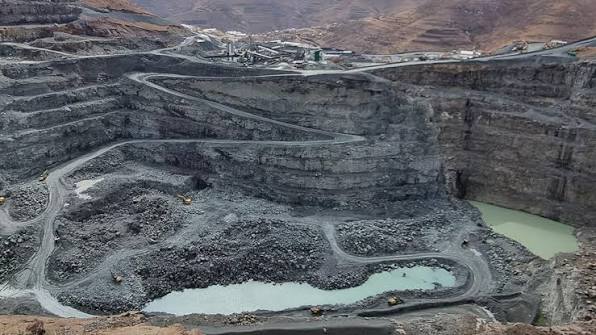
What the three institutions agree on is the direction of travel and the fragility underlying it: growth is recovering from a very low base, is heavily dependent on external financing and one-off sectoral gains, and remains vulnerable to insecurity, unreliable electricity and fuel supplies, and incomplete infrastructure. The African Development Bank explicitly flags all of these as downside risks to its 2026 forecast, alongside the physical toll of climate change on a largely rain-fed agricultural economy.
Diamonds Return to the Legal Market
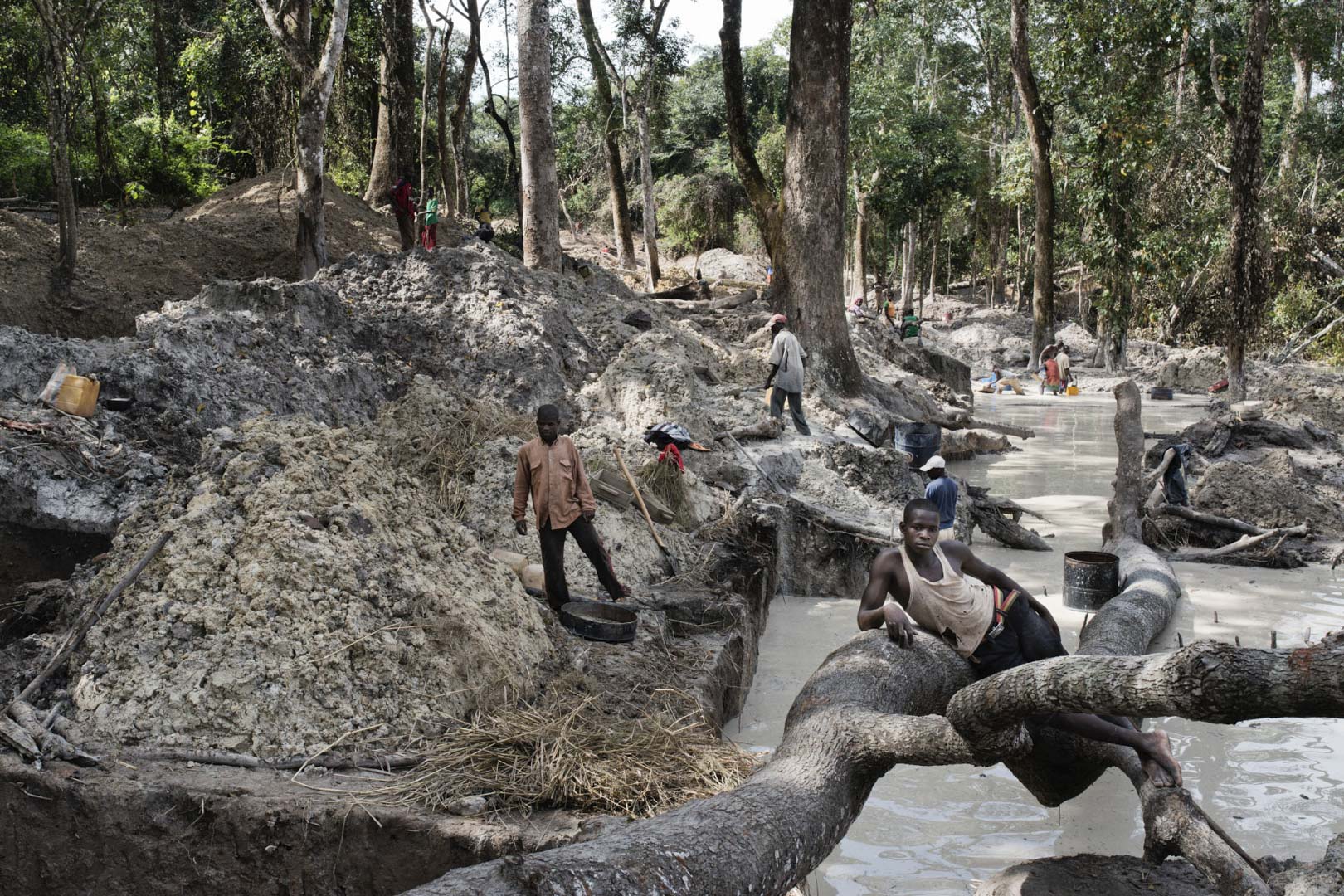
The most tangible structural change in CAR's economy over the past two years has been the normalization of its diamond trade. At its 2024 plenary meeting in Dubai, the Kimberley Process — the international certification scheme meant to keep "blood diamonds" out of global markets — voted to lift the roughly 11-year-old embargo it had imposed on CAR rough-diamond exports following the 2013 conflict. The lifting was unconditional and immediate, subject only to a requirement that CAR report on its progress at the 2025 Kimberley Process intersessional and plenary meetings. The African Development Bank credits this normalization with materially improving CAR's trade balance and expects it to help narrow the current account deficit sharply through 2025 and 2026.
The government has moved to formalize its institutional grip on the sector. In 2025, it created two new state-owned entities envisioned under a draft mining code overhaul: Gemmes et Mineraux de Centrafrique (GEMINCA), mandated to purchase precious and semi-precious minerals directly, and the Societe Nationale de Developpement des Ressources Minerales (SONADERM), tasked with improving the country's geological knowledge base. Both are explicit attempts to capture more value domestically in a sector that has historically been dominated by informal, artisanal extraction and by opaque foreign-linked concessions — including gold, diamond and timber holdings tied to Russia's Wagner Group (now largely operating in CAR under the rebranded Africa Corps), which the Center for Strategic and International Studies and other analysts have documented extensively since 2018.
Even so, independent monitors caution that the legal reopening has not eliminated the illicit trade it was meant to supersede. A report from the International Peace Information Service (IPIS) found that the original embargo, for all its symbolic weight, did little to stop armed groups from financing operations through diamond revenue, and analysts at the Global Initiative Against Transnational Organized Crime have separately warned about opaque management of state-linked cryptocurrency schemes, including the Sango Coin project and a 2025 "$CAR" token episode, that officials have floated as vehicles for monetizing mineral concessions without adequate anti-money-laundering safeguards.
An IMF Program Under Strain
CAR's economic policy framework continues to run through a $197 million (SDR 147.48 million) Extended Credit Facility arrangement the IMF's Executive Board approved in April 2023. The Fund completed the arrangement's third and fourth reviews on June 4, 2025, approving a further $58 million disbursement while explicitly describing program performance as "mixed" and downside risks as "substantial." The IMF's staff report accompanying that review flagged CAR's continued reliance on regional bond issuance to roll over maturing debt as a structural vulnerability, particularly given that debt servicing on regional-market bonds alone is projected to consume roughly a third of public revenue in 2026.
On the fiscal side, the government has made real progress narrowing its deficit: the overall budget shortfall fell to an estimated 3.5% of GDP in 2025, down from 5.2% in 2024, driven primarily by improved domestic revenue mobilization rather than spending cuts. Public debt is projected to trend near 54% of GDP in 2026, and the government's stated budget strategy is to hold nominal public spending close to $600 million while shrinking its share of GDP from roughly 20% in 2024 to about 16.5% by 2026, with the explicit goal of pushing total public debt below 50% of GDP by 2027. The IMF has repeatedly urged Bangui to prioritize grants and concessional financing over costlier regional-market borrowing to make that trajectory sustainable, given that domestic bond yields on three-year CAR issuances have hovered near 11% — among the highest in the six-country CEMAC monetary union.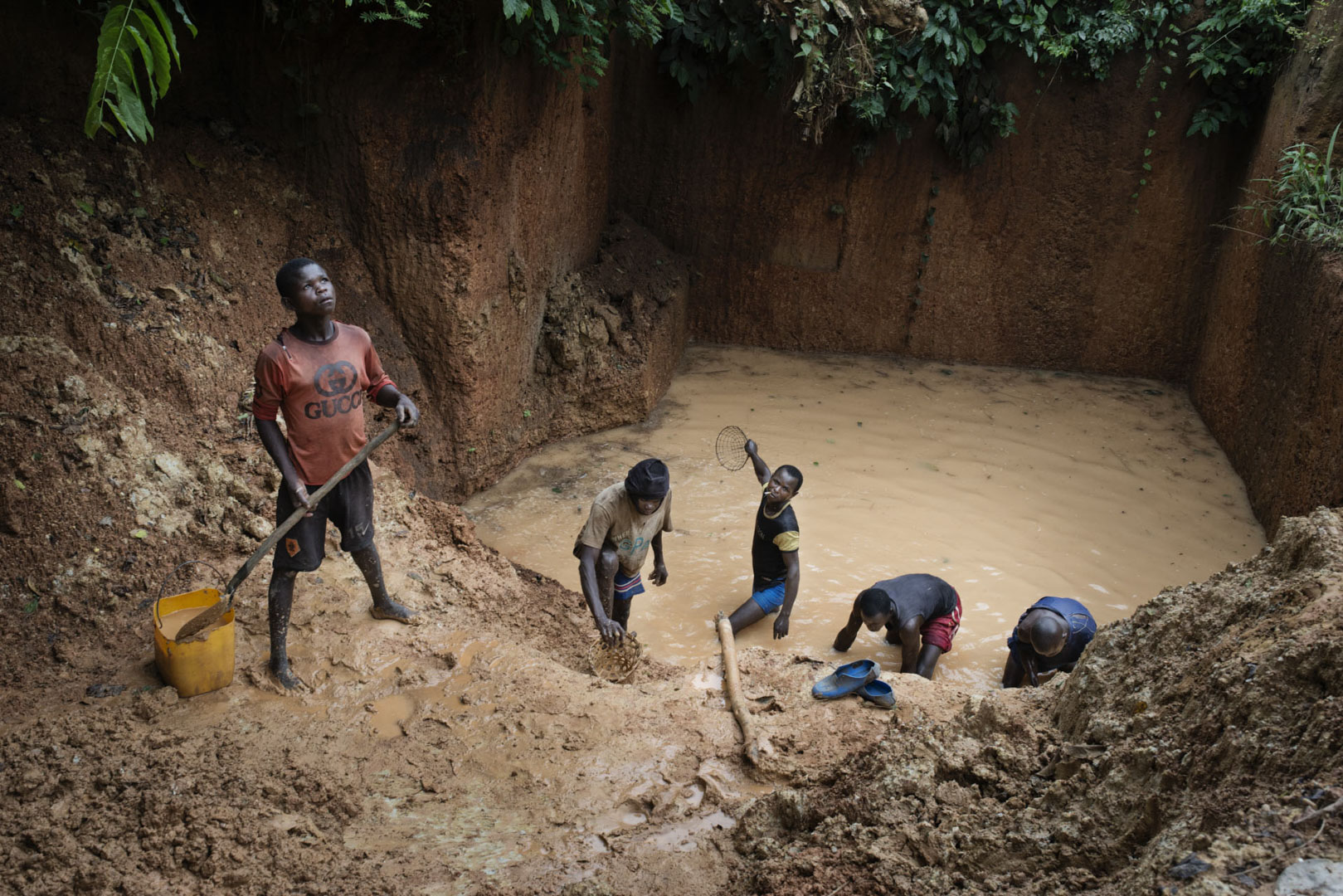
Poverty and Food Insecurity Remain the Central Fact
Set against these balance-sheet improvements is a poverty rate that has barely moved. World Bank and IMF assessments put the share of Central Africans living in poverty at somewhere between 71% and nearly 80%, figures that place CAR among the poorest nations on earth by any measure. Roughly 31% of the population faces severe food insecurity, according to World Food Programme assessments, and humanitarian officials have warned that the situation could deteriorate further following the planned scaling-back of USAID programming that began in early 2025, a shock that hit CAR's humanitarian and health sectors harder than most given how dependent they had become on U.S. assistance.
A World Bank poverty assessment focused squarely on the country's rural economy as the lever most likely to move these numbers. Agriculture remains both the largest sector of the economy — contributing roughly half of GDP — and its largest employer, occupying an estimated 70% to 80% of the working-age population, most of it in low-productivity, rain-fed subsistence farming of cassava, maize, sorghum, millet, rice and groundnuts. The Bank's analysis concluded that CAR could lift millions of people out of poverty simply by raising the productivity of this existing agricultural base — improving seed quality, rural infrastructure and access to markets — rather than waiting for mining or forestry windfalls to trickle down through a still-thin formal economy.
Energy, Infrastructure and Regional Integration
Chronic power shortages remain one of the clearest binding constraints on CAR's recovery, and the African Development Bank names unreliable electricity and petroleum supply explicitly among the risks to its 2026 growth forecast. The country's flagship power asset, the Boali hydroelectric complex outside Bangui, has been the focus of a slow rehabilitation effort: the Boali 2 station, with an installed capacity of 20 megawatts and expected to supply more than 30% of national power once fully restored, was the subject of a Chinese-backed (China Gezhouba) rehabilitation project completed in 2021, while the older Boali 1 facility adds a further roughly 8.75 megawatts. Even with that capacity nominally online, outages remain frequent in Bangui and access outside the capital is minimal, a constraint that continues to cap investment in processing and manufacturing.
Regionally, CAR's integration into the CEMAC customs union and the African Continental Free Trade Area (AfCFTA) remains nascent. Intra-CEMAC trade has historically represented a small share of CAR's total commerce, and the government's structural reform agenda under the IMF program includes commitments to strengthen public financial management and complete unfinished road and energy projects that are prerequisites for deeper regional trade integration. Landlocked and dependent on transport corridors through Cameroon for the bulk of its external trade, CAR's ability to benefit from AfCFTA tariff liberalization will depend heavily on progress on exactly these infrastructure bottlenecks.
What to Watch Through the Rest of 2026
Three threads will determine whether CAR's cautious recovery deepens or stalls. First is whether the diamond and mining sector's legal reopening translates into measurable formal-sector revenue rather than simply relabeling flows that were already moving informally — a test that GEMINCA and SONADERM's first full year of operation should help answer. Second is whether the IMF program survives further reviews without the kind of performance slippage that has already been flagged, since continued disbursements are tightly linked to CAR's ability to avoid a renewed debt crisis. Third, and most consequential for ordinary Central Africans, is whether the World Bank's agriculture-led poverty strategy gains real traction, since mining and forestry revenue — even if fully captured by the state — will do little to move a poverty rate above 70% without productivity gains reaching the smallholder farmers who make up the bulk of the workforce. For a country this poor, the difference between a growth statistic and a rising standard of living remains, for now, the whole story.



