Written By |
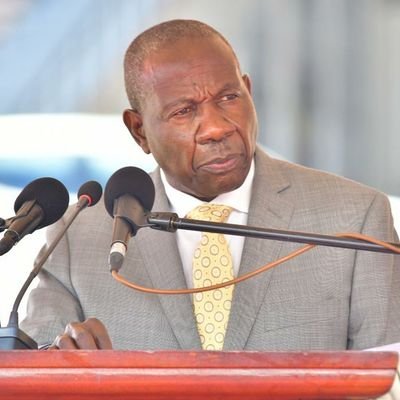
Minister of Finance Matia Kasaija. File Photo
Finance minister Matia Kasaija has fully constituted the Tax Disputes Tribunal to expedite the backlog currently estimated at more than 250 cases worth sh700b.
The minister said fully constituting the tribunal will enhance its operational efficiency in settling cases between taxpayers and the Uganda Revenue Authority(URA), thereby free the sh700b locked up in various disputes.
In a statement read by Susan Nakagolo, a principal economist at the finance ministry during the launch of the Tax Appeals Tribunal users’ forum at Golden Tulip Hotel in Kampala on Tuesday, Kasaija said quick disposal of cases will unlock tax revenue for the government and working capital for businesses to stimulate national development.
“The tribunal contributes to the creation of a conductive business environment, which encourages investment,” Kasaija said.
Kasaija congratulated the tribunal upon making 25 years and retaliated the Government’s commitment in ensuring that the tribunal handles tax disputes efficiently and effectively.
“As the finance ministry, we shall ensure that the tribunal, especially under the new leadership, is able to fully operate to settle tax disputes. This will ensure that the investment and business community can trust the tribunal to resolve any disagreements,” the minister noted.
He commended the tribunal for establishing the users’ forum, saying it is an avenue through which all the users can provide feedback on how the tribunal can improve service delivery in line with its mandate.
Kasaija urged the tribunal members to listen to the stakeholders’ views and concerns and expedite their disputes.
The minister said the forum is timely given the debate regarding disagreements between URA and traders.
“The forum will provide stakeholders with the opportunity to have a discussion on how URA and the taxpayers settle disputes,” he said.
President Yoweri Museveni a fortnight ago met traders at Kololo Independence Grounds and advised them to embrace the use of smartphones to file (value added tax) VAT returns using Electronic Fiscal Receipting and Invoicing Solution (EFRIS) tax collection system instead of the costly EFRIS special devices of sh6m.
Additionally, he said traders do not have to pay taxes immediately with the EFRIS system.
The meeting followed a standoff between URA and the traders who closed their businesses for days in a bid to press the Government to redress their grievances regarding EFRIS.
The chairperson of the Tax Appeals Tribunal of Uganda Crystal Kabajwara disclosed that they have extended services across the country with branches in Gulu, Arua, Mbale and Mbarara and that the tribunal has embraced technological advancements as matters can be heard remotely.
“Tax disputes are on the rise and it is our role to ensure that disputes are not only expeditiously resolved, but done in a fair, independent, impartial and transparent manner,” she stated.
Kabajwara revealed that the tribunal has 463 cases of which 30% have been concluded or consented and 70% are pending disposal.
She revealed that the value of pending cases as at March 31, 2024 was sh615b.
Kabajwara said the tribunal will next year focus on increasing the number of daily sessions from 10 to 20 in line with the additional capacity resulting from the fully constituted membership.
The new members of the tribunal are Ali Siraj, Christine Katwe, Masiko Kabakumba, Rosemary Najjemba Mbabali, Willy Nangusyo and Grace Safi. The mediators include May Virji, Zaina Nabukenya, Stanley Kawalya and Teddy Mayengo. The tribunal also has registers Rachel Kisakye and Solomon Wamai.
She disclosed that they will also focus on digitising the tribunals systems and processes such as the registry and case management system to ease service delivery.
Kabajwara urged stakeholders, including URA and the entire business community to rally behind the tribunal in resolving tax disputes.
Users speak out
During the event, most users asked the government and tribunal to scrap off the requirement for payment of 30% of the tax assessed in a dispute, before resolution of the cases, saying most businesses have closed as a result of the penalty.
“Tax payers choose to close businesses rather than file their cases with the tribunal because of the 30% requirement. This has denied our people access to justice,” William Were, a lawyer, observed.
PwC Uganda’s manager Juliet Najjinda said: “Once 30% payment for tax assessed is imposed on an aggrieved person, who cannot afford, he or she loses interest in the matter.”
Deus Mugabe, a lawyer, questioned why getting interim injunctions by an aggrieved party is subject to 30% payment.
In response, Nakagolo proposed an amendment on 30% payment by the parliamentarians. “We shall do research on how the 30% has impacted the business community and push for its amendment in the law,” she replied.
About the tax appeals tribunal
The tribunal is a quasi-judicial institution established under the Tax appeals Tribunals Act, 1997, to settle tax disputes between taxpayers and URA.
The tribunal members including the Chairperson are appointed by the finance minister.
Any person who disagrees with a tax decision made by URA may apply to the tribunal for a review of the decision. If dissatisfied with the tribunal’s decision, that person can appeal to the High Court within 30 days.



