Written By | Business Experts
Burkina Faso enters the second half of 2026 as a study in contradiction
Economic & Social Transformation
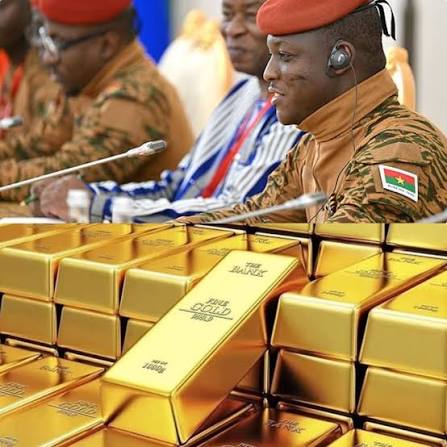
Burkina Faso enters the second half of 2026 as a study in contradiction. A country still fighting a grinding jihadist insurgency that has displaced more than 2 million of its own citizens is simultaneously posting some of West Africa's strongest growth numbers, slashing its domestic debt load, and helping build a new regional financial architecture designed to outlast the security crisis that produced it. The engine behind this reversal is gold — and the state's decision, under the military government of Captain Ibrahim Traoré, to claim a far larger share of it.
A State-Led Gold Windfall
The pivotal event of the past eighteen months was the June 2025 nationalization of five foreign-owned gold mining assets, a move that has since generated more than $2 billion in revenue for the Burkinabe treasury, according to figures compiled by the African Development Bank. National gold production surged 47% to roughly 94 tonnes in 2025, transforming the metal from a royalty-paying export into a direct source of state income. The government has used a portion of the windfall to cut domestic debt by approximately 25%, easing what had been one of the most expensive components of its balance sheet — domestic debt instruments that, as of 2024, carried a disproportionate share of the country's overall borrowing costs and made up 59% of total public debt.
The nationalizations were paired with a rewrite of the mining code that lifted the state's minimum equity stake in gold operations from 10% to 15%, a change designed to boost royalty and dividend flows from the mines that remain in foreign hands. The IMF, in its most recent Article IV-linked review, credited 'reforms in the mining sector' and 'stronger state oversight' with flipping Burkina Faso's current account from deficit into a projected surplus of 1.1% of GDP in 2025 and 0.8% in 2026 — a rare achievement for a landlocked, conflict-affected economy still importing the bulk of its fuel and manufactured goods.
Growth Outpacing the Region
The African Development Bank projects real GDP growth of 5.4% in 2026 and 5.8% in 2027, driven by what it describes as strong agricultural and extractive production alongside robust investment. The IMF is more conservative, placing medium-term growth in a 4.5%–5.0% band and flagging that the trajectory depends on continued improvement in domestic security conditions and on private-sector financing trends that remain fragile in a country still under a state of emergency in large parts of its territory. Public debt stood at 58.8% of GDP in 2024 and is projected to decline further in the medium term as the domestic-debt paydown continues and the budget deficit narrows.
Even by the government's own account, governance work remains unfinished: authorities have implemented six of eleven recommendations from an IMF Governance Diagnostic Assessment, including tightened procedures for issuing mining licenses, but five recommendations are still outstanding — a signal that the extractive-sector windfall is running ahead of the institutional capacity needed to manage it transparently over the long run.
Cotton's Cautious Comeback, and a Food-Security Gap
Gold is not the only commodity story. Seed cotton production is forecast to rise 15% to 336,812 tonnes in the 2025/2026 season, according to Ecofin Agency reporting on ginner and government estimates, with planted area up 13% to roughly 391,000 hectares and yields improving 2% to 861 kilograms per hectare. It would mark the sector's first rebound after three consecutive years of decline, and the government has pointed to it — alongside improved seed distribution, mechanization, and targeted subsidies — as evidence that the country achieved food self-sufficiency in 2025.
That claim sits uneasily against the government's own 2026 humanitarian figures: an estimated 1.6 million people are experiencing acute food insecurity, of whom more than 223,000 are in the emergency phase, and roughly 4.5 million people overall are assessed as needing humanitarian assistance this year. The gap between a self-sufficiency narrative and an emergency-phase caseload of that size illustrates a broader pattern in Burkina Faso's 2026 economy: national aggregates are improving even as large pockets of the population, concentrated in the conflict-affected north, east, and increasingly the west, are cut off from the recovery. Extreme poverty has declined nationally from 35% in 2022 to roughly 30% in 2025, and the government's 2026–2030 National Development Plan targets a reduction in the broader poverty rate from about 42% to 35%, but that plan depends on security gains that have yet to materialize in large parts of the territory.
A Region Under Siege
The security backdrop makes the macroeconomic turnaround more striking. Burkina Faso now hosts roughly 2.1 million internally displaced people, part of a wider Sahel displacement crisis that the UN's regional humanitarian overview puts at 2.8 million IDPs and 444,400 refugees across Burkina Faso, Mali, and western Niger combined. More than 5,000 schools have closed because of violence, affecting over 800,000 children, and 733 health facilities have shut down or scaled back operations due to insecurity. Africa Defense Forum and other regional trackers have reported that attacks intensified in 2026, particularly in the western regions that had previously been comparatively insulated from the conflict that began in the north and east.
Building an Alternative Regional Order
Economically, Burkina Faso is betting heavily on the Alliance of Sahel States (AES), the confederation it formed with Mali and Niger after signing the Liptako-Gourma Charter in September 2023 and which formally exited ECOWAS on January 29, 2025. Three years into the project, the AES has moved from declaration to institution-building. A joint biometric passport meeting ICAO standards launched on January 29, 2025. More significantly for the economic story, the three states activated the Confederal Investment and Development Bank of the Alliance of Sahel States (BCID-AES) on December 23, 2025, launching with 500 billion CFA francs earmarked for regional infrastructure, energy, and mining projects — explicitly framed by AES officials as a break from what they describe as colonial-era finance structures.
Longer term, the bloc has stated ambitions to create its own currency, one intended to be backed by the natural-resource wealth of the three member states rather than pegged, as the CFA franc is, to the euro. No firm timeline or technical design has been published as of mid-2026, and the three economies remain, for now, inside the West African CFA franc zone administered by the BCEAO. But the combination of the confederal bank, the common passport, and the nationalized gold revenue suggests Ouagadougou is trying to build the fiscal and institutional foundations for monetary sovereignty before it attempts the currency itself.
Outlook
Burkina Faso's 2026 economic story is ultimately one of concentrated gains funding a fragile transition. Gold nationalization has delivered real fiscal space — debt reduction, a current-account surplus, and growth rates that outperform many of the country's coastal, more stable neighbors. Cotton is recovering. The AES project has moved from rhetoric to functioning institutions faster than many regional analysts expected. But none of it resolves the underlying security crisis displacing millions and keeping over a fifth of the school-age population out of class. Whether the mining windfall becomes durable, broad-based development or remains a fiscal cushion for a government fighting an unresolved war is likely to be the defining question for Burkina Faso's economy through the remainder of the decade.



