NEW YORK
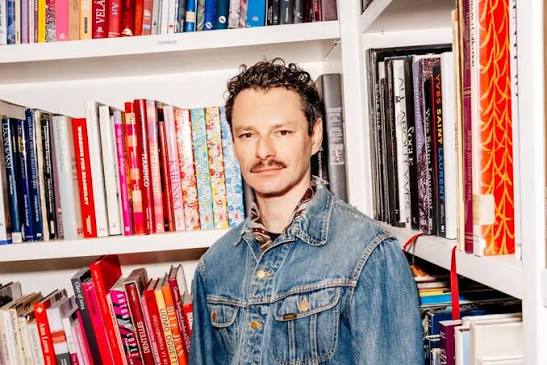
New York Fashion Week has a habit of putting its most nervous show first. This season it has outdone itself: the spring-summer 2027 calendar opens on Thursday 10 September with Henry Zankov's debut as artistic director of Diane von Furstenberg — a house whose signature garment is so famous it is in museum collections, presented by a designer best known for chromatically inventive knitwear.
It is the kind of pairing that either reads as a category error or as the smartest appointment of the year, and everyone in the room on Thursday will be deciding which.
An unusual return
Zankov, 45, is not a stranger to the building. He worked at DVF from 2014 to 2018 before leaving to launch his own label, ZANKOV, in 2020 — a brand built almost entirely on knitwear, and one that turned him into a New York Fashion Week favourite well before he had the scale to match the attention. In 2024 he won the CFDA's American Emerging Designer of the Year award.
His route back was gradual rather than dramatic. Graziano de Boni, DVF's global chief executive, was thinking through the brand's future when a colleague suggested he talk to a former employee. That conversation produced a capsule collection, which debuted at Bergdorf Goodman, and a working friendship. The capsule became a full appointment.
The title itself is new. DVF has never had an artistic director before; Zankov is the first, and his remit covers the total creative vision — collections and visual identity both. He is continuing to run ZANKOV alongside it, which is now standard practice for designers of his generation and still a logistical feat.

The house he is inheriting
DVF has spent the last two years reclaiming control of itself. De Boni took the business back from Glamel, its Chinese licensee and distributor, in 2025 — a deliberate move to pull the brand's identity and margin back in-house after a period in which the label's global presence had outrun its creative coherence.
That is the context for Thursday. Zankov is not being asked to reinvent a struggling house from scratch; he is being asked to give a recently repatriated one a single legible point of view. The wrap dress is both the asset and the obstacle. It is one of the few garments in American fashion with genuine iconography — a 1974 design that became shorthand for a certain kind of working woman's autonomy — and it has been reissued, reinterpreted and licensed enough times to risk becoming wallpaper.
A knitwear designer taking it on is more logical than it first sounds. The wrap dress is, structurally, a garment about how fabric behaves on a body: how it falls, how it holds, how much it forgives. Knit is the discipline that thinks about exactly that. If Zankov's own label has a signature, it is fabric that has opinions.
The week around him
The rest of the calendar is unusually loaded. Ralph Lauren shows Spring 2027 on Wednesday 9 September, on the eve of the official week — a scheduling flex only he could pull off. Coach, Rachel Comey, Cult Gaia and Libertine also show that day, with Rachel Comey marking 25 years in business, a milestone that in independent American fashion is close to miraculous.
The week then runs through to Tuesday 15 September, closing with Thom Browne. Ten designers are making debuts on the official calendar this season, which is a high number and reflects a market where the barrier to showing has fallen even as the barrier to selling has risen.
What the collection has to do
There are three things a debut like this has to accomplish at once, and they pull against each other.
First, it has to be recognisably DVF, which means the print archive and the wrap silhouette have to appear in some form. Ignore them entirely and the show reads as a designer using a heritage house as a personal platform. Second, it has to be recognisably Zankov — otherwise, why hire him? Third, and least glamorously, it has to be sellable to a customer base that is broader and more price-sensitive than the one that follows him for his own label.
The designers who survive these appointments are usually the ones who find a single formal idea that satisfies all three. Watch for what he does with fabric weight and colour: those are his instruments, and they are the levers most likely to update a wrap silhouette without disowning it.
What this means for you
If you buy clothes rather than watch shows, the practical read is that DVF is likely to become interesting again at a mid-luxury price point — and specifically that its knitwear is worth watching for the first time in years. A knit-led creative director almost always means more knit in the line, and knit is where the wearability lives.
More broadly, this season is a useful barometer for a question American fashion keeps circling: whether heritage houses can be revived by hiring the people who already know them, rather than importing a European name for the headline. Zankov is an inside hire with an outside reputation. If it works, expect more of it.
And there is the simplest reason to look. On Thursday morning, a designer who spent four years in this company as a junior figure will send out a collection under his own creative authority, in the first slot of the most-watched week in American fashion. Very few debuts carry that much narrative before a single look walks. The clothes now have to carry the rest.
Published By | Features Editor