Written By | Joshua Nahamya
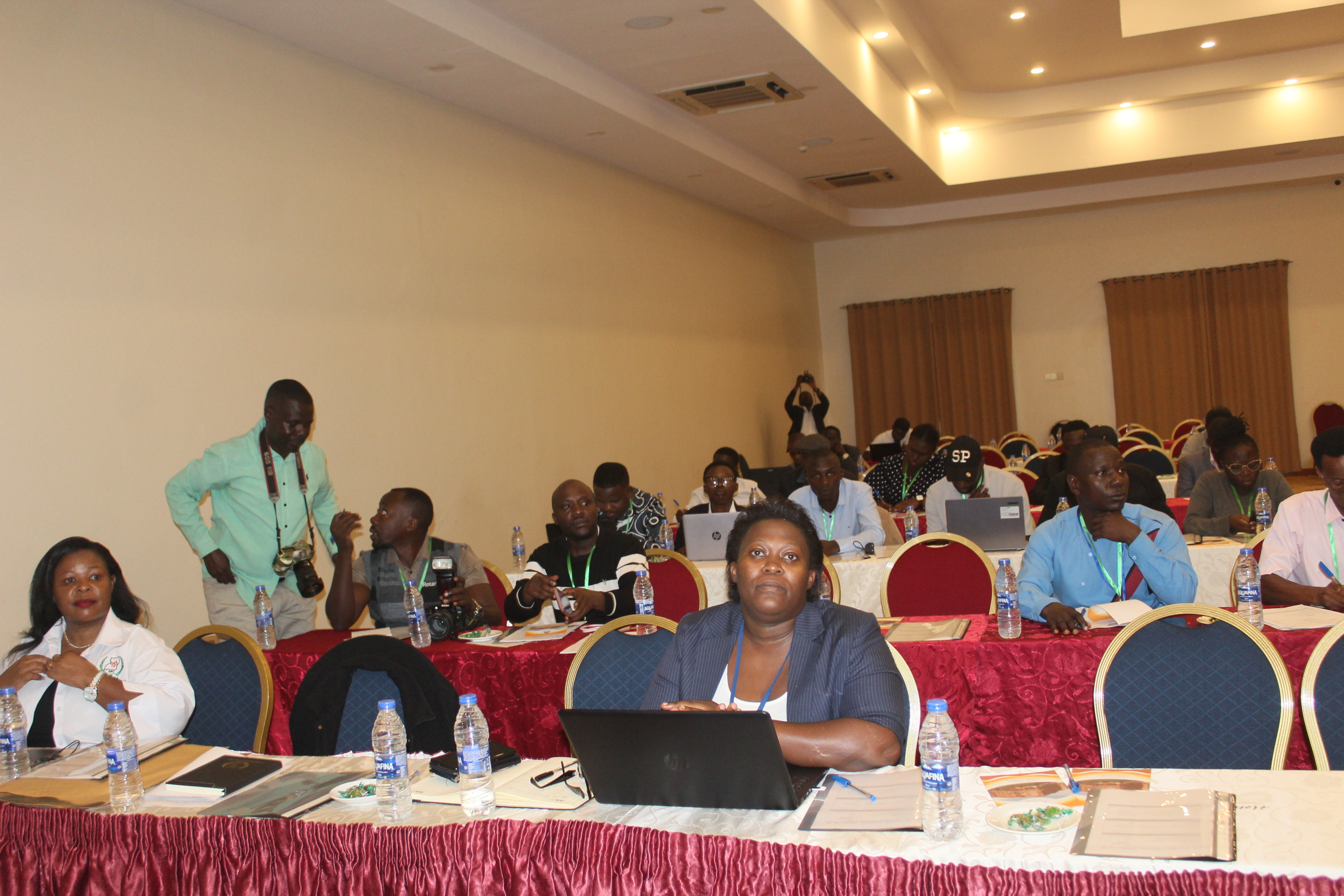
Journalists in Western Uganda being sensitized on regulation of Atomic Energy applications at Hotel Triangle in Mbarara on Tuesday
Mbarara
Journalists have been urged to deepen their knowledge of nuclear science and exercise professionalism when reporting on atomic energy applications, as Uganda moves closer to integrating nuclear power into its national energy mix.
The call was made on Tuesday by Natharius Nimbashabira, Chief Executive Officer and Secretary of the Atomic Energy Council (AEC), during a regional sensitization workshop in Mbarara.
“You must be knowledgeable in all areas that are of human interest,” Nimbashabira told media practitioners.
“By training, I do not think that you will know things of nuclear science, things of agriculture and so on. You write about things as professionals.”
Why Atomic Energy Matters for Uganda’s Future
The AEC is a statutory government agency under the Ministry of Energy and Mineral Development. Established in 2008, it regulates the peaceful applications of ionizing radiation in sectors such as medicine, agriculture, industry, education, research, and security.
Nimbashabira emphasized that the council’s core mandate is to protect the public and the environment from the harmful effects of radiation, while ensuring maximum benefit for those working in the industry.
He linked nuclear energy directly to Uganda’s long-term development plans, including the Fourth National Development Plan (NDP4) and Vision 2040.
“By 2040 we are supposed to have around 52,000 megawatts, and 40% or more is supposed to come from nuclear energy,” he said. “If that is to be realized, then we must also have a framework that ensures that we generate it and use it in a peaceful way.”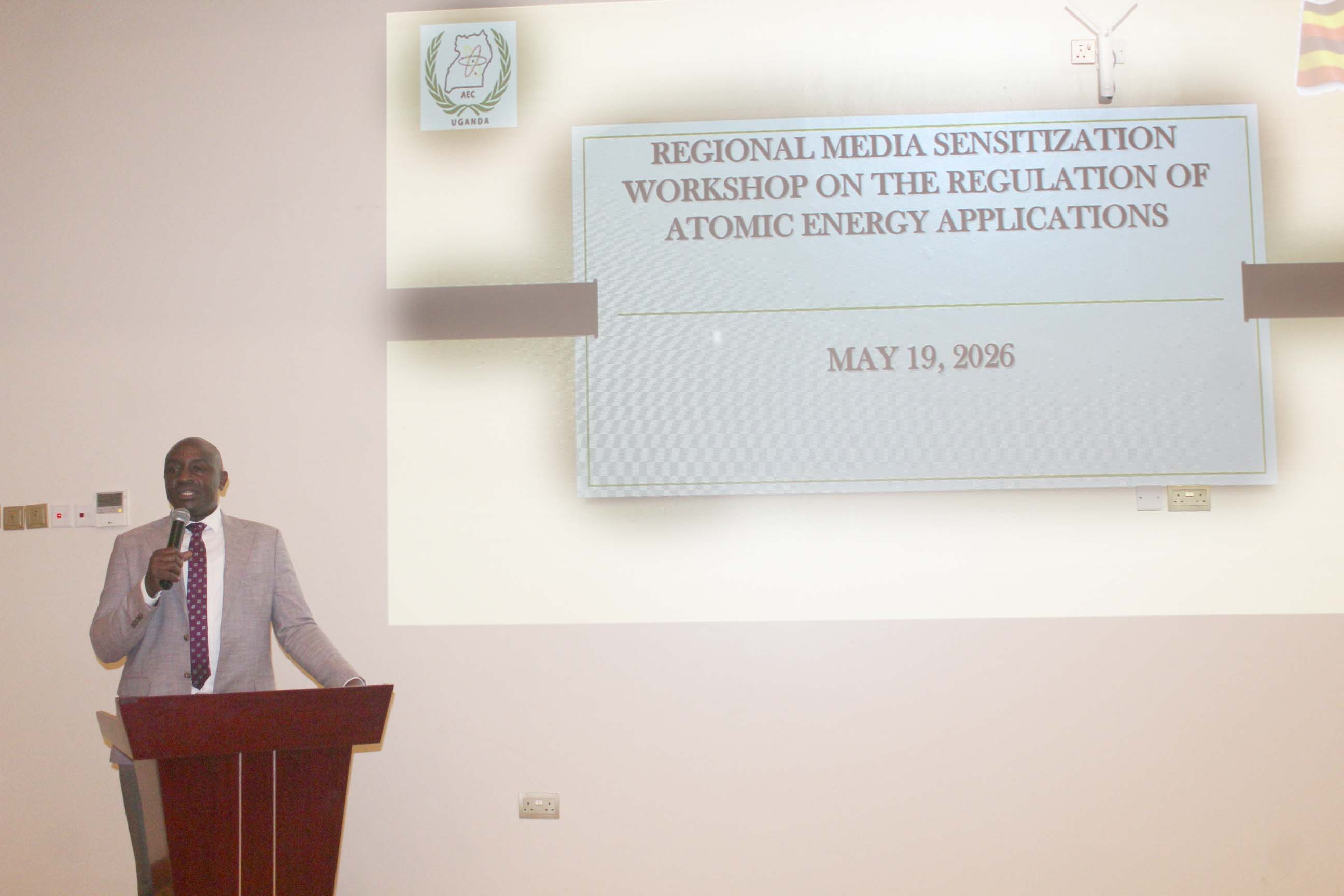
Natharius Nimbashabira, Ag. Secretary & Chief Executive Officer Atomic Energy Council training journalists in Mbarara
Fighting Misinformation and Fear
Nimbashabira noted that widespread misconceptions about nuclear science often delay critical government projects.
“Sometimes government projects stall because of misinformation, inaccurate reporting,” he said. “In the nuclear sector, projects sometimes delay because of misinformation. It is important that we invest our savings in these topics.”
He reminded the public that atomic energy is already an inescapable reality.
“There is nothing that you can say like ‘let me go and hide in Kenya or neighbouring countries,’” he said. “Our job is to embrace it but ensure that it is used in a peaceful way.”
Key Nuclear Projects Underway
The AEC boss revealed that the government is currently focusing on designated sites in Buyende District, where it is projected that 8,400 megawatts of electricity will be generated.
Additionally, a new project at Soroti University aims to establish a center for science, teaching, learning, and research to address local innovation deficits in the nuclear sector.
“Our educational institutions for now are not adequately handling nuclear aspects, so we have to train from out, but now the government wants to establish a centre for science and technology at Soroti University,” Nimbashabira explained. “Activities have so far started.”
Media’s Role in Public Safety
Lydia Khalayi, Senior Communications Officer at the AEC, said building media capacity directly serves public safety and awareness.
“Apart from ensuring safety of people and the environment, we also make sure that our people understand how to take hold and regulate what is happening in the industry,” Khalayi said.
She added: “Once you understand the applications, then you can start doing your research and read more about them, then you’re able to educate our people on the consequences of using ionized radiation.”
Practical Applications of Radiation
Susan Nalumansi, a Senior Radiation Protection Officer at the AEC, explained that radiation tools are already widely used in Uganda for:
“Radiations are good for our socio-economic transformation, but they are detrimental to human health when used poorly,” Nalumansi warned. “The AEC exists so that these machines comply with standards, and the doses that come out of them are accurate, so no one is harmed.”
She also assured the public that the council strictly forbids unlicensed operations, adding: “We ask facilities to display their license in a visible place, either at reception or in the imaging room, so the public knows that this facility meets minimum safety requirements.”
Protecting Patients and Workers
John Kisakye, another Senior Radiation Protection Officer, challenged medical professionals to be diligent in using protective gear during diagnostic imaging.
“If they are taking a scan of the arm, put on protective wear. If they are doing a chest X-ray, protect the gonads. Protect the eyes,” Kisakye said. “That is the mandate of the Atomic Energy Council – to protect the patients, the workers, the comforters, and the government.”
He also clarified a common public fear: telecommunication masts emit non-ionizing radiation, which is fundamentally harmless.
“There is no need to shift these masts,” Kisakye said. “You only need to confirm that the radiation coming from them is okay. You don’t need to fear.”
Looking Ahead
Nimbashabira reiterated the AEC’s commitment to working closely with the media.
“Your platforms have the power to educate communities, promote awareness, support compliance with safety requirements, and build public confidence in the peaceful applications of atomic energy in Uganda,” he said.
“We are confident that this workshop will enhance your knowledge, skills, and capacity to report objectively and professionally on issues relating to radiation safety and nuclear safety.”
Torch Media Africa



