Written By | Health News Agencies
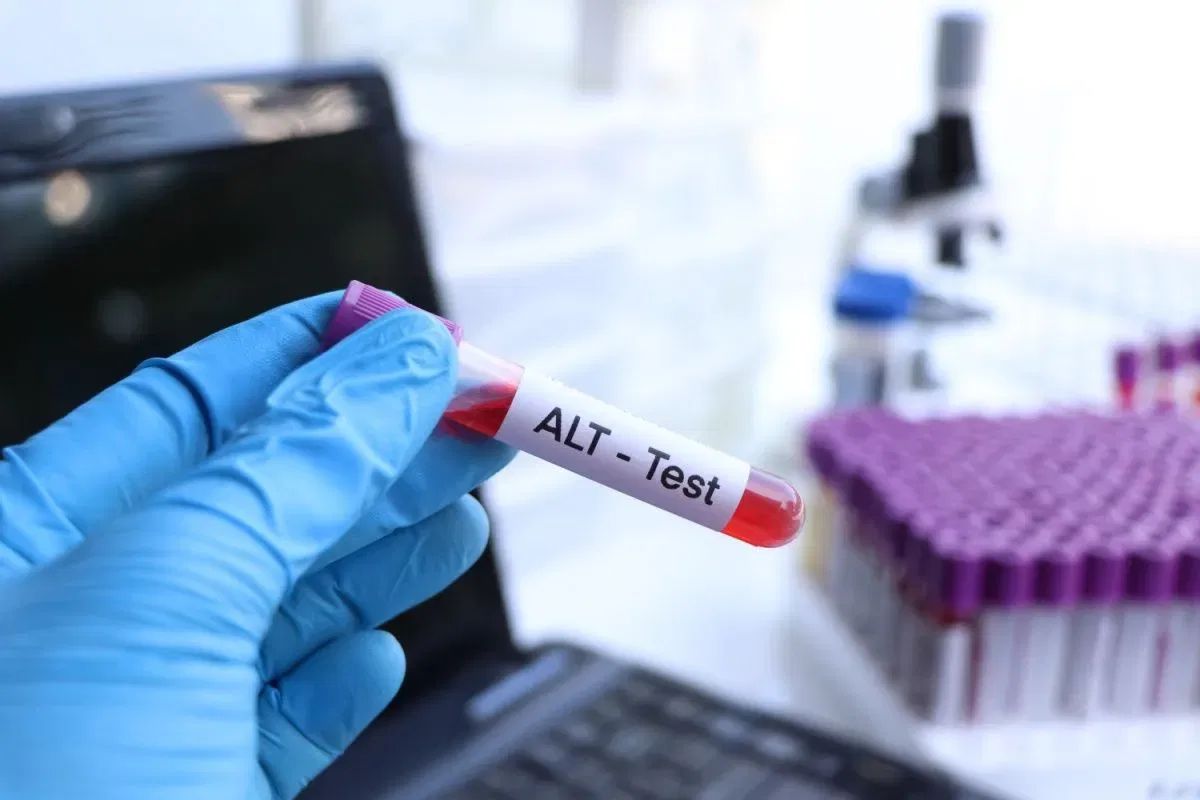
For families carrying the disease's genetic curse, scientists have built something doctors have never had: a countdown clock — and maybe a window to fight back before the paralysis begins
MIAMI
For decades, the question haunting families who carry a genetic mutation for ALS has been unanswerable: not if, but when. Amyotrophic lateral sclerosis — the relentless, incurable disease that steals the ability to walk, speak, swallow, and eventually breathe — can lie dormant in a carrier's body for years, even decades, before symptoms erupt with no warning. Now, in a study published Monday in the journal Nature Medicine, researchers say they've found a way to answer that question with startling precision: a blood test that can predict, within about a year and a half, when ALS symptoms will begin.
The breakthrough comes from a team led by scientists at the University of Miami, working with data from the National Institutes of Health's long-running Pre-symptomatic Familial ALS study — known as Pre-fALS — which has tracked people who carry ALS-linked genetic mutations for years before, and after, they develop symptoms. What they found could reshape how doctors counsel patients, and when they intervene, for a disease that has historically given families almost no warning at all.
A DISEASE THAT STRIKES WITHOUT WARNING
ALS attacks the motor neurons that control voluntary muscle movement, and as those neurons die off, patients progressively lose the ability to move their limbs, speak clearly, swallow, and eventually breathe on their own. Most cases — roughly 90 percent — arise with no known family history. But in the remaining 10 percent, the disease runs in families, passed down through mutations in genes like C9ORF72, SOD1, TARDBP, and FUS, which together account for more than 70 percent of familial cases.
For people who test positive for one of these mutations, life becomes an exercise in uncertainty. They know they carry a heightened risk of developing a fatal disease, but not when — or even whether — it will strike within their lifetime. That uncertainty has made genetic counseling for ALS families notoriously difficult, and it has complicated efforts to test experimental treatments before irreversible nerve damage sets in. Roughly 30,000 Americans are living with ALS at any given time, and thousands more carry a known genetic risk without yet showing symptoms.
HUNTING FOR PROTEINS IN THE BLOOD
To crack the puzzle, the research team turned to plasma samples banked from 137 Pre-fALS study participants, 33 of whom went on to develop clinically diagnosed ALS or a related condition called frontotemporal dementia during the study period. Using a high-throughput protein-profiling technology called Olink, the researchers screened more than 5,000 proteins circulating in each blood sample, looking for patterns that shifted in the months and years before symptoms appeared.
They found 92 proteins whose levels changed measurably in people who would go on to develop symptoms — silent biological alarm bells ringing long before anyone could tell something was wrong. From that pool, the team distilled a final panel of 19 proteins, including neurofilament light chain, or NfL, a marker already used by neurologists to flag nerve damage, that together maximized the accuracy of predicting when symptoms would emerge across time windows ranging from six months to five years out.
The results were striking: using the 19-protein panel, the model could estimate a person's time to symptom onset with an average margin of error of about 18 months — turning what was once a total unknown into something closer to a weather forecast than a coin flip.
EXPERT PERSPECTIVE
"If someone carrying an ALS-associated genetic variant had asked me in the past when they would become symptomatic, I would have struggled to provide a reasonable estimate," said Dr. Michael Benatar, the study's senior author and a professor of neurology and public health sciences at the University of Miami's Miller School of Medicine. The new panel, he and his co-authors argue, changes that calculus fundamentally — giving both doctors and patients something to plan around instead of simply waiting in the dark.
The finding builds on years of research establishing NfL itself as an early warning sign; prior studies have shown that levels of the protein in blood and spinal fluid can begin rising six to twelve months before a person carrying an ALS mutation "phenoconverts" — the clinical term for the moment silent genetic risk turns into an active, diagnosable disease. What the new 19-protein panel adds is precision: not just that trouble is coming, but a meaningfully narrower window for when it's likely to arrive.
WHY TIMING IS EVERYTHING
The stakes of that precision go well beyond peace of mind. Researchers and drug developers have long argued that ALS treatments are most likely to work if they're given before nerve damage becomes irreversible — the biological equivalent of trying to put out a fire before the house burns down rather than after. That thinking is already being tested in the real world: an ongoing Phase 3 trial called ATLAS is evaluating whether starting tofersen, an FDA-approved therapy for SOD1-linked ALS, in presymptomatic carriers with elevated NfL levels can delay or even prevent the onset of clinical disease in roughly 150 participants.
A more precise predictive panel could sharpen exactly which presymptomatic carriers should be prioritized for trials like ATLAS — and when. Instead of monitoring at-risk carriers indefinitely and hoping to catch early signs before it's too late, doctors could use the 19-protein signature to identify people entering a high-risk window and intervene while there's still motor function left to save.
A DISEASE THAT SHARES ITS SECRETS WITH DEMENTIA, TOO
One of the more unexpected wrinkles in the findings: the same genetic mutations that cause ALS in some families can, in others, cause frontotemporal dementia instead — a related but distinct condition that robs people of personality, judgment, and language rather than movement. Some carriers even develop a combination of both. Because the Pre-fALS cohort tracked people who went on to develop either condition, the 19-protein panel wasn't just built to predict ALS onset; it captured warning signs for frontotemporal dementia's arrival as well, hinting that the same blood draw could someday flag risk for two devastating diseases at once rather than just one.
That dual utility matters because families carrying mutations like C9ORF72 often don't know in advance which disease, if either, they're facing — a cruel bit of uncertainty layered on top of the uncertainty about timing. A single panel that can gesture toward both possibilities, researchers say, could eventually streamline counseling for these families instead of forcing them to brace for two entirely separate unknowns.
WHAT THIS MEANS FOR YOU
The test isn't sitting on pharmacy shelves yet. For now, it exists as a research tool validated within the Pre-fALS cohort, and the scientists behind it caution it will need to be validated in larger, more diverse populations before it becomes a standard clinical test. But for the roughly 30,000 Americans living with ALS, and the thousands more who carry a known genetic risk for it, the study offers something that has been in short supply for a long time: a roadmap.
For people with a family history of ALS, genetic counselors say this kind of research reinforces the value of genetic testing and enrollment in monitoring programs like Pre-fALS, which give at-risk individuals access to exactly the kind of biomarker tracking that made this breakthrough possible. Even for people without a known genetic risk, the discovery adds to a growing body of evidence that NfL and related blood proteins could eventually play a role in earlier, faster ALS diagnosis generally — a disease that today takes doctors an average of 10 to 16 months to diagnose after symptoms first appear, a delay that costs patients precious time and treatment options.
There's also a psychological dimension experts are quick to flag. Knowing a rough timeline for a devastating illness is not the same as being ready for it, and genetic counselors say patients considering this kind of predictive testing should go in with mental health support lined up alongside the science. Still, most families who have lived with ALS's genetic uncertainty for generations say a fuzzy countdown clock beats no clock at all — it lets people finish degrees, plan families, front-load bucket-list trips, and get affairs in order on their own terms rather than the disease's.
THE BOTTOM LINE
ALS remains, for now, a disease without a cure — a diagnosis that still carries a typical life expectancy of two to five years. But the Pre-fALS findings mark a shift in how scientists think about fighting it: not just treating the disease once it arrives, but catching it in the act of arriving. For families who have spent years living under an unanswerable question, that shift alone may be worth more than the 18-month margin of error suggests.



