Written By | International News Agencies
Iraq
Background
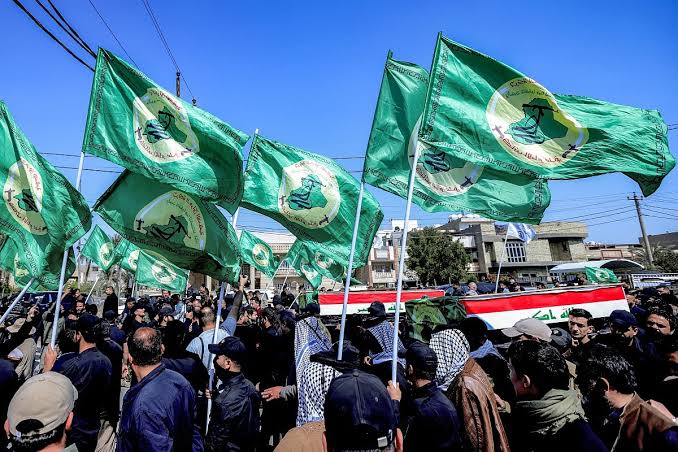
Iraq's Popular Mobilization Forces, known in Arabic as the Hashd al-Shaabi, trace their origins to the summer of 2014, when a fatwa from Grand Ayatollah Ali al-Sistani called on Iraqis to take up arms against the advancing Islamic State after the collapse of the Iraqi army in Mosul. Tens of thousands answered the call, forming a patchwork of militias that, alongside Iraqi security forces and a U.S.-led coalition, eventually rolled back and destroyed the Islamic State's territorial caliphate. In 2016, Iraq's parliament passed legislation formally incorporating the PMF into the state's official security architecture, technically making it an arm of the government answerable to the prime minister as commander-in-chief.
In practice, the PMF has never fully submitted to state control. Many of its most powerful constituent factions — including Kataib Hezbollah, Asaib Ahl al-Haq, and others collectively referred to as the "Islamic Resistance in Iraq" — were founded, trained, armed, and funded with direct support from Iran's Islamic Revolutionary Guard Corps, and their loyalty has long run more clearly to Tehran than to Baghdad. These groups have periodically launched rocket and drone attacks on U.S. forces stationed in Iraq during periods of heightened U.S.-Iran tension, including a fresh wave of attacks after the United States and Israel went to war with Iran in March 2026.
The question of whether and how to disarm these factions has bedeviled a succession of Iraqi governments, none of which had the political strength or unified backing to force the issue. In 2025, under al-Zaidi's predecessor Mohammed Shia al-Sudani, the Coordination Framework proposed an earlier, more limited plan to disarm six of the smaller Iran-backed militias in partial response to U.S. pressure; nearly all of the targeted factions reportedly agreed in principle, with the notable exception of Kataib Hezbollah, which rejected the plan outright even then. That earlier failure set the stage for the far more sweeping, deadline-driven approach al-Zaidi's government has now adopted. Iraq's disarmament dilemma also echoes a nearly identical standoff in Lebanon, where Iran-backed Hezbollah has similarly resisted pressure — including from the Lebanese state and the United States — to surrender its weapons, underscoring that Tehran regards armed, loyal proxy forces in both countries as a core pillar of its regional deterrence strategy rather than a negotiable bargaining chip.
Key Developments
Al-Zaidi is an unlikely figure to be leading Iraq's most serious disarmament push in years. A 40-year-old banker and businessman who chairs Al-Janoob Islamic Bank, he had never held elected office before becoming, at his age, the youngest prime minister in Iraq's modern history. He emerged as a compromise candidate after Iraq's November 2025 parliamentary elections produced six months of deadlock within the Shia-led Coordination Framework, whose leading contenders — including former prime minister Nouri al-Maliki — could not command a governing consensus. Trump administration officials made clear they would not accept al-Maliki, seen in Washington as too closely aligned with Tehran, reportedly threatening to cut U.S. support and suspending cooperation and funding for Iraqi security agencies until a different candidate emerged. Al-Zaidi, seen as acceptable to Iraq's rival factions and not viewed as a U.S. red line, was unanimously approved by parliament on May 14, 2026.
One of al-Zaidi's central commitments since taking office has been a plan to bring PMF weapons under exclusive state control. His government has now set September 30, 2026 as a hard deadline for pro-Iran armed factions to disarm — a date that coincides with the scheduled end of the U.S.-led international coalition's anti-ISIS mission in Iraq. After that date, according to Iraqi officials, any weapons held outside the official state security framework will be treated as illegal and subject to legal action.
The response from Iraq's Shia militia landscape has been sharply divided. Several factions — including the Sadrist-linked Saraya al-Salam, Asaib Ahl al-Haq, and Kataib al-Imam Ali — have signaled willingness to integrate into Iraq's formal armed forces under the plan. But Kataib Hezbollah, one of the PMF's most powerful and most explicitly pro-Iranian factions, has flatly rejected the government's mandate. In a defiant statement, Kataib Hezbollah official Abu Hussein al-Hamidawi said the group was founded on the direct orders of Iran's late Supreme Leader, Ali Khamenei — killed earlier this year in the opening days of the Iran war — and that its fighters "were and remain loyal to this path." Al-Hamidawi went further, demanding the Iraqi government "submit" to the so-called resistance rather than the reverse, and the broader Islamic Resistance in Iraq umbrella issued a statement of "principled rejection" of al-Zaidi's planned trip to Washington. Reports also indicate Kataib Hezbollah is moving to expand its arsenal rather than surrender it, and the group has said it will not disarm until all foreign — meaning American — forces leave Iraqi soil, framing continued armament as a matter of ideological "resistance."
Reactions
The standoff has placed al-Zaidi in an acutely difficult position just as he prepares to travel to Washington for talks. U.S. Ambassador-at-large Tom Barrack has already met with him to discuss the disarmament roadmap, and Washington has visibly hardened its posture, treating the September 30 deadline as a genuine test of Baghdad's sovereignty rather than a symbolic gesture. That pressure follows years of U.S. concern, including a 2025 warning from Secretary of State Marco Rubio to al-Zaidi's predecessor, Mohammed Shia al-Sudani, over separate legislation that would have granted the PMF greater institutional and financial independence — a move Rubio argued would "institutionalize Iranian influence and armed terrorist groups undermining Iraq's sovereignty." Notably, even as Baghdad pushes disarmament, Iranian officials — including senior adviser Ali Larijani during a visit to Baghdad — have simultaneously lobbied Iraqi Shia factions to advance that same PMF empowerment legislation, illustrating the contradictory pressures Iraq's government is caught between.
Sunni and Kurdish political blocs, longtime critics of the PMF's outsized influence, have broadly welcomed the disarmament push as a long-overdue reassertion of state authority. Analysts and regional commentators, however, have been far more skeptical that the deadline will be met in full. Recent coverage from Al Jazeera and Arab News has framed Iraq as facing a genuine crisis, warning that al-Zaidi has neither the coercive tools nor the political capital to compel a well-armed faction like Kataib Hezbollah to disarm against its will, and that a forced confrontation risks producing destabilizing violence rather than an orderly transition. There are also reports that Trump declined an offer from al-Zaidi to personally relay a message to Iran, suggesting Washington sees limited value in using Baghdad as an intermediary while it pursues its own, separate track of negotiations with Tehran over the Strait of Hormuz.
What's Next
With the September 30 deadline less than two months away, al-Zaidi's Washington visit is expected to be a pivotal moment, both for what assurances the United States offers Iraq in exchange for cooperation and for how explicitly Washington signals what consequences — sanctions, further funding cuts, or a continued troop presence — would follow a failure to disarm the holdout factions. Inside Iraq, attention will focus on whether the factions that have tentatively agreed to integrate, such as Asaib Ahl al-Haq, follow through in practice, and on whether Kataib Hezbollah's defiance hardens into open confrontation with Iraqi state forces or is quietly tolerated past the deadline, as has happened with past disarmament pushes.
The outcome carries stakes well beyond Iraq's borders. A genuine rollback of Iran-aligned militia power would mark one of the most significant shifts in Tehran's regional influence since the 2026 Iran war began, potentially reshaping the balance of power in a country long treated by Iran as a strategic rear base. A collapse of the initiative, by contrast, would leave armed, Iran-backed factions operating with impunity inside a nominal U.S. partner state, at a moment when the broader U.S.-Iran relationship remains volatile and only tentatively moving toward de-escalation over the Strait of Hormuz. For al-Zaidi personally, a businessman with no political base of his own, the disarmament push is also a test of whether he can survive politically in a system historically dominated by armed factions far more organized and battle-hardened than he is.
Much will also depend on how Iraq's neighbors and the wider international community respond in the weeks ahead. Gulf states that backed the earlier push to sideline al-Maliki are watching closely to see whether al-Zaidi can translate Washington's confidence into a durable reduction of Iranian influence inside Iraq, while Iran itself faces a strategic choice between quietly tolerating a partial disarmament that preserves its most important factions like Kataib Hezbollah, or risking a broader rupture with Baghdad at a moment when its regional position has already been badly weakened by the 2026 war. Whatever happens on September 30, few analysts expect the underlying tension between an Iraqi state seeking full sovereignty over its territory and armed factions loyal to a foreign patron to be resolved by a single deadline.



