Written By | International News Agencies
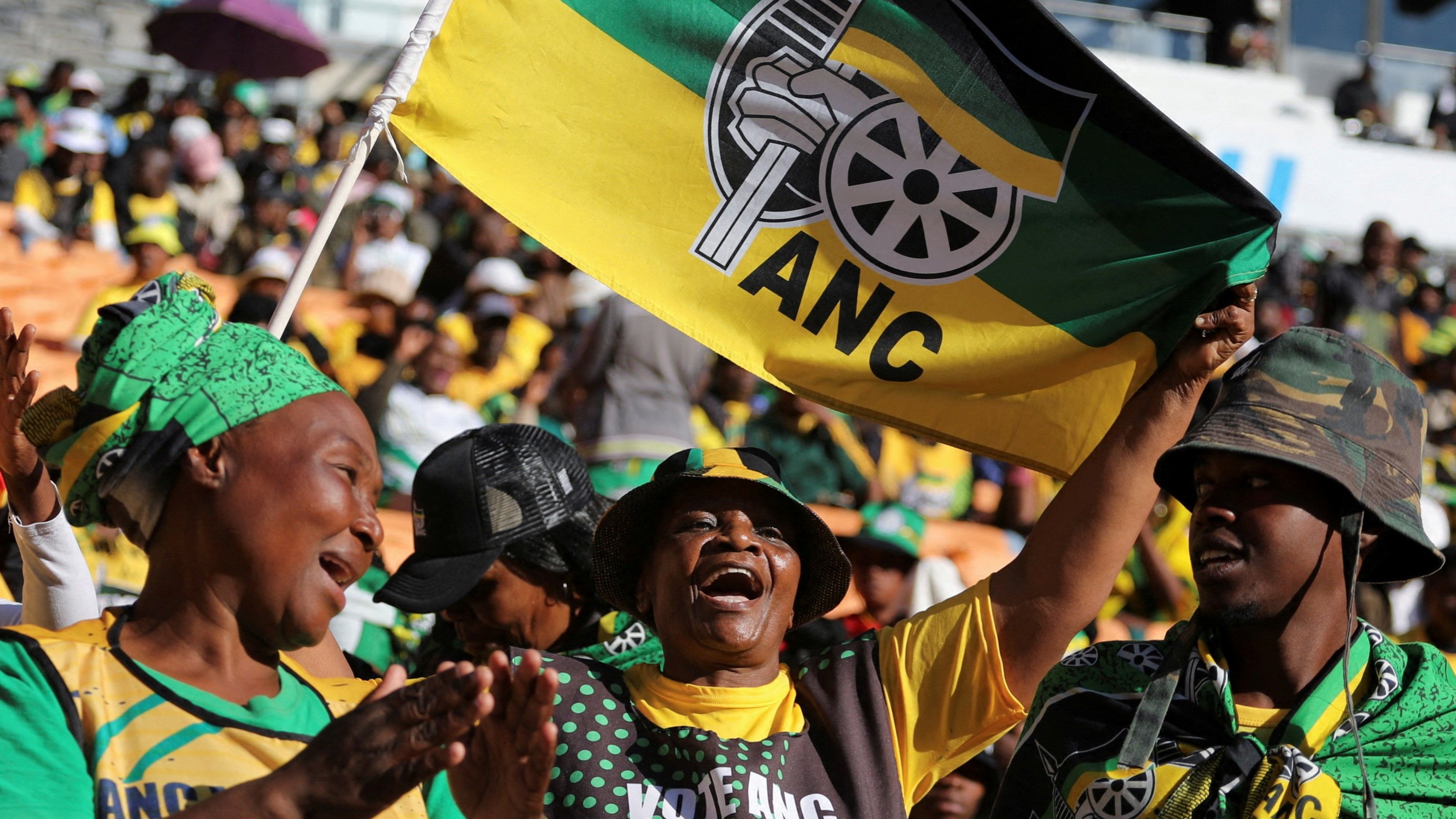
The ANC fell to 40.2% from 57.5% in 2019, losing its outright majority for the first time, the foundation notes
SOUTH AFRICA
South Africans vote on Nov. 4 in local government elections that will decide who runs the country's biggest cities, and the available polling suggests that in most of them no party will win outright. The African National Congress (ANC), which lost its national majority in 2024, is defending its standing in the metros against a Democratic Alliance (DA) emboldened by the candidacy of Helen Zille in Johannesburg, a resurgent uMkhonto weSizwe (MK) Party in KwaZulu-Natal, and a crowd of smaller parties that hope to hold the balance of power.
With about three weeks left, the campaign is shaping up as a referendum on the national Government of National Unity (GNU) as much as on potholes and power cuts. How the parties behave after the vote may matter more than the vote itself.
Why this election matters
Local elections in South Africa use a mixed system. Voters fill a proportional representation ballot for parties and a first-past-the-post ballot for ward councillors, according to the Friedrich Naumann Foundation. National and provincial elections are purely proportional. There are 257 municipalities, and the biggest prizes are the eight metropolitan councils.
The 2024 national election changed the country's politics. The ANC fell to 40.2% from 57.5% in 2019, losing its outright majority for the first time, the foundation notes. Jacob Zuma's MK Party won 14.6% in its debut, the best result for a new party in the democratic era. The DA took 21.8%. The two parties now govern together in the GNU, supported by eight smaller parties, and the foundation says the arrangement has "held together relatively well" despite tensions, most acutely over the 2025 budget.
Local government is where voters feel the state most directly, and it is also where coalition politics has been most chaotic. In Johannesburg, Tshwane and Ekurhuleni, no party has governed alone since 2016, according to Theo Neethling, a political analyst at the University of the Free State. South Africa also has no statutory coalition framework, and the foundation says a bill from the Department of Cooperative Governance and Traditional Affairs is unlikely to pass before the vote.
What the polls say, and what they do not
The polling picture is incomplete, and the sources do not always agree. Ipsos interviewed 3,600 South Africans in June and July and cautioned that its figures are not a prediction. Its findings, as reported by the IOL news site, include:
Ipsos flagged small sample sizes in Nelson Mandela Bay, Mangaung and Buffalo City, so those findings should be treated with care. The Naumann Foundation cites different polling, by The Common Sense and the Social Research Foundation, that put the DA at 42% and the ANC at 18% in Johannesburg, the DA at 43% and the ANC at 32% in Tshwane, and MK at 33%, the DA at 23% and the ANC at 18% in eThekwini. The gap between MK's 55% in one survey and 33% in another is large. The Ipsos figure is calculated only among respondents who named a party, and the surveys were taken at different times, so the two should not be read as measuring the same thing.
Nationally, the foundation says pollsters expect the ANC to fall to at least 35%. Johannesburg is the contest to watch. UKZN analyst Siyabonga Ntombela said the DA "is making inroads with Zille's mayoral candidacy placing it neck and neck against ANC." The ANC had not named final mayoral candidates for any of the eight metros as of early October, IOL reported. It unveiled 42 potential candidates in August, and national officials will make the final picks.
Clues from the by-elections
Business Day's Tara Roos analyzed 435 ward by-elections from February 2022 to June 2026. Of those, 120 wards (27.6%) changed party from the 2021 result, and the ANC lost 68 of the 120, the most of any party. The IFP gained 21 wards from the ANC, all of its 28 changes were in KwaZulu-Natal, and MK picked up nine wards, eight of them from the ANC. The DA gained 19 and lost 20. The Patriotic Alliance (PA) gained 23, including 14 in the Western Cape.
Turnover has accelerated, from about 23% in 2022 and 2023 to 29.6% in 2025. In the first half of 2026, 16 of 34 by-elections (47.1%) produced a change, though the author warns this is a small sample. Average by-election turnout was 42.2%, compared with 48.1% in the same wards in 2021. Roos is explicit that by-election results "cannot be used as a direct forecast" of the November vote, because by-election wards are not a random sample.
Kingmakers and the GNU
Because few metros are likely to produce a majority, the real contest is over who can assemble one afterward. Ntombela expects MK to "have the lion's share" in eThekwini "but will need one or two smaller parties to co-govern with." In Cape Town, he said, "chances of a coalition government are slim to none." The Naumann Foundation expects the ANC to hold an outright majority in Buffalo City, fall below 50% in Mangaung while still leading a coalition, and decline in Ekurhuleni, where MK could be a kingmaker. In Nelson Mandela Bay, it expects a tight DA-ANC race with the PA as a possible kingmaker.
The GNU is also being discussed as a template. IFP leader Velenkosini Hlabisa, who is also minister of cooperative governance, said GNU partners are discussing extending the national coalition model to hung councils after the election, according to The South Africa Brief. He added that smaller parties would not be allowed to lead councils. The statement matters because it signals that the ANC and DA, rivals in local councils, may try to govern together in cities where neither wins outright. That would be a major shift from the pattern of shifting minority deals.
The ANC's internal troubles
The ANC enters the final stretch with internal friction. The South Africa Brief reported that a court ruled Andile Lungisa must be restored to the party's internal Nelson Mandela Bay proportional representation list, finding that Secretary-General Fikile Mbalula had not proven Lungisa skipped vetting. The newsletter described it as another blow to Mbalula.
At MK, Zuma remained in a private hospital as of Oct. 9, though the party described it as a routine check-up. MK has also opened a crimen injuria case against Zille over an alleged outburst at its Gauteng spokesperson, Andile Chalwe, during an unaired debate recorded on Aug. 31, according to The South Africa Brief. The EFF plans to close its campaign with a rally at Orlando Stadium on Oct. 31, the first major stadium event announced by a main party.
Violence and election integrity
Political violence is a recurring risk in KwaZulu-Natal. Crisis Group's September CrisisWatch reported that three IFP candidates had been killed before the vote. The Independent Electoral Commission is auditing its results system, with technical experts from the ANC, DA, MK and ACDP testing its integrity, security, functionality and reliability. Those checks are meant to head off disputes over a count that could be very close in several metros.
Analysis: the stakes beyond the cities
Three questions will shape how the result is read. The first is whether the ANC's decline continues. If it drops to the mid-30s nationally, as pollsters expect, the party could face pressure over its leadership and coalition strategy ahead of the next national contest. The second is whether the DA converts its metro momentum into governing power. A Zille mayoralty in Johannesburg would be a symbolic and practical win for the party, but the DA would need partners, and each one will extract a price. The third is whether MK can translate a strong showing in eThekwini into governance. A party that has built its brand on opposing the establishment will face the discipline of coalition arithmetic.
There is also a broader risk. If hung councils proliferate and post-election deals collapse, voters may conclude that the GNU model has failed at the local level, even if it has worked in Pretoria. Conversely, if the ANC and DA do extend their partnership downward, it may hasten the realignment of South African politics, with opposition space shifting to MK, the EFF and others.
What to watch
Watch for the ANC's final mayoral picks, any further polling from Ipsos or other firms, the pace of KwaZulu-Natal violence, and the IEC's audit findings. After Nov. 4, the key signal will be the first coalition announcements in Johannesburg, Tshwane and Ekurhuleni, which will show whether the GNU's logic holds in local government.



