LA JOLLA, CALIFORNIA
After 14 Years and Seven Rounds of Shots, Researchers Coaxed Primates Into Making the Antibody That Could End the HIV Vaccine Hunt — And Human Trials Have Already Begun
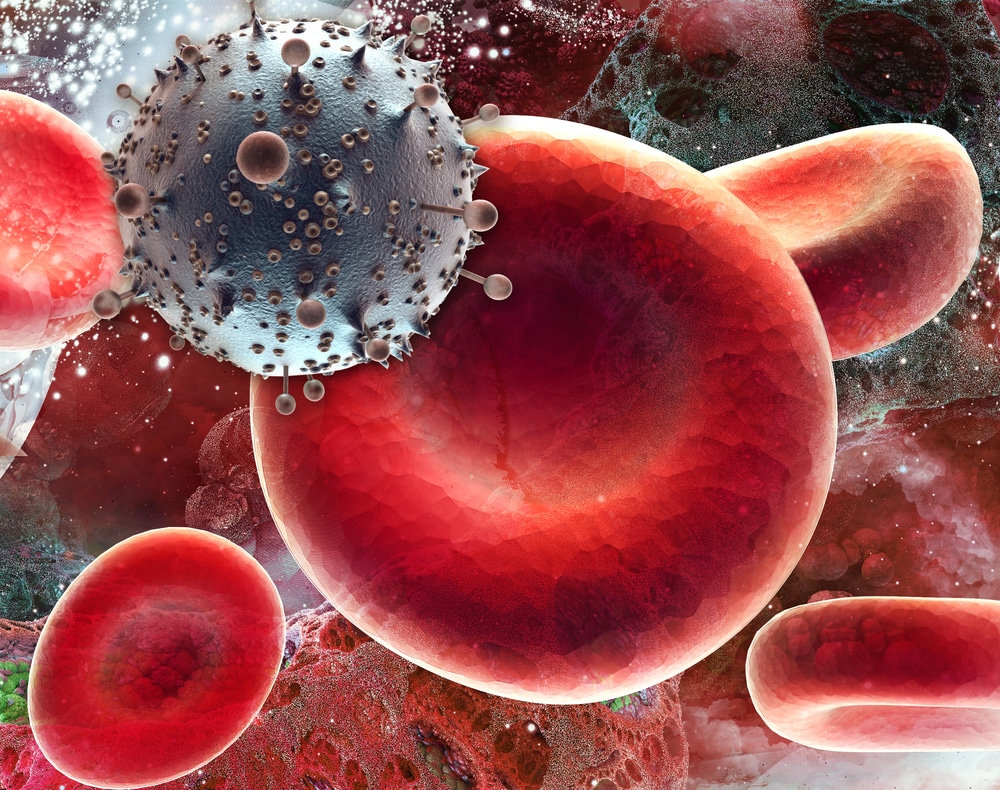
For more than four decades, HIV has beaten every vaccine thrown at it for one infuriating reason: the virus doesn't really have one identity. It has hundreds of thousands of them. Every strain is slightly different, which means an antibody trained to block one version of HIV can be completely blind to the next one that walks through the door. It's the biological equivalent of trying to build a single key that opens every lock ever made — and for years, most scientists quietly wondered if it was even possible.
Now, a team at Scripps Research, the La Jolla Institute for Immunology (LJI), Emory University, IAVI and several partner institutions says they've done something no one has managed before: they trained the immune systems of primates, step by step, to reliably produce "broadly neutralizing antibodies" — the elusive, do-it-all antibodies capable of recognizing and disabling many different strains of HIV at once. The results, published June 30 in the journal Nature, aren't a cure and they aren't a finished vaccine. But HIV researchers are calling it one of the most significant proof-of-concept results in the field's history — and the regimen that produced it is already being tested in human volunteers.
The Problem That Broke a Thousand Vaccine Candidates
To understand why this matters, you have to understand why virtually every previous HIV vaccine attempt failed. Most past candidates worked by showing the immune system a piece of HIV's outer shell — its "envelope" protein — and hoping the right antibody response would spontaneously emerge. It rarely did. That's because the rare, specialized precursor immune cells capable of eventually evolving into bnAb-producing cells generally don't recognize a natural HIV envelope protein well enough to even get activated in the first place. The starting gun never fired.
Some people who live with HIV for years do naturally develop broadly neutralizing antibodies on their own, proving the human immune system is capable of it — it just normally takes years of a live, evolving infection to get there, which obviously isn't a workable path for a preventive vaccine.
Teaching Immune Cells Like a Multi-Year Curriculum
The Scripps-led team's approach, called "germline-targeting sequential immunization," essentially treats the immune system like a student that needs a carefully sequenced curriculum rather than a single lecture. The strategy doesn't wait for antibodies to develop by chance. Instead, researchers engineer a series of shots — a priming dose followed by multiple boosters — each one specifically designed to activate the right rare precursor cells and then nudge them, one step at a time, toward recognizing tougher and more realistic versions of the HIV envelope protein.
"For years, a major question in HIV vaccine research has been whether we could guide the antibody-maturation process through multiple stages to a desired end result," said study co-senior author William Schief, a Scripps Research professor who also serves as vice president of protein design in infectious disease research at Moderna and executive director of vaccine design at IAVI's Neutralizing Antibody Center. "This work shows that the strategy can function as intended."
In this study, primates received a priming shot followed by seven separate booster immunizations over more than two years, with the final booster displaying HIV proteins on nanoparticles to help push mature immune cells into becoming plasma cells — the antibody factories of the immune system. Researchers also used an adjuvant called SMNP, developed in the lab of Scripps Research's Darrell Irvine, which appears to have been critical to supercharging the immune response at each stage.
The specific antibody the team was chasing is known as BG18 — a particularly potent broadly neutralizing antibody that targets a vulnerable spot on HIV's surface that stays relatively consistent even as the rest of the virus mutates wildly.
The Numbers That Have HIV Researchers Excited
The results, by the standards of a field accustomed to disappointment, are striking. After the fifth booster shot, 78% of the vaccinated primates still had detectable immune responses from the targeted BG18-class cells — meaning the training process wasn't losing the cells it was trying to cultivate. More than half of the animals that received the complete regimen went on to develop antibody lineages capable of blocking multiple HIV strains.
The headline number: following the final booster, 44% of vaccinated primates had detectable broadly neutralizing antibody activity circulating in their blood serum — the first time this specific vaccine strategy has achieved that in a preclinical primate study. In the single strongest responder, the antibodies produced were able to neutralize an estimated 52% of HIV strains represented on standard global testing panels, at levels researchers say could plausibly offer meaningful protection based on prior research into what antibody concentrations correlate with blocking infection.
Crucially, high-resolution structural imaging — led by Scripps Research professor Andrew Ward's lab — confirmed the antibodies were binding to HIV's envelope protein exactly where researchers had designed them to, and at the intended angle, rather than stumbling onto the same target by some unplanned biological shortcut. In other words, the immune system wasn't just improvising something that happened to work. It was following the blueprint.
"We were encouraged that the desired antibody lineages didn't fade away during repeated rounds of vaccination," said co-author Dennis Burton, a Scripps Research professor and the James & Jessie Minor Chair in Immunology. "Instead, they continued to mature, and in many cases developed bona fide bnAbs in serum, a strong indicator of protection against HIV following exposure."
Jon Steichen, an institute investigator at Scripps Research and a co-first author on the study, described the delicate choreography behind the results: "Activating rare precursor B cells was the starting point. Each new immunization had to keep the BG18-class cells engaged while asking them to recognize a more difficult and realistic version of HIV Env."
The Honest Caveats
Scientists working on the project are careful not to oversell it, and there's real reason for that caution. The study did not test whether the vaccine regimen actually prevents HIV infection in the animals — only that it successfully generates the type of antibodies believed necessary for protection. Seven booster shots spread across more than two years is also, by any measure, wildly impractical for a real-world public health vaccine campaign; nobody is going to roll up their sleeve seven separate times over two years for a shot most people will never need to use. Researchers say their next major task is compressing the sequence into something closer to a standard vaccine schedule without losing the antibody response that took two years to build the first time around.
The priming component of the regimen — the very first shot in the sequence — is already ahead of the curve. It was tested in humans as part of the HVTN 144 trial and is now advancing in a Phase 1 human trial called IAVI G004, run jointly by IAVI, Scripps Research and the HIV Vaccine Trials Network. The full multi-shot regimen tested in primates has not yet been tried in people, but partners are actively planning how to move it into future human studies.
Expert Perspective: A Milestone, Not a Finish Line
Co-corresponding author Shane Crotty, a professor and chief scientific officer at the La Jolla Institute for Immunology, oversaw the detailed B-cell analysis that tracked immune responses across the full two-year study — work led in his lab by co-first author Patrick Madden. That granular tracking is what allowed the team to prove, cell by cell, that the strategy was doing exactly what it was designed to do rather than producing a lucky fluke.
Schief, looking beyond HIV entirely, framed the significance in broader terms: "Our work represents both an HIV vaccine milestone and a broader test of germline-targeting vaccine design. It indicates that vaccines can be built as a sequence of instructions that deliberately guides antibody evolution, which is an approach that may also be useful against other pathogens whose rapid variation makes them difficult to target." That's a notable claim — the same "sequential training" logic being pioneered here for HIV could theoretically be adapted for other fast-mutating viruses that have historically dodged vaccine development.
What This Means For You
If you're waiting for an HIV vaccine you can walk into a pharmacy and get this year, this isn't it — and researchers are the first to say so. The regimen tested here took over two years and seven separate shots in a controlled research setting, and scientists still need to shorten it dramatically, make the strongest results more consistent across a broader population, and figure out how long the protective antibodies actually stick around in the bloodstream before advancing further.
But for the roughly 1.3 million people newly infected with HIV worldwide each year, and the 40 million-plus people currently living with the virus, this result matters for a less flashy but arguably more important reason: it proves the underlying scientific premise works at all. For decades, the field didn't know if it was even possible to deliberately steer the human immune system, shot by shot, toward manufacturing a specific, rare, powerful antibody on command. Now there's primate data showing it can be done — and a live human trial already collecting data on the first piece of that puzzle.
The Bottom Line
Fourteen years, seven boosters, one cryo-EM confirmation that the antibodies landed exactly where they were supposed to — and a Phase 1 trial already quietly underway in human volunteers. HIV vaccine research has produced plenty of hopeful headlines before that fizzled in the clinic. But rarely has a preclinical result come with this much structural and immunological proof that the strategy is working precisely as designed. Researchers now face the unglamorous but essential work of turning a landmark two-year science experiment into something that could someday be a practical shot in the arm. If they pull it off, the story of how scientists finally taught the immune system to see past HIV's disguise may end up starting right here, in a 2026 Nature paper about a very patient set of monkeys.
Published By | Features Editor