Written By | Health Agencies
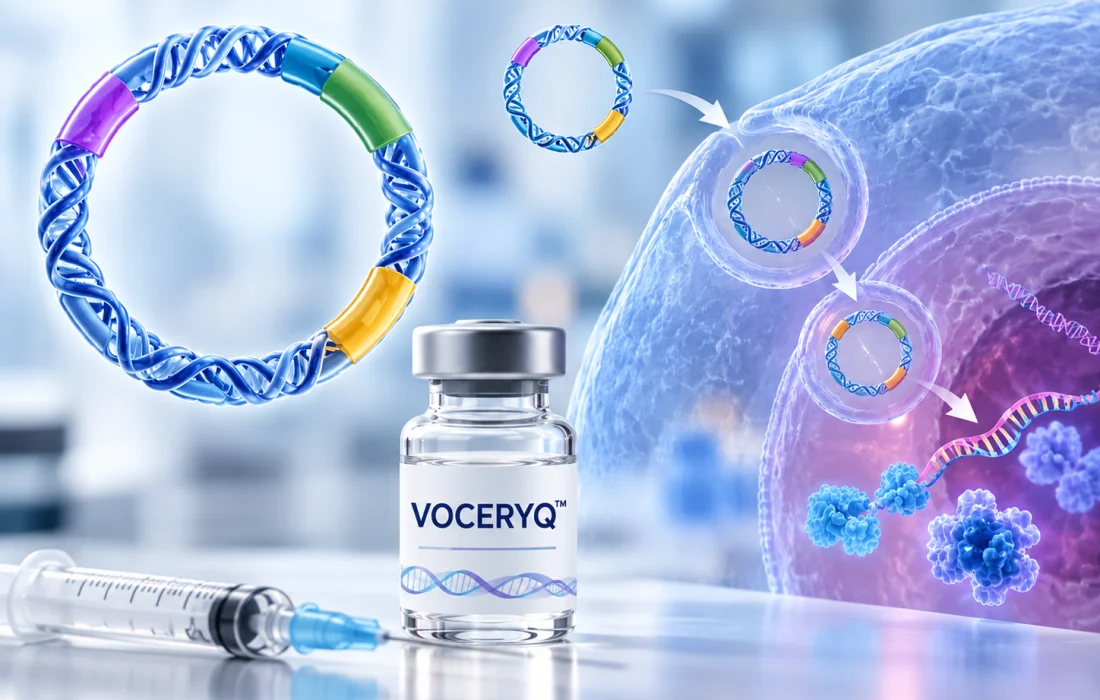
Inovio's Voceryq wins accelerated approval for recurrent respiratory papillomatosis — and the company's shares rocketed 257 percent after hours.
WASHINGTON
Imagine having surgery on your throat four or five times a year, just to keep breathing and speaking. That is life for many adults with recurrent respiratory papillomatosis (RRP), a rare and relentless disease in which wart-like growths keep sprouting in the airways, especially around the voice box.
On 30 October 2026, the US Food and Drug Administration handed them a new option: Voceryq, a treatment from Inovio Pharmaceuticals that the agency calls the first plasmid DNA-based immunotherapy ever approved in the United States. The approval is accelerated, which means it rests on early evidence and comes with strings attached.
Wall Street reacted instantly. Reuters reported Inovio's shares jumped 257 percent in extended trading. The same news hit a rival hard: shares of Precigen, which makes the first drug ever approved for the disease, tumbled about 27 percent after hours, according to Stocktwits.
What is recurrent respiratory papillomatosis?
RRP is a rare, chronic condition caused mainly by two strains of the human papillomavirus, HPV-6 and HPV-11. The virus triggers recurring papillomas in the respiratory tract. Symptoms include hoarseness, chronic coughing and, in severe cases, difficulty breathing as growths narrow the airway.
The standard treatment is surgery to remove the growths. But surgery does not eliminate the virus, so the papillomas keep coming back. Patients can find themselves back in the operating theatre again and again. Inovio's chief executive, Jacqueline Shea, put the stakes bluntly: physicians mainly want therapies that reduce the need for surgery because "every operation carries a risk of permanent vocal cord damage."
What exactly is Voceryq?
Voceryq, also known by its development name INO-3107, is a combination of two DNA plasmids — small circular pieces of genetic material. One plasmid carries instructions for HPV-6 and HPV-11 antigens, the viral proteins the immune system learns to recognise. The other encodes interleukin-12, a signalling molecule that boosts immune responses. Its generic names are doruxapapogene ralaplasmid and lalikinogene sifuplasmid-gxfd.
The idea is to train the body's own T cells to find and destroy cells infected with HPV-6 and HPV-11, so the growths stop coming back or come back less often. It is not a cure; the FDA's wording is that it reduces the frequency of surgical papilloma excisions in adults.
The drug is delivered with a twist. After injection into muscle, a handheld device called CELLECTRA 5PSP delivers brief electrical pulses, a process called electroporation, which helps cells take up the DNA. Patients receive four doses, one every three weeks over nine weeks. Surgeons must first debulk any visible papillomas before the first dose.
The evidence: promising, but small
The approval rests on a Phase 1/2 trial, known as RRP-001, an open-label study with no control group. It enrolled 32 adults who had needed at least two surgeries in the previous 12 months. The efficacy analysis included 26 patients who had undergone at least three excisions in the prior year, with a median of 4.5 surgeries at baseline.
The headline result: 7 of the 26 patients, or 27 percent, needed no surgical papilloma excision in the following 12 months. The 95 percent confidence interval ranges from 12 to 48 percent, a wide band that reflects how few patients were studied.
Put simply, roughly one in four patients in the study went a full year without surgery after treatment. The FDA treated freedom from surgery as an intermediate endpoint that is reasonably likely to predict clinical benefit — the legal basis for accelerated approval. Voceryq had previously received both Breakthrough Therapy and Orphan Drug designations.
Critics of accelerated approval often point out that without a control group, it is hard to know how much of the benefit is due to the drug. RRP is unpredictable; some patients have quiet spells on their own. The FDA's condition is that continued approval may depend on confirming clinical benefit in a post-approval study.
Side effects
The most common adverse reactions, affecting more than 5 percent of patients, were injection-site reactions, headache, fatigue, high blood pressure, nausea and dizziness. Most were mild to moderate, Grade 1 or 2.
Because the treatment uses electroporation, there are device-specific cautions. Electrical pulses may cause temporary muscle contractions, bleeding at the injection site and vasovagal reactions such as fainting, so patients should be monitored for at least 30 minutes after each dose. The product should not be administered in a limb on the same side as a pacemaker or implantable defibrillator, near metal implants, or where there are skin abnormalities at the injection site.
A crowded field — suddenly
Voceryq is not the first drug approved for RRP. Precigen's Papzimeos won US approval last year as the first medicine for the disease. Shea told Reuters the key difference is the technology: Voceryq is a DNA-based immunotherapy, while Papzimeos uses a modified virus.
That distinction could matter for patients and doctors weighing options, though no head-to-head trial exists, and comparing results across small studies with different designs is notoriously unreliable. The market reaction — Inovio soaring, Precigen sliding — shows investors see real competition, but it says nothing about which drug is better for any individual patient.
It is also a landmark for Inovio itself. Voceryq is the company's first approved product, after more than two decades of working on DNA medicines.
Why DNA medicines have taken so long
DNA vaccines and immunotherapies have been a scientific promise for decades. The concept is elegant: instead of injecting a protein or a weakened virus, doctors inject a small piece of genetic code and let the patient's own cells manufacture the target. In practice, getting enough DNA into enough cells to trigger a strong immune response has proved stubbornly difficult, particularly in humans, where early DNA vaccines produced weaker responses than hoped.
Electroporation is one answer to that problem. The brief electrical pulses temporarily open tiny pores in cell membranes so the plasmids can slip inside. It is the reason Voceryq comes bundled with a dedicated device rather than a simple syringe, and it is also the reason for the extra safety precautions around pacemakers, metal implants and post-dose monitoring.
Adding interleukin-12 to the mix is a second boost. IL-12 is a messenger that helps activate the T cells that clear virus-infected cells. Combining the viral antigens with that immune signal is intended to produce a stronger, more durable response against HPV-6 and HPV-11 than the antigens alone.
What doctors and patients will weigh
For patients, the practical questions are many. Treatment requires a surgical debulking before the first dose, so Voceryq does not replace the operating theatre at the start; it aims to stretch the time between procedures afterwards. Four injections over nine weeks, each followed by at least 30 minutes of monitoring, is a manageable commitment compared with repeated surgery, but it is not trivial.
Doctors will also have to consider that the trial's headline figure describes complete responders only. The study's 27 percent no-surgery rate does not say how many of the other 19 patients in the efficacy analysis had fewer operations than before, and the approval documents reviewed for this article do not spell that out. That is precisely the sort of detail the confirmatory study should clarify.
Finally, there is cost and access. Inovio has not publicly stated a price in the coverage reviewed, and insurers will have to decide how to cover a new therapy for a rare disease. Patients should expect that conversation to matter as much as the clinical one.
What happens next
Inovio says Voceryq should be orderable and shippable about 60 days after approval, with full commercial deployment expected in the first quarter of 2027. The price has not been publicly disclosed in the coverage reviewed for this article.
The company must now submit a draft confirmatory study protocol to the FDA by the end of 2026, with a final protocol expected by mid-2027. The confirmatory study will be the real test: if it fails to show a clear benefit, the accelerated approval could be at risk.
What this means for you
RRP is rare, so most readers will never need this drug. But the approval carries wider lessons. DNA-based immunotherapy, long promised and rarely delivered, now has its first US-approved product. That could encourage more research into similar approaches for other HPV-related conditions and cancers, although each would need its own evidence.
If you or a family member has RRP, talk to your ENT specialist or a centre experienced in the disease about whether Voceryq or Papzimeos fits your situation. Questions worth asking include how many surgeries you need now, whether you have a pacemaker or metal implants, how the treatment is scheduled around surgery, what insurance coverage looks like, and what is known about long-term follow-up.
For everyone else, the story is a reminder of the value of HPV vaccination. HPV-6 and HPV-11 are covered by vaccines that are widely available, and vaccination is the most effective way to prevent the infections behind many HPV-related diseases.
The bottom line
Voceryq offers hope to a small group of patients who have run out of reasons to love the operating theatre. It is a genuine scientific first, and a major commercial win for a company that has spent years on the edge. But a 27 percent no-surgery rate in a 26-patient, uncontrolled study is a starting point, not a final answer.
The next chapter — the confirmatory trial and real-world use from early 2027 — will show whether this electrifying new approach can deliver lasting relief.



