Economic & Social Transformation
Guinea-Bissau, a small West African nation of roughly two million people wedged between Senegal and Guinea, remains one of the world's most cashew-dependent economies and one of its most politically fragile. Over the past year the country has managed a striking combination: a bumper cashew harvest that pushed growth above 5.5 percent, a military takeover that upended its transitional government, and a continued, if bumpy, partnership with the International Monetary Fund aimed at keeping public finances on a sustainable footing. Understanding Guinea-Bissau in mid-2026 means understanding how those three forces — agricultural windfall, political instability, and external fiscal discipline — are pulling against and around each other.
A Cashew Harvest Powers Growth, But Momentum Is Fading
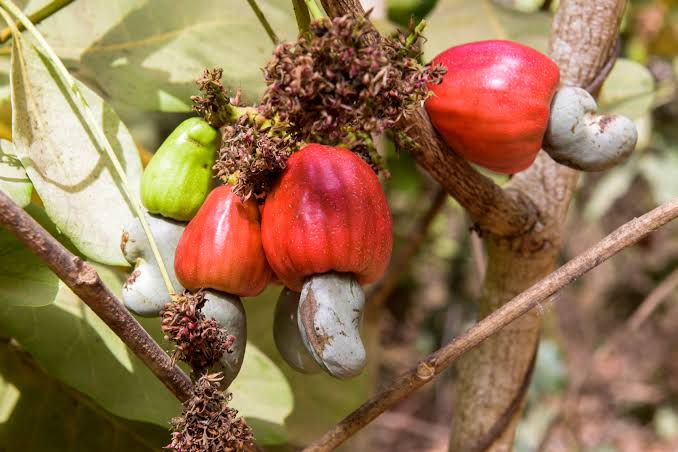
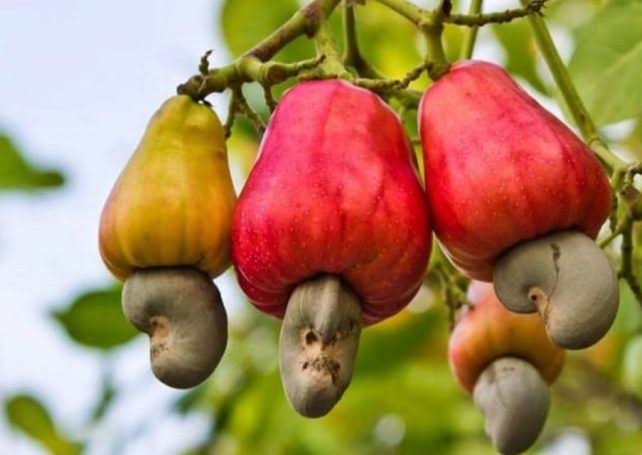
Real GDP expanded by 5.8 percent in 2025, according to the World Bank's June 2026 Guinea-Bissau Economic Update, driven overwhelmingly by a strong cashew harvest and favorable farmgate prices that lifted rural incomes and private consumption. Cashew nut exports rose from 167,000 tonnes in 2024 to 211,000 tonnes in 2025, a jump of roughly 26 percent that underscores just how much of the national economy still runs through a single tree crop. Cashews account for the overwhelming majority of Guinea-Bissau's export earnings and are the primary cash-income source for hundreds of thousands of smallholder farming households.
That momentum is now cooling. The World Bank and IMF both project growth easing to a range of 4.8 to 5.2 percent in 2026, as political instability following the November 2025 transition and spillovers from Middle East-linked shipping and fuel-price disruptions weigh on the recovery. Because fuel and food together make up roughly 30 percent of Guinea-Bissau's import bill, higher freight and energy costs squeeze cashew export margins directly — the World Bank estimates this dynamic alone will shave about 0.3 percentage points off 2026 growth, add roughly 2 percentage points to inflation, and widen the current account deficit by 1.6 percentage points. For an economy this narrowly based, external shocks of this kind translate quickly into household-level pain.
A Military Takeover Interrupts, But Does Not Derail, the IMF Program
Guinea-Bissau's economic management has for several years run in parallel with an IMF Extended Credit Facility (ECF) arrangement, and 2025-26 tested that relationship severely. In October 2025 the IMF and Bissau-Guinean authorities reached staff-level agreement on the program's ninth review. Weeks later, in November 2025, a military takeover installed a transitional government, delaying implementation of agreed reforms in several areas. Despite the disruption, the transitional authorities reaffirmed their commitment to the ECF-supported program's objectives, and by February 13, 2026, the IMF announced a new staff-level agreement covering both the ninth and tenth reviews simultaneously — an unusual double-review structure that reflected the lost time.
The IMF Executive Board formally completed the ninth and tenth reviews on March 20, 2026, releasing a disbursement of SDR 2.36 million (about $3.3 million) and bringing cumulative disbursements under the arrangement to SDR 37.4 million (about $51.6 million). The Fund also agreed to extend the program by five months, to December 29, 2026, giving the transitional government more runway to complete the reforms originally scheduled for 2025. The IMF Executive Board went on to complete an eleventh review in June 2026, a sign that despite the change in government, program engagement has continued largely on track — a notable outcome given how frequently political ruptures elsewhere in the region have derailed Fund-supported programs entirely.
Fiscal Slippage and a Debt Load Above the Regional Ceiling
Fiscal management remains Guinea-Bissau's central vulnerability. The 2025 fiscal deficit came in larger than initially projected, reflecting a revenue shortfall, prompting authorities to commit to a package of corrective measures aimed at bringing the deficit down to 4.2 percent of GDP. Public debt, meanwhile, stood at 75.6 percent of GDP in 2026 — a level that, while down slightly thanks to stronger nominal growth and a more prudent concessional-borrowing strategy, still sits well above the 70 percent ceiling set by the West African Economic and Monetary Union (WAEMU), of which Guinea-Bissau is a member and whose common currency, the CFA franc, it shares with seven other states.
That combination — a shrinking but still-elevated debt stock, a persistent fiscal deficit, and an economy exposed to global commodity and shipping shocks — is precisely why the IMF relationship matters so much to Bissau-Guinean policymakers. Every review completed keeps concessional financing flowing and signals to other creditors and to regional partners that the country's public finances remain broadly under control, even amid political upheaval.

Poverty Remains Stubbornly High, With a Deep Rural-Urban Divide
Economic growth has not yet translated into broad-based poverty reduction. The World Bank projects extreme poverty, measured at the $3.00-per-day (2021 PPP) line, at 41.2 percent in 2025, easing only gradually to around 37.2 percent by 2027 as per-capita growth and softer food prices take hold. The rural-urban gap is stark: poverty among rural workers stands at roughly 60.0 percent, compared with 23.5 percent in urban areas — a reminder that even a good cashew season disproportionately benefits farmers with land and market access, while leaving the rural landless and urban informal workers largely behind.
Human development indicators tell a similarly difficult story. Guinea-Bissau ranked 179th out of 193 countries on the United Nations' Human Development Index in the most recent assessment, and public health spending has remained thin — just 1.1 percent of GDP in 2021 and 1.2 percent in 2020, far below levels needed to build resilient health systems. The World Bank's Human Capital Review for the country has explicitly framed investment in health, nutrition, social protection, and education as the precondition for turning today's cashew-driven growth into tomorrow's more diversified, higher-productivity economy — arguing that without stronger human capital, growth spurts like the 2025 cashew boom will keep failing to compound into lasting development gains.
Regional Integration: A Late Starter on AfCFTA
Guinea-Bissau is also navigating its place in West Africa's evolving trade architecture. The country remains among the ECOWAS members that have yet to ratify the African Continental Free Trade Area (AfCFTA) agreement, leaving it at an earlier stage of continental market integration than most of its neighbors. In August 2025, ECOWAS, the African Development Bank, and the United Nations Development Programme launched an institutional-support initiative to help Guinea-Bissau build the foundational capacity needed to design its first national AfCFTA implementation strategy — support the government has welcomed as a chance to catch up rather than be left further behind. Alongside this, reform priorities identified by the World Bank include modernizing customs operations through an electronic single window aligned with ECOWAS standards, a technical but consequential step toward reducing trade costs and formalizing more of the economy.
Outlook: Diversification as the Unfinished Task
The World Bank's June 2026 Economic Update, titled "Pathways for Unlocking Productivity-Led Private Sector Growth," captures the core policy challenge facing Guinea-Bissau: growth over the 2026-27 period is expected to average around 5.2 percent, respectable by regional standards, but almost entirely dependent on the same cashew sector that has defined the economy for decades. Agriculture is expected to remain the principal growth driver, supported by government investment aimed at lifting rural incomes and stimulating consumption further. Yet without deeper private-sector development beyond cashews — in processing, logistics, and services — Guinea-Bissau risks remaining exposed to the same volatility that a single bad harvest, a spike in fuel prices, or a shock to global cashew demand can inflict. For a country simultaneously managing a fragile political transition and an IMF program extended into its final months of 2026, the test ahead is whether a good year for cashews can be converted into the kind of institutional and economic resilience that survives a bad one.
Published By | Business News Editor