Written By | Joshua Nahamya
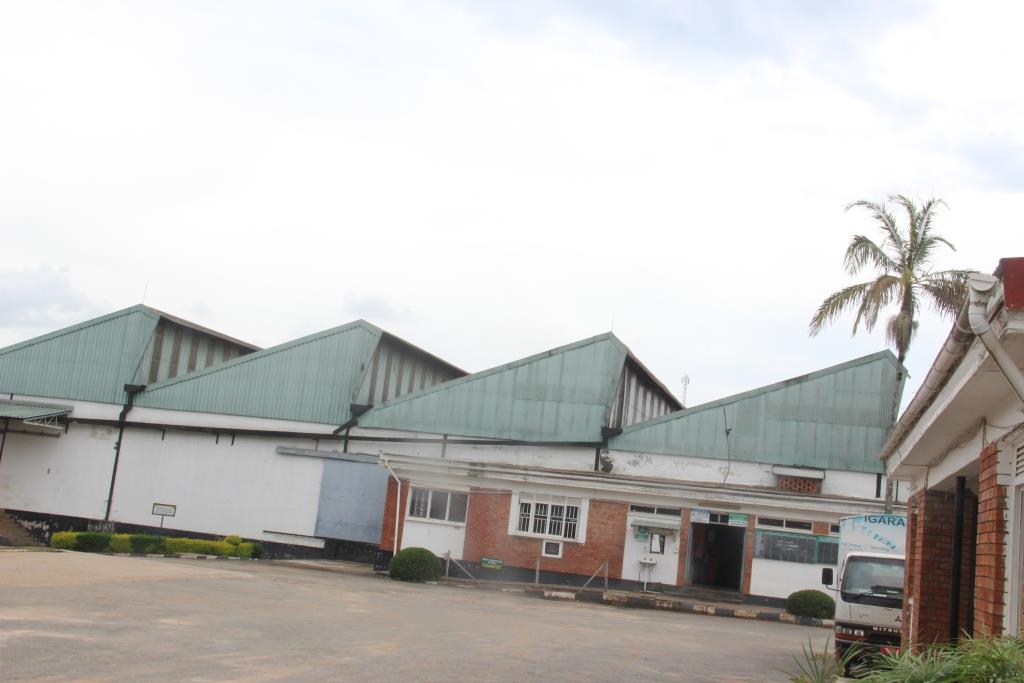
Igara tea growers premises. [All Photos: Joshua Nahamya]
Bushenyi
Igara Growers Tea Factory in Kyamuhunga, Bushenyi District, is once again embroiled in a bitter leadership dispute after the Uganda Registration Services Bureau (URSB), through the company's interim leadership, halted the forthcoming Annual General Meeting (AGM).
The latest standoff follows the High Court in Bushenyi dismissing a petition filed against the Board of Directors of Igara Growers Tea Factory Limited (IGTF), with costs awarded against the applicants.
Delivering the ruling a few days ago, Justice Amos Kwizera held that the petitioners, mostly smallholder tea farmers and shareholders, had failed to exhaust the available administrative remedies before seeking court intervention.
He said the complainants should first have presented their grievances to the Registrar of Companies.
URSB injunction stops AGM
In a newspaper announcement, all members were invited to attend the company's AGM, which had been scheduled for Wednesday, 24 June 2026. Following the court ruling, the Company Secretary, Kenneth Mutabaruka, issued a notice inviting shareholders to attend the 28th Annual General Meeting on the same date.
The AGM was intended to enable shareholders to receive and deliberate on the company's audited financial report for the year ended 31 December 2022, among other business.
However, in a letter dated 15 June 2026, URSB, acting on a complaint lodged by five shareholders—Willis Bashaasha (Shareholder No. 221524), Agaba Tirikwenda Godfrey (representing the late A.N. Tirikwenda, Shareholder No. 212016), Batangaya Asuman (Shareholder No. 24121), Ronald Rwankangi (Shareholder No. 253843), and Katarikawe Hannington (Shareholder No. 229113)—advised the board to halt the AGM scheduled for 24 June 2026.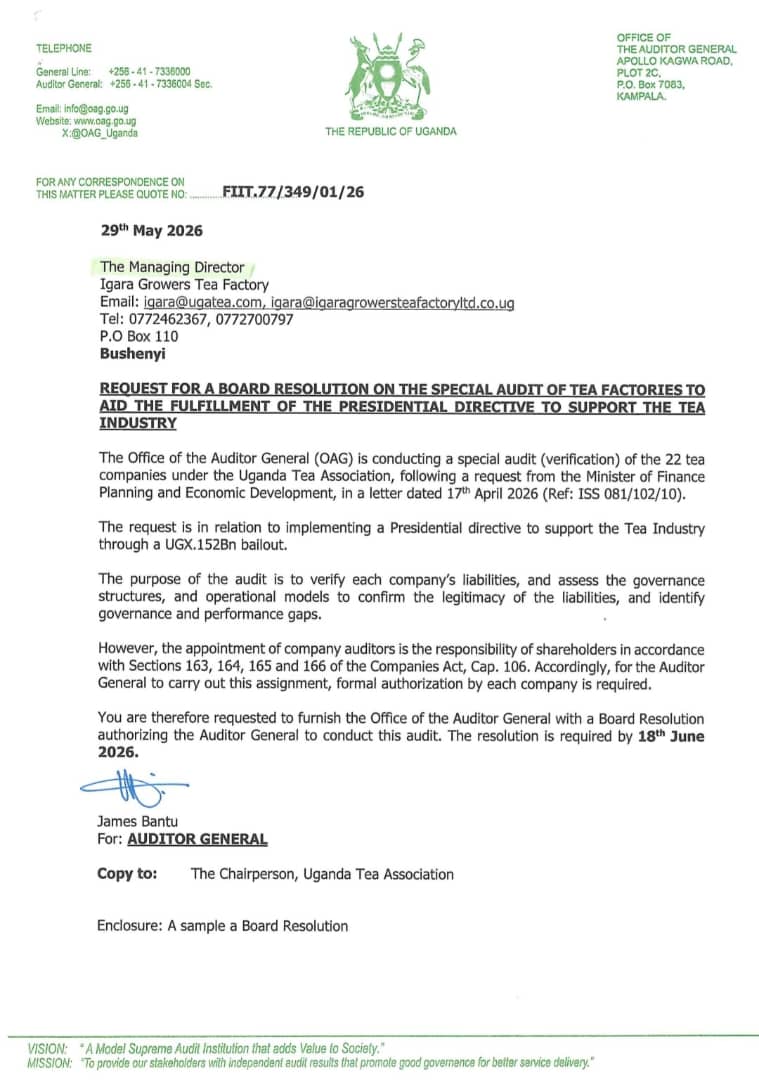
The shareholders requested the board to wait for the determination of their petition challenging the legality of the current board.
"Reference is made to your letter concerning the above matter and your earlier complaint under reference number HQ/IGARA/URSB/2026/02 regarding the management and governance affairs of Igara Growers Tea Factory Ltd," the letter reads.
"The Registrar acknowledges receipt of your request and notes your concerns regarding the legitimacy of the current Board of Directors and the proposed Annual General Meeting scheduled for 24 June 2026."
According to the letter, there is a pending application challenging the legitimacy of the board and management of Igara Growers Tea Factory, which must first be resolved before the AGM can proceed.
"The legitimacy of the Board is currently under consideration by this office. A hearing is scheduled to take place on 1 July 2026. In view of the pending proceedings, this office advises the Company to refrain from proceeding with the Annual General Meeting scheduled for 24 June 2026 pending the conclusion of the hearing and determination of the complaint," the letter further states.
It adds that maintaining the status quo would ensure fairness to all shareholders and preserve the integrity of the proceedings.
"Maintaining the status quo pending the outcome of the hearing will promote procedural fairness, safeguard the integrity of the ongoing proceedings, and ensure that any eventual decision of this office is not rendered ineffective or overtaken by events," the letter states.
In a separate letter dated 29 May 2026, Auditor General James Bantu also directed the company to prepare for an ongoing special audit of the 22 companies under the Uganda Tea Association.
"The Office of the Auditor General (OAG) is conducting a special audit (verification) of the 22 tea companies under the Uganda Tea Association following a request from the Minister of Finance, Planning and Economic Development in a letter dated 17 April 2026 (Ref: ISS 081/102/10). The request is in relation to implementing a Presidential directive to support the tea industry through a UGX 152 billion bailout," the letter reads.
According to Bantu, the purpose of the audit is to verify each company's liabilities, assess governance structures and operational models, confirm the legitimacy of the liabilities, and identify governance and performance gaps.
"However, the appointment of company auditors is the responsibility of shareholders in accordance with Sections 163, 164, 165, and 166 of the Companies Act, Cap. 106. Accordingly, for the Auditor General to carry out this assignment, formal authorization by each company is required. You are therefore requested to furnish the Office of the Auditor General with a Board Resolution authorizing the Auditor General to conduct this audit. The resolution is required by 18 June 2026."
This is not the first time members have clashed with the board over leadership disputes. On 25 October 2025, court proceedings abruptly halted the confirmation of new directors at Igara Growers Tea Factory after the board was served with an interim court order issued by Justice Simon Peter Kinobe restraining the company from confirming the new leadership until pending court cases were resolved.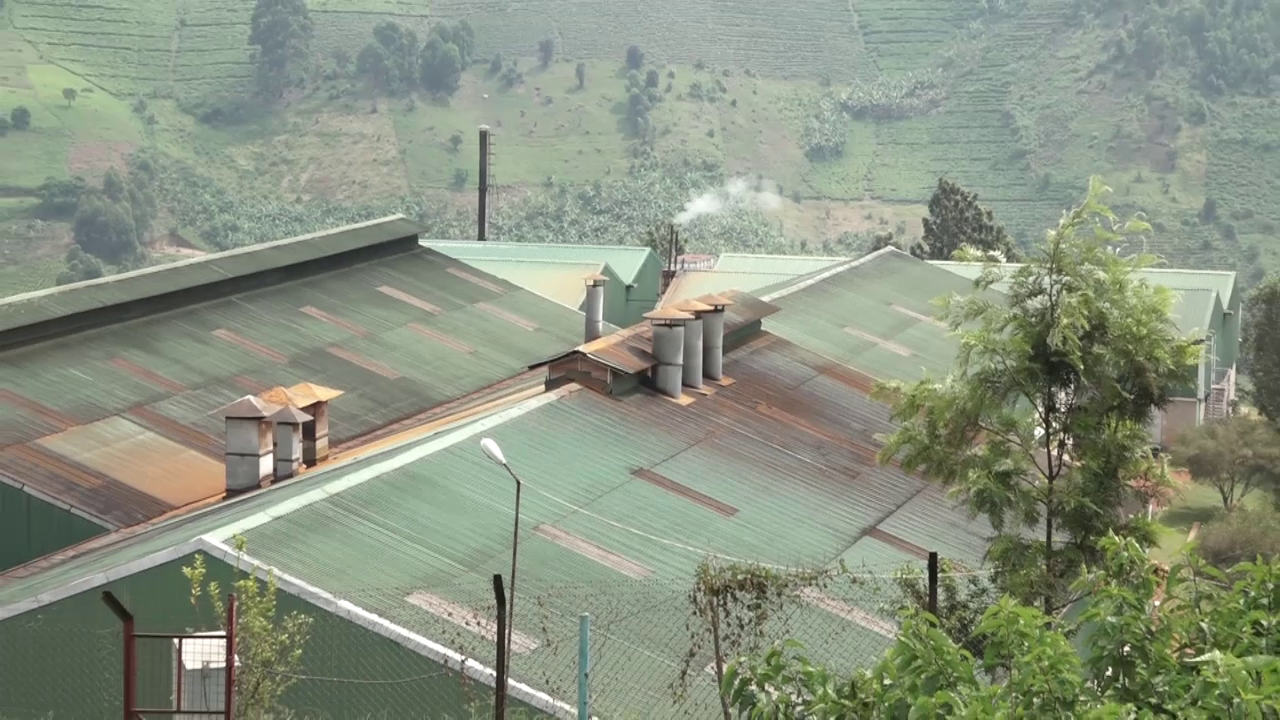
Aerial view of Igara Growers Tea Company
Shareholders react
The injunction reportedly shocked the outgoing board, prompting the chairperson, Sam Muhereza Karumira, to suspend the meeting.
However, some shareholders criticised the decision, accusing Muhereza of misinterpreting the court order.
Abraham Muganzi supported URSB's decision, noting that there is still a pending petition before URSB challenging the legitimacy of the current board.
"...Then how can the same URSB allow the current board, which is allegedly in office illegally according to the petitioners, to hold the AGM? Actually, URSB is instructing that the AGM be suspended until the main petition is disposed of on 1 July 2026," he said.
Another shareholder also agreed with URSB's decision but expressed hope that the factory would soon reopen and resume operations.
"I agree with you. It is on 1 July that URSB will hear the matter. Issues regarding the AGM will come later. Either way, it will be a sigh of relief if this factory reopens and resumes normal operations so that farmers can once again have a market for their green tea leaves."
Another shareholder, Savio Tumuramye, challenged the board to resolve the ongoing leadership impasse to enable tea farmers to access a reliable market for their green tea leaves.
"Follow the events. Read the recent judgment in the case where URSB was the respondent together with Igara. Then determine which has greater authority between the court and URSB. The supreme body governing a company is the AGM, which is mandated to confirm the board's resolutions. The Auditor General wrote to Igara's board requesting permission to conduct the audit. Did the board pass the required resolution?" he asked.
Tumuramye said shareholders were ready to attend the AGM, arguing that nothing legally prevented them from holding one since the court had earlier dismissed the petition challenging the current leadership.
"I haven't heard any official announcement calling off the AGM scheduled for 24 June 2026. On 1 July, URSB will only hear the complainants' case, not that of us shareholders."
He added that tea farmers have suffered enough and urged all parties to resolve the leadership impasse, alleging that farmers had lost their market.
"My wish is to see Igara Tea Factory reopen, regardless of who leads it, so that I can sell my tea as a shareholder."
Background
Established in 1969, Igara Growers Tea Factory Limited remains a key economic pillar in south-western Uganda, supporting the livelihoods of thousands of smallholder farmers across Bushenyi, Buhweju, and Sheema districts. It was established as part of the government's efforts to reduce poverty during the 1960s.
Government, through an Act of Parliament, established the Uganda Tea Growers Corporation (UTGC) in 1966 to safeguard the interests of smallholder tea farmers. As green leaf production increased, UTGC established Igara as one of four smallholder tea factories in Uganda to process green leaf from Bushenyi District.
Political instability during the 1970s led to a sharp decline in Uganda's tea industry, bringing Igara close to collapse as the factory was deprived of essential inputs and large tea plantations were abandoned.
In 1989, a European Union-funded ten-year Tea Rehabilitation Project for the smallholder tea subsector commenced. The project focused on rehabilitating farmers' tea gardens as well as processing factories.
As part of the government's broader privatisation programme, Igara and the other three smallholder tea factories—Mabale, Mpanga, and Kayonza—were sold to smallholder tea farmers in their respective areas. The privatisation process began in 1995 and was completed in 2000, when full ownership was transferred to the farmers.
Torch Media Africa



