Written By | Health News Agencies
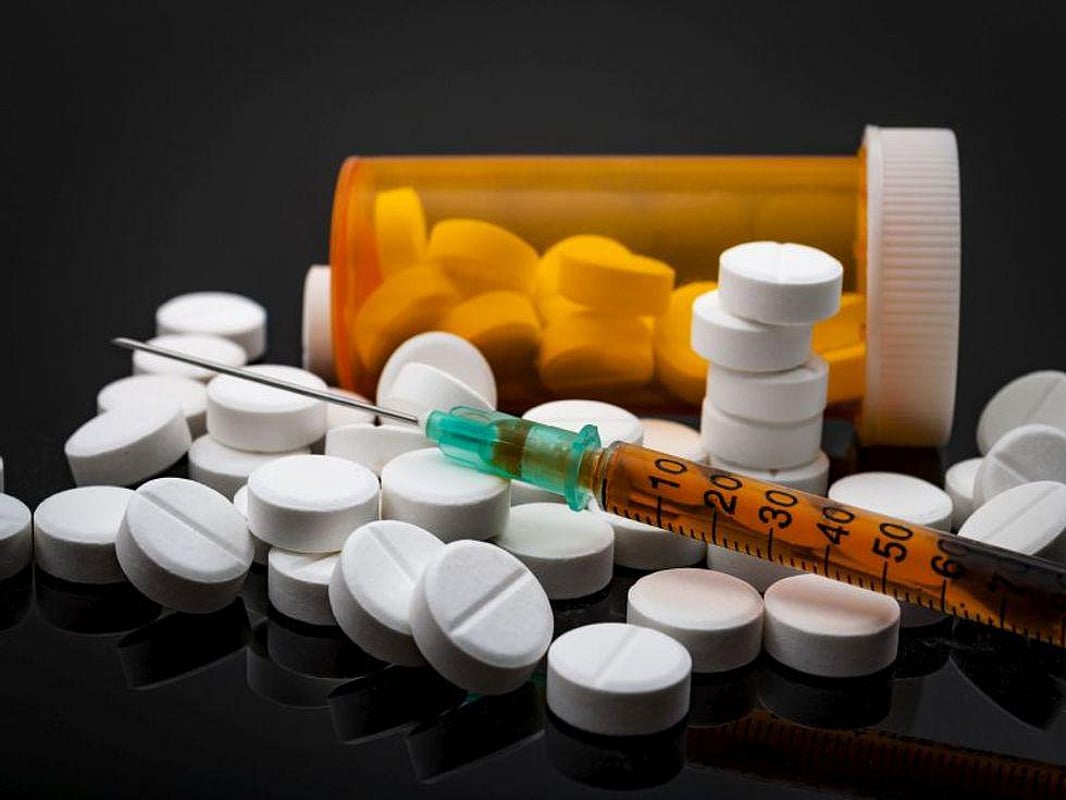
Published May 12, 2026, in the Journal of Medicinal Chemistry and unveiled to the public on June 11, the new vaccine candidate represents a fundamentally different approach to the opioid epidemic.
LA JOLLA, California
In a nondescript lab overlooking the Pacific, a team of chemists may have built the single most important weapon yet against the deadliest drug crisis in American history. It isn't a new antidote. It isn't a stronger version of naloxone. It's a vaccine — and it doesn't just go after fentanyl. It goes after fentanyl's entire bloodline.
Published May 12, 2026, in the Journal of Medicinal Chemistry and unveiled to the public on June 11, the new vaccine candidate represents a fundamentally different approach to the opioid epidemic. Rather than trying to neutralize one molecule at a time, Scripps scientists engineered a vaccine that trains the immune system to recognize the chemical "shape" shared across an entire class of fentanyl analogs — including some of the most lethal compounds ever synthesized.
If it works in humans the way it has worked in mice, doctors say, it could change the calculus of an overdose crisis that has already claimed hundreds of thousands of American lives.
A Crisis That Keeps Mutating
Fentanyl and its chemical cousins are now responsible for more American deaths each year than car crashes and gun violence combined. What makes the crisis so resistant to existing interventions is precisely what makes this vaccine so urgently needed: clandestine chemists don't just manufacture fentanyl. They tweak it. Slight alterations create a rotating cast of analogs — carfentanil, acetylfentanyl, furanylfentanyl — each capable of evading drugs designed to target only the original structure.
It's a pharmacological game of whack-a-mole, and until now, medicine has always been one step behind.
"What this research shows us is that we don't have to keep playing catch-up with every new synthetic designer drug that emerges," said Kim Janda, the senior scientist behind the project. "By training the immune system to recognize the entire fentanyl class — not just individual structures — we can stay ahead of illicit drug traffickers."
Janda has spent decades working on antibody-based countermeasures to drugs of abuse, including a previous breakthrough that identified an antibody capable of reversing carfentanil overdoses. This new vaccine pushes further: instead of an antibody injected after exposure, a vaccine could provide long-term, self-renewing defense — potentially protecting someone for months before they ever encounter the drug.
How a Vaccine "Outsmarts" a Street Drug
Traditional anti-drug vaccines work by linking a small fragment of the target drug to a larger carrier protein, tricking the immune system into mounting a permanent antibody response. The challenge has always been specificity: a vaccine built around fentanyl's exact structure might miss a slightly altered version.
Janda's team solved this by designing a hapten that mimics a structural feature shared broadly across the fentanyl family. The result is a set of antibodies that bind tightly to fentanyl and its dangerous offshoots — including carfentanil, China White, and furanylfentanyl — while leaving alone medically important opioids like morphine and oxycodone.
In mouse studies, the results were striking. Vaccinated mice given lethal doses of fentanyl continued breathing nearly normally. Researchers found fentanyl levels in the animals' brains reduced by roughly 70 percent compared to unvaccinated mice — meaning the vaccine's antibodies were intercepting the drug in the bloodstream and physically preventing it from crossing into the brain, where it triggers the respiratory shutdown that kills overdose victims.
From Mouse Cages to Human Veins
The jump from a successful animal study to an approved medical product is one of the longest journeys in science. The first human trial is expected to enroll around 40 participants, designed primarily to answer safety questions: does the vaccine cause side effects, and does it reliably trigger anti-fentanyl antibodies in real people?
The Phase 1/2 trial is slated to begin at the Centre for Human Drug Research in the Netherlands — an appropriate setting for testing a vaccine against one of the most lethal substances on Earth.
Even optimistic timelines put a publicly available vaccine years away. Realistically, addiction medicine specialists say, this is a near-decade project from first human dose to pharmacy shelf — if it succeeds at every stage.
Who Would Actually Get This Vaccine?
Unlike a measles or flu vaccine, no one is proposing the fentanyl vaccine become routine. Its target population is far more specific: people in medication-assisted addiction treatment and recovery programs at elevated risk of relapse, individuals being released from incarceration (a population at extreme risk of fatal overdose immediately after release), and potentially first responders or family members facing accidental exposure risks.
Addiction medicine specialists have cautiously welcomed the approach while emphasizing how much work remains. A vaccine that reduces brain fentanyl levels by 70 percent could blunt the respiratory depression that kills overdose victims, but it would not erase the underlying disease of addiction, nor protect against other drugs the same person might be using.
There is also the unsettling question: will illicit drug manufacturers respond by synthesizing fentanyl analogs specifically engineered to dodge the vaccine's antibody recognition? Janda's team designed the hapten to anticipate this arms race, but no one can say with certainty how the underground chemistry will evolve in response.
What This Means for You
If you or someone you love is in recovery from opioid use disorder, this vaccine is not yet available — so existing tools remain essential. Naloxone (Narcan) should still be on hand in any household touched by opioid use. Fentanyl test strips remain a critical harm-reduction tool. Medication-assisted treatments like buprenorphine and methadone remain the frontline therapies today.
What this research offers is a genuinely novel scientific strategy: a vaccine that works against an entire drug class, rather than one molecule. If human trials confirm even a fraction of what the mouse data suggests, it could mark the first time medicine gets to dictate the next move in the opioid crisis.
The Bottom Line
The fentanyl vaccine is not a cure, not a treatment available today, and not a replacement for naloxone or harm reduction. But it represents something the opioid crisis has badly needed: a forward-looking scientific strategy built to anticipate the next synthetic threat rather than simply react to the last one. With human trials on the horizon, the coming year will offer the first real test of whether a vaccine can do for the opioid epidemic what it has done for so many infectious diseases — get ahead of the threat before it reaches the people most vulnerable to it.
Sources: Scripps Research; Journal of Medicinal Chemistry; ScienceDaily; EurekAlert!; Live Science; SciTechDaily; News-Medical.net



